
What are Implant-Supported Prostheses?
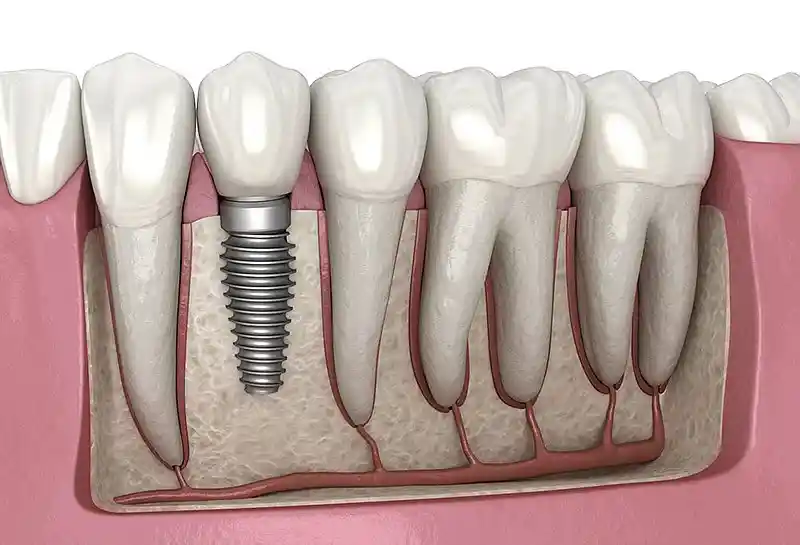
Implant-supported prostheses are new-generation prosthetic systems carried by using biocompatible titanium screws (dental implants) as artificial roots, unlike traditional tooth-supported crowns or tissue-supported removable complete dentures. By transmitting the high loads generated during chewing directly to the jawbone, these prostheses histologically prevent insidious bone resorption (atrophy) that can occur in the jaw skeleton due to tooth loss. The connection between the implant and the prosthetic body is established using mechanical or ceramic intermediate components called “abutments.” The system reconstructs the patient’s lost lip and cheek profile support according to vertical dimension parameters, imparting a smooth anti-aging power to the lower face oval.
- Biomechanical Anchorage: The chewing force being absorbed directly by artificial titanium roots instead of the mucosa.
- Versatile Design: The ability to be manufactured in different engineering models such as fixed, removable, or hybrid, depending on the patient’s bone volume.
- CAD/CAM Integration: Prosthetic frameworks being milled in computer-aided robotic devices with zero error tolerance.
How are Fixed Implant-Supported Prostheses Applied?
Fixed implant-supported prostheses are highly resistant restorations locked onto implants by cementation (bonding) or direct screwing, which cannot definitely be removed by the patient from the jaw. The application process begins after the implants complete their full integration stage with the bone (osseointegration). The protective cover screws on the implants are removed, digital scanning pins called “scan bodies” are fitted, and the exact X, Y, Z axis coordinates of the implants are transferred to the computer using 3D intraoral scanning cameras. The zirconium or porcelain bridge framework designed in the digital laboratory is seated onto the implant abutments with millimetric precision. Today, to zero out the risk of bonding material leaks (cement residues) causing gum inflammation, clinicians deploy the “occlusal screw-retained fixed prosthesis” method as a primary rule, fixing the prosthesis directly to the implants with micro screws.
- Cemented System: The technique of permanently locking the prosthesis onto the abutment using medical cements.
- Screw-Retained System: Screwing the prosthetic body directly into the implant through micro holes opened on it; it can be easily removed and cleaned by the clinician when requested.
- Passive Fit Assurance: The framework seating completely smoothly without creating any internal tension on the bone and implants.
What are Removable Implant-Supported Prostheses?
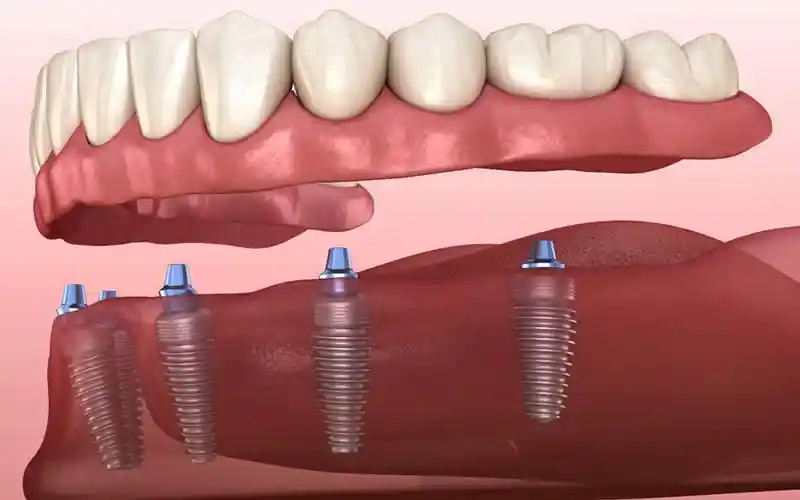
Removable implant-supported prostheses are hybrid dentures whose retention is enhanced with implant-supported mechanisms, popularly referred to as “snap-on dentures,” planned particularly in completely edentulous mouths where the bone volume is insufficient to carry a fixed bridge. In these systems, specialized geometric retentive attachments called “Ball,” “Locator,” or “Bar” are mounted onto 2 or 4 implants placed in the jawbone. The matrices (sockets) for these attachments are fitted on the inner surface of the denture. When the patient places the denture in the mouth and presses gently, locking occurs with a snap sound. Unlike traditional removable dentures, it does not fly out of the mouth while chewing or speaking, and does not rub or wound the mucosa; however, the patient can remove the prosthesis themselves at any moment for cleaning purposes.
- Locator Attachment: Attachments with a flexible plastic mechanism that offer high stabilization and self-centering comfort to the prosthesis.
- Bar-Retained System: An engineering method that completely blocks rotational movements of the prosthesis by connecting the implants to each other via a metal rail line.
- Mucosa-Implant Partnership: The chewing load being shared partly by the implants and partly by the soft tissue mucosal bed.
How are Hybrid Implant-Supported Prostheses Applied?
Hybrid implant-supported prostheses are specialized micro-surgical prosthetic structures developed for patients with severe tissue destruction (advanced resorption) in the jawbone and gingiva, who nonetheless seek the comfort of completely fixed teeth. Structurally, they fall under the category of fixed prostheses; that is, they can definitely not be removed by the patient, and are screwed to the jaw via multiple implants (e.g., All-on-4 or All-on-6 concepts). The reason they are called “hybrid” is that these prostheses harbor both white dental crowns and aesthetic “pink acrylic/porcelain” artificial gingival tissues in their body to replace the resorbed gums. At the moment of application, the titanium or cobalt-chromium metal framework altyapı is milled in CAD/CAM robots; the composite or porcelain teeth fitted on it are smoothly locked by being screwed to the jaw in a manner that supports the patient’s lip profile millimetrically.
- All-on-4 Infrastructure: Screwing onto 4 implants placed at an angle in order to bypass anatomical spaces (sinuses) in the posterior region.
- Pink Aesthetic Camouflage: The phase of balancing the vertical dimension losses resulting from jawbone resorption with artificial pink gingiva to suit facial contours.
- High Hygiene Clearance: Designing the underside of the prosthesis to join the gingiva like a knife-edge and to be smooth enough for interdental brushes to penetrate.
Who is Suitable for Implant-Supported Prostheses?
Implant-supported artificial tooth restorations are medically suitable for any adult individual who has completed the bone development process (passed the age of 18) and has lost one, several, or all of their teeth. The system is the most rational option for consultants who are psychologically tired of using removable complete dentures or who wish to regain brushing comfort with fixed teeth. However, prior to the operation, verifying that the patient’s general systemic profile (for instance, uncontrolled diabetes, presence of severe osteoporosis, or active history of chemotherapy) is within stable limits that will not compromise the biology of implant bonding with the bone is mandatory in accordance with medical standards.
- Total Edentulism Cases: Patients who have no teeth left in their mouth and complain about the mobility of removable complete dentures.
- Those with Regional Gaps: Individuals who have lost several teeth in a row and do not want to have their healthy adjacent teeth reduced mechanically for a bridge.
- Those with Severe Tissue Damage: Individuals experiencing widespread jawbone resorption due to an accident or periodontal disease.
In Which Cases is Implant-Supported Prosthetic Treatment Preferred?
Preferring implant-supported prosthetic protocols as a primary priority over traditional bridge or complete denture alternatives is indicated according to the dimension of intraoral tissue destruction and skeletal limitations. In “free-end edentulism” cases where the last teeth in the posterior region have been extracted and no vital anchor tooth is available to fabricate a bridge, implant-supported prostheses are the sole fixed solution. The clinician rationally decides on this advanced technology workflow in order to preserve the patient’s chewing mechanics, nutritional quality, and facial muscle balance over the long term without relapse.
The primary clinical conditions where implant-supported prostheses are definitively preferred are as follows:
- In patients with a very high gag reflex who cannot tolerate the thick structure of traditional complete dentures that covers the palatal vault,
- In cases where removable complete dentures constantly slip inside the mouth while speaking because the jawbone has resorbed excessively and no tissue support remains,
- In single tooth deficiencies, with the purpose of preventing the mechanical shaving and reduction of the two adjacent healthy and sound teeth,
- When permanent correction of the aged, wrinkled facial expression formed on the face as a result of the collapse of the lip and cheek muscles is desired through vertical dimension construction.
How is the Evaluation Conducted Before Implant-Supported Prosthetic Treatment?
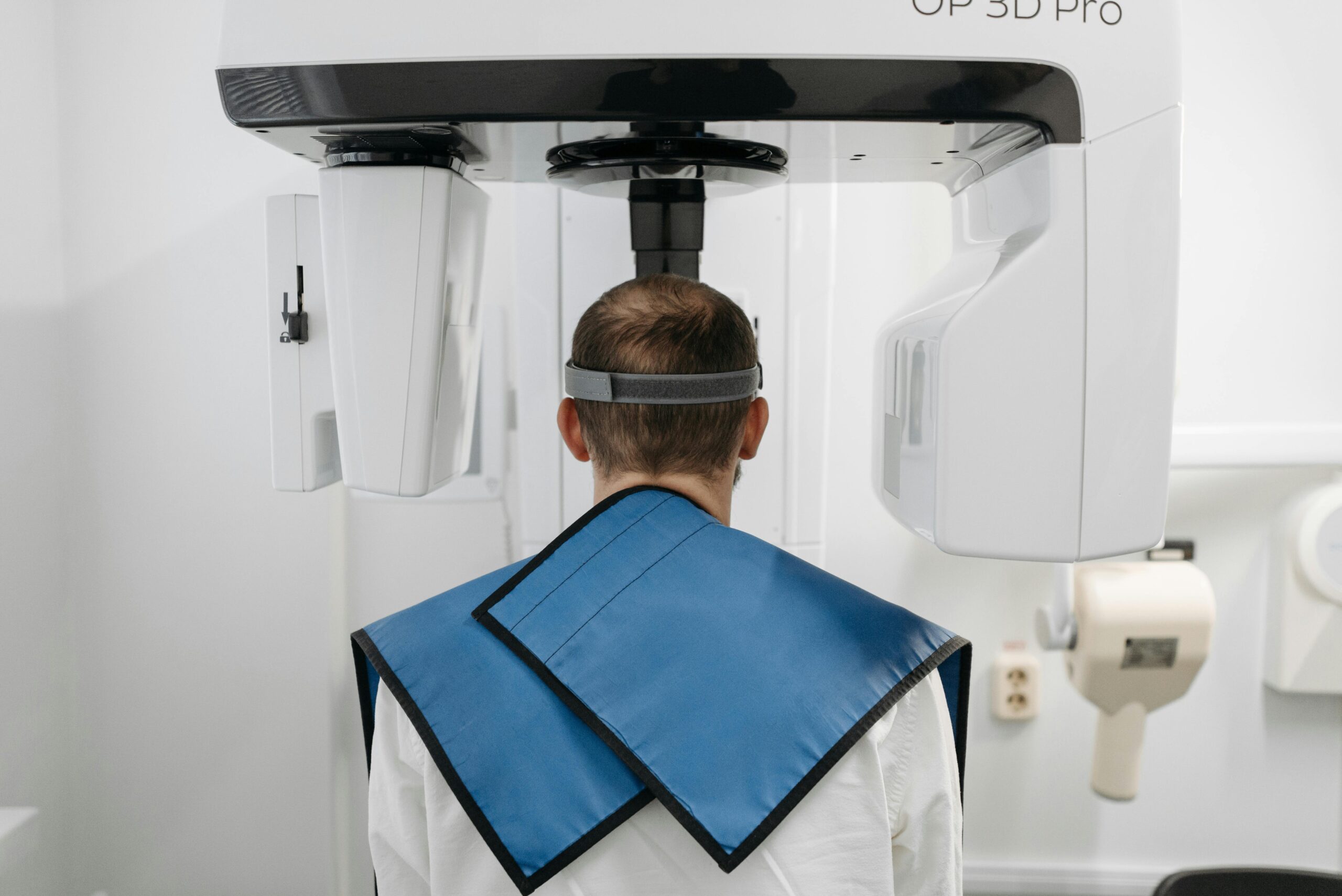
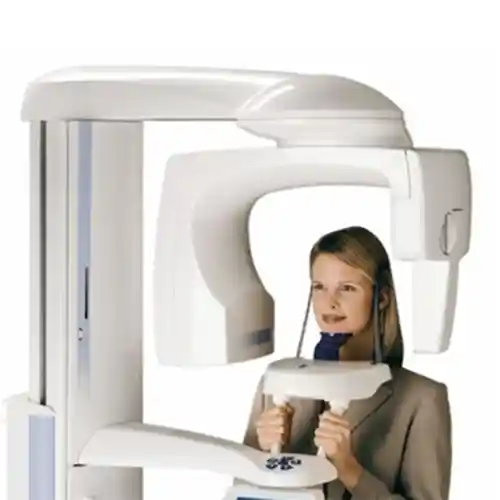
The clinical evaluation carried out before the operation schedule is finalized is the most vital analysis stage drawing the safety boundaries of the surgical and prosthetic steps. During the examination, the clinician inspects the thickness of the oral mucosa, the attachment quality of the gums, and the occlusal relationship between the upper and lower jaws with the help of periodontal probes. The most uncompromising digital support at this stage is the CBCT 3D dental tomography scan, which transcends the limitations of classic two-dimensional radiographs to display the width, height, and density of the jawbone at a 1:1 scale. Cross-sections obtained from the tomography finalise the exact millimetric coordinates where the implants will be placed and the static load balance the prosthesis will carry without error before the operation.
- Bone Volume Mapping: Determining whether the alveolar bone width accommodates the implant diameter on an mm basis.
- Anatomical Boundary Isolation: Scanning the positions of the lower jaw main nerve line (inferior alveolar nerve) and the upper jaw sinus cavities.
- Artificial Intelligence Plaque Analysis: Measuring the existing microbial load inside the mouth to dry up periodontal infection foci before surgery.
How is Implant-Supported Prosthetic Planning Performed?
In modern digital dentistry, implant-supported prosthetic planning is conducted with the philosophy of “prosthetically driven implantology,” unlike past analog methods; that is, where the implants will be placed is decided not randomly based on bone status, but according to the chewing axis of the final tooth form (prosthesis) designed on the computer. The process begins by superimposing 3D tomography bone data (DICOM) and intraoral optical scanner data (STL) in specialized planning softwares. The physician designs the prosthesis on the screen, the software automatically simulates the most ideal implant angles to fit under the prosthesis, and utilizing these data, custom-navigated “surgical guide plates” are manufactured from 3D printers.
- Backward Software Design: First drawing the aesthetic tooth form on the computer, then locking the implant positions according to this form.
- Surgical Guide Production: Fabricating template plates that allow sutureless, incisionless implant placement without utilizing a scalpel during the surgery.
- Force Analysis Simulation: Algorithmic calculation of the micro-strains that will be imposed on the neck region of titanium screws during chewing.
What is the Difference Between Fixed and Removable Implant-Supported Prostheses?
The most radical difference between fixed implant-supported prostheses and removable (overdenture) systems is the mechanism by which the prosthesis locks onto the jaw, the quality of comfort it offers to the patient, and the management style of the cleaning cycle. Since fixed prostheses are permanently connected to the implants with screws or specialized cements, they stand inside the mouth just like the person’s own natural teeth and provide high chewing comfort; the patient can definitely not remove them from the mouth. Removable systems, on the other hand, operate with sockets clinging to locator or bar attachments; although their retention is many times higher compared to traditional complete dentures, the patient must remove the prosthesis from the mouth after every meal to wash it under the tap and brush the implant attachments inside the mouth. The comparison table below lists the clinical parameters of both prosthesis classes:
| Clinical and Aesthetic Parameter | Fixed Implant-Supported Prosthesis (Screw-Retained/Cemented) | Removable Implant-Supported Prosthesis (Overdenture) |
|---|---|---|
| Minimum Required Implant Count | At least 4 to 6 or 8 implants are mandatory in a completely edentulous jaw. | 2 implants in the lower jaw and at least 4 implants in the upper jaw can be sufficient. |
| Chewing Force Performance | Very high (95%+); the firm chewing power closest to natural tooth comfort. | Medium-High level; a slight perception of movement may occur due to tissue flexion with hard foods. |
| Cleaning and Maintenance Cycle | Cannot be removed from the mouth; cleaned with routine toothbrushes, interdental brushes, and oral irrigators. | Must be removed from the mouth by the patient at least twice a day to be cleaned outside. |
| Tissue Volume Loss Camouflage | Ideal in cases with minimal bone resorption; cannot fill out the face in very advanced resorptions. | Fills out sunken lip/cheek depressions due to excessive bone resorption perfectly thanks to its high acrylic flanges. |
In Which Situations are Hybrid Prostheses Preferred?
Hybrid implant-supported prosthetic systems are preferred in borderline cases where the patient has lost both the vertical height of the jawbone to a great extent and the aesthetic form of the gingival margin due to long-term edentulism or a severe history of periodontitis. In these cases, if a straight classic fixed bridge is fabricated, the tooth lengths will display an excessively long, artificial, and unsightly appearance like horse teeth. Hybrid prostheses camouflage these anatomical spaces with a pink acrylic or ceramic artificial gingival layer on the lower framework; the clinician selects this method when wishing to give the patient the luxury of completely fixed teeth without imposing a removable complete denture, while also filling out facial depressions (aging lines) with pink gingiva support.
- In Extreme Alveolar Bone Losses: In vertical volume deficiencies where bone graft surgeries would be risky or insufficient,
- In Gummy Smile Variations: In establishing the pink-white balance of totally edentulous patients whose gingival margins appear irregular during smiling,
- In Speech Phonetics Needs: To ensure sounds like “f, v, s, z” exit the mouth clearly without leaking, by acting as a lip-support filler.
What are the Materials Used in Implant-Supported Prostheses?
Materials utilized in the manufacturing of implant-supported restorations are meticulously shaped in industrial laboratory environments according to the class of the prosthesis (fixed/removable) and the mechanical and optical flexibility coefficients it will display against the chewing pressures imposed on it. The strength of the altyapı framework material functions as the main biomechanical shield preventing cracking of the porcelain on the upper layer. All materials possess high biocompatibility certificates according to medical standards.
- Monolithic Zirconium: An ultra-durable fixed material milled in CAD/CAM robots containing no internal metal, which provides the highest aesthetics due to its light transmittance,
- Titanium-Framework Porcelain: A premium framework milled from a titanium block on the computer, which is lightweight, flexible, and establishes an excellent molecular bond with implant screws,
- Cobalt-Chromium Laser Sintered Metal: A corrosion-resistant traditional metal framework structure where micro powders are melted and woven via digital laser sintering technology,
- Premium Composite / Acrylic Teeth: Flexible composite tooth designs selected particularly in hybrid and removable overdenture prostheses to absorb vertical shocks arriving at the implant necks.
How Do Implant-Supported Prostheses Support Oral Functions?
The most revolutionary contribution of implant-supported prostheses on oral functions lies in elevating “chewing efficiency”—which traditional complete dentures reduce down to 20%—back up to over 90%, reaching the level of natural vital teeth. Since the prosthesis derives its power from titanium screws fused to the jawbone rather than the soft flesh tissue underneath the mucosa, the patient can comfortably grind foods like hazelnuts, pistachios, and tough meat without carrying any concern of pain, ache, or the prosthesis dislodging; this rational functional support enables the stomach to digest food more easily, protecting the patient from chronic gastrointestinal disorders as well.
- Effective Bolus Grinding: Distributing pressure homogeneously to bone trabeculae at the moment of chewing to achieve full crushing power.
- Phonetic Speech Accord: Enabling the tongue to rotate freely inside the mouth and words to exit clearly without lisping, thanks to the palatal portion of the prosthesis being designed thin.
How Do Implant-Supported Prostheses Affect Aesthetic Appearance?
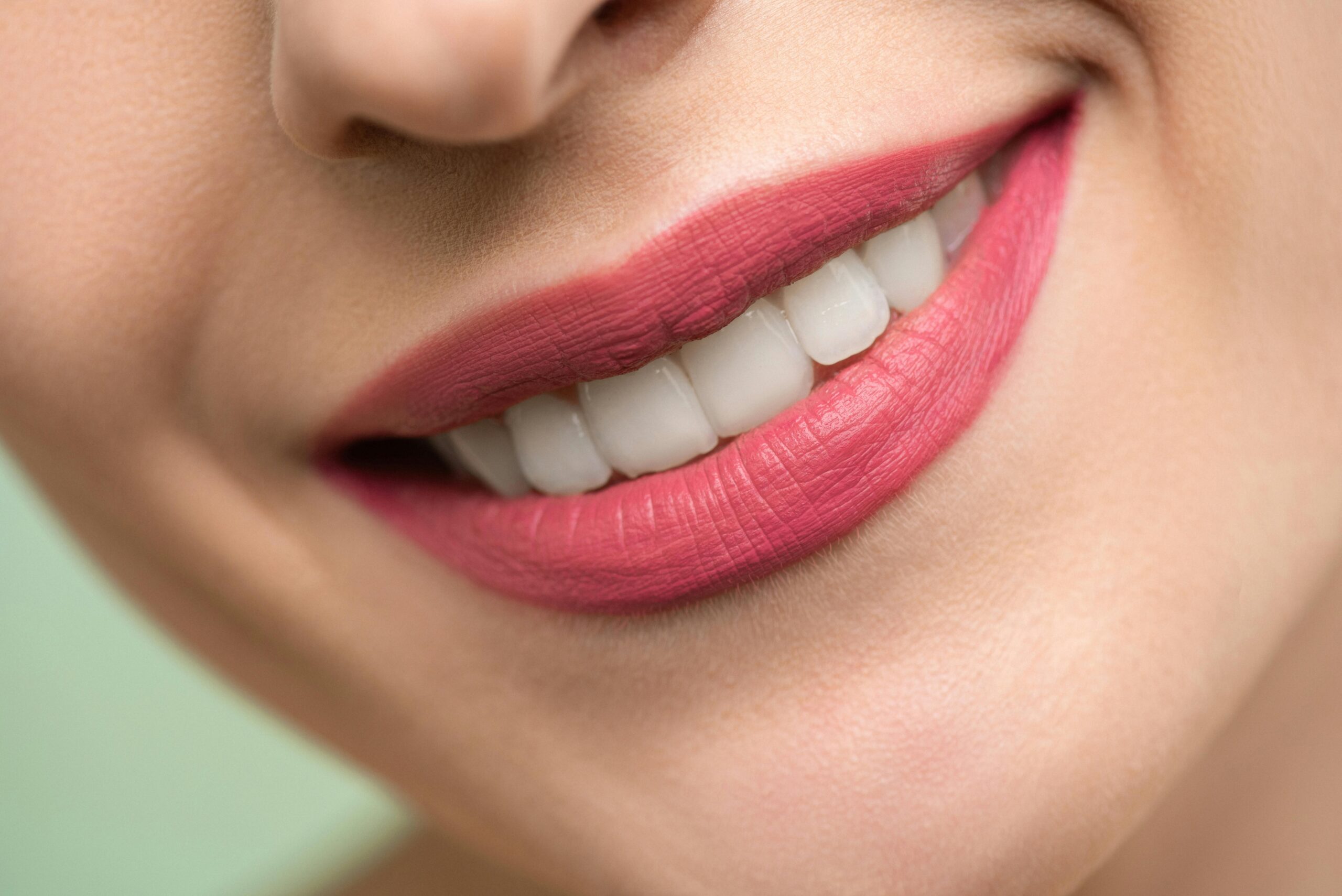
In situations of long-term complete edentulism, the disappearance of teeth and surrounding bone volume produces an aesthetic deformation termed “aging collapse” (facial collapse) in the lower face oval; lips fall inward, cheeks sag, and the nose tip approaches the chin tip excessively. Implant-supported prostheses lift this collapsed facial architecture from the bottom up within the framework of vertical dimension construction rules. When the fullness support lost by the lip and cheek muscles is returned from the inside via the prosthetic body, wrinkles on the face stretch and nasolabial lines soften; this generates a radical anti-aging illusion and a smooth aesthetic enlightenment across the lower face in general.
- Golden Ratio Restoration: Computerized re-balancing of the jaw vertical distance according to the patient’s ocular and nasal anatomical ratios.
- Natural Smile Arc: Eliminating artificiality by weaving anterior tooth lines fully parallel to the curvature line the lower lip takes during smiling.
How Does the Fabrication Process of Implant-Supported Prostheses Progress?
Implant-supported prosthesis manufacturing processes include an uninterrupted digital chain inspecting micro-deviation errors that human hands and laboratory environments might introduce using artificial intelligence algorithms. During the operation, each try-in step is locked to fortify the error-free execution of the next production phase; the clinician performs simultaneous data transfer via the same digital 3D cloud data with the prosthetic technician in the laboratory while working chairside.
- Impression and Scanning Stage: Fitting digital pins inside the osseointegrated implants to scan them within seconds using a 3D intraoral camera,
- Virtual Modeling (CAD): Virtual drawing of the prosthetic anatomy on the computer screen to suit the patient’s facial features and jaw closure movements,
- Framework Try-in (Geometric Control): Performing a full fit test in the mouth of the titanium or zirconium framework emerging from robotic devices (milling machines),
- Aesthetic Characterization and Assembly: The phase of modeling porcelain teeth, shade staining, and subsequently finalizing the process with a permanent screwing or bonding session.
How Long Does Implant-Supported Prosthetic Treatment Take?
The total duration of implant-supported prosthetic treatments is scheduled according to the biological healing quality of the jawbone and the chosen loading protocol (whether immediate loading or traditional waiting will be performed). In the traditional workflow, after implants are placed, a waiting period of 2-3 months in the lower jaw and 3-4 months in the upper jaw is observed for the titanium screws to fuse with the bone; once this waiting period is completed, the digital impression, design, and robotic manufacturing stages of the prosthesis are usually finished smoothly within a short time frame of just 7 to 10 days.
- Immediate Loading (Same-Day Fixed Teeth): In cases with very solid bone, the luxury of screwing temporary fixed prostheses within 24 hours on the same day the implant is performed.
- Smart Sintering Period: The process of milling the framework and crystallizing it in porcelain ovens after the digital impression is captured; it averages a 1-week laboratory cycle.
Is Implant-Supported Prosthetic Application a Painful Procedure?
No, implant-supported prosthetic applications strictly do not cause the patient the slightest pain, ache, or sting during the session; because the prosthetic phase is a completely non-surgical clinical process. The initial surgical stage where implants were placed into the jawbone was already completed completely painlessly under local anesthesia, and months have passed; during prosthetic sessions, no sutures are placed in the gums, bones are not drilled, and scalpels are not used. The physician merely turns the screws inside the implants using micro screwdrivers to fit the abutments; since these steps load no mechanical trauma onto the skin and teeth, they are completed with full chair comfort without even requiring numbing needle injections.
- Zero Needle Stress: Complete elimination of syringe and narcosis anxieties thanks to sessions harboring no surgical incisions.
- Mechanical Practicality: Assurance of exiting the operatory room with psychological relaxation since only screwing or optical scanning maneuvers are performed.
How Should Implant-Supported Prostheses Be Maintained?
Implants and the artificial crowns on them do not decay biologically since they are porcelain or metal structures; however, those marginal edge boundary lines where the prosthesis joins the gingiva are the most insidious corridors inside the mouth for bacterial plaque to accumulate. If home hygiene is neglected along these boundaries, plaque accumulations infiltrate over time into the gingival margin, leading to an insidious implant inflammation termed “peri-implantitis,” and this inflammation resorbs the jawbone holding the implant, causing the screw to become mobile and fall out; to zero out this risk, a meticulous mechanical cleaning discipline must be applied at home.
- Standard and Interdental Brushing: Cleaning prosthetic necks twice a day with a soft-bristled brush and sweeping out spaces underneath crowns with specialized thick interdental brushes.
- Bridge Flosses (Superfloss): Purifying the mucosal bed underneath fixed bridge pontics every night by scraping via specialized flosses with a stiffened spongy tip.
- Oral Irrigator (Waterpik) Integration: The necessity of blasting away micro debris trapped between the prosthesis and gingiva with hydraulic power using devices spraying pressurized water, without mechanical contact.
What are the Factors Affecting the Lifespan of Implant-Supported Prostheses?
The ability of implant-supported prostheses to remain inside the mouth for decades without breaking, loosening, or losing surrounding bone support depends directly on biomechanical engineering rules and the functional fidelity of the patient working in full harmony. After titanium artificial roots integrate with the bone, the sole factor determining the long-term permanence of the prosthesis is how balanced the chewing pressures shifting onto the prosthesis are distributed to the implant bodies; faulty occlusions invite fracturing of the screws.
- Occlusal Contact Balance: When the upper and lower teeth close, chewing loads should arrive axially (linearly) onto the implants, eliminating lateral shearing stresses.
- Home Hygiene Quality: The quality of preventing micro bacterial plaque from initiating a peri-implantitis infection and resorbing the bone integration around the implant.
- Bruxism and Night Guards: It is a rule for patients with teeth grinding problems to regularly wear their protective splint plates to avoid experiencing micro-cracks on porcelain surfaces or screw loosenings.
What are the Advantages of Implant-Supported Prosthetic Treatment?
Among holistic maxillofacial restorations, the implant-supported prosthetic workflow is the most visionary and evidence-based medical solution in the world that brings patients living the fate of complete edentulism to the luxury of permanent fixed teeth and social self-confidence. Radically ending the nightmares of mobility, rubbing, and flying out of the mouth while speaking caused by removable complete dentures makes this method the most popular and cost-effective anti-aging investment of modern dental restorations.
- Natural Tooth Fidelity: Preserving chewing sensations and taste reflexes exactly, without restricting them unlike removable complete dentures.
- Preservation of Bone Volume: Definitively halting facial jawbone resorptions (atrophy) due to edentulism by stimulating the bone from the inside with chewing pressures.
- Zero Adjacent Tooth Trauma: Ending the necessity to cut and reduce perfectly sound natural teeth to the right and left of a gap to fabricate a bridge.
- Lifelong Archivability: The luxury of digital data being stored in cloud servers, enabling robots to mill a new one within seconds without taking impressions even if the prosthesis breaks in the future.
What are the Frequently Asked Questions About Implant-Supported Prostheses?
Presented below are the most common practical anxieties arising in the minds of consultants planning to replace missing teeth with fixed, removable, or hybrid implant-supported systems, along with their uncensored medical answers:
Are those small holes on screw-retained fixed implant-supported prostheses visible when looking from the outside?
No, they are definitely not visible and do not compromise aesthetics. Micro screw access holes are opened on the chewing surfaces of teeth to fix screw-retained fixed or hybrid prostheses to the implants. After the prosthesis is screwed in the mouth, our expert physician closes and smooths the inside of these holes completely with aesthetic white composite filling materials displaying high light transmittance; therefore, no hole or metal appearance can definitely be selected on the tooth when looking from the outside.
Can my implant-supported prostheses loosen over time, and can I tighten them myself at home if they do?
Depending on excessive hydraulic shocks during chewing or teeth grinding (bruxism) pressures, slight loosenings may occur over time in the micro screws connecting the prosthesis to the implant, though rarely, and the patient may feel a slight mobility in their tooth. When this situation is experienced, the patient tampering with or trying to tighten the prosthesis by their own means at home causes permanent major damage to the implant internal threads; our polyclinic should be applied to immediately, and our physician will safely tighten and lock the screw within seconds with specialized torque-controlled medical keys.
Do the plastic sockets of removable (snap-on) implant-supported prostheses wear out over time, and how often should they change?
Yes, the teflon plastic sockets (matrices) located on the inner surface of removable overdenture implant-supported prostheses that provide retention to implant attachments can wear out over time due to mechanical friction from the prosthesis being inserted and removed multiple times every day, and the retention (snap power) of the prosthesis may loosen slightly. This is a completely normal wear and tear of a consumable material; during your 6-month routine checks, these plastic sockets are replaced with new ones within seconds by our physician chairside, painlessly and at a very economical cost, instantly regaining the firmness of the prosthesis on its first day.
I already had titanium implants placed, does the material of the prosthesis being zirconium or metal affect success?
The implant itself remains within the bone, but the material choice of the prosthesis directly affects success, particularly according to your aesthetic expectations and the biological thickness of your gingiva. If metal alloys are selected as a framework in anterior region smile designs, light transmittance is zeroed out and a purplish artificial shadow residue reflects along the gingival margin; monolithic zirconium or titanium-framework porcelains, on the other hand, offer the highest aesthetic and tissue-friendly sealing quality since they break and transmit light like natural enamel.
Can I start my normal life, work, and chewing immediately on the day implant-supported prostheses are fitted?
Yes, the permanent assembly session of prostheses is a completely non-invasive stage harboring no injections, scalpels, or surgical wounds; therefore, the exact minute your prosthesis is screwed, you can return to your social, academic, or professional life rhythm instantly and with a high confidence freshness. Starting to chew with softer morsels instead of excessively hard foods for the first few days is medically recommended solely in terms of the functional adaptation schedule, so that your tongue and jaw muscles, which have been edentulous for months, acclimate to the new tooth forms.
Who We Are & Panorama Ankara Oral and Dental Health
Panorama Ankara is a licensed oral and dental health center that offers institutional health assurance to its patients by combining an academic expert staff and the latest global bio-technological digital infrastructure under a single roof, across all specialty branches of dentistry, primarily oral, dental, and maxillofacial surgery, advanced implantology, prosthetic dental treatment, periodontology, and aesthetic dentistry. Attaching vital importance to bringing patients experiencing facial collapse due to tooth loss to the comfort of permanent fixed teeth through evidence-based medical disciplines centering “prosthetically driven implantology” principles, rather than condemning them to the harrassing incompatibilities of removable complete dentures, our center operate digital dentistry (CAD/CAM) and fixed, removable, and hybrid implant-supported prosthesis ecosystems uninterruptedly from the very beginning to the end of the clinical operation workflow.
Under the roof of Panorama Ankara, absolute sterilization, high patient safety, transparency, and honesty principles are operated with uncompromising determination by regulation in all diagnosis, radiological scanning, design, and robotic production interventions. In our clinical practices, proprietary intraoral scanners with micron-level point cloud processing resolution and smart artificial intelligence integrations, CBCT 3D dental tomography planning units, and high-axis milling robots are administered with millimetric precision under the supervision of our expert surgeon, endodontist, and prosthodontist staff. Our aim is not to tire our patients in painful try-in sessions lasting for weeks by imposing incompatible impressions with generic molds; but rather to analyze each individual’s jawbone quality, occlusion mechanics, and facial aesthetic golden ratio boundaries in 3D on a virtual screen prior to the operation, achieving maximum session comfort without harming surrounding soft tissues and vascular pathways, a same-day dentistry standard, and smooth fixed tooth restorations to be used with lifelong sealing and unwavering confidence. If you are tired of your missing teeth, your removable dentures moving in your mouth, or your fading smile integrity when you look in the mirror, yet worry about surgical risks or time limitations, and want to initiate your smart digital treatment process with scientific assurance in an expert institutional center environment; you can safely protect your health and smile integrity by contacting the expert staff of Panorama Ankara for your detailed 3D intraoral scanning and digital planning analysis.