
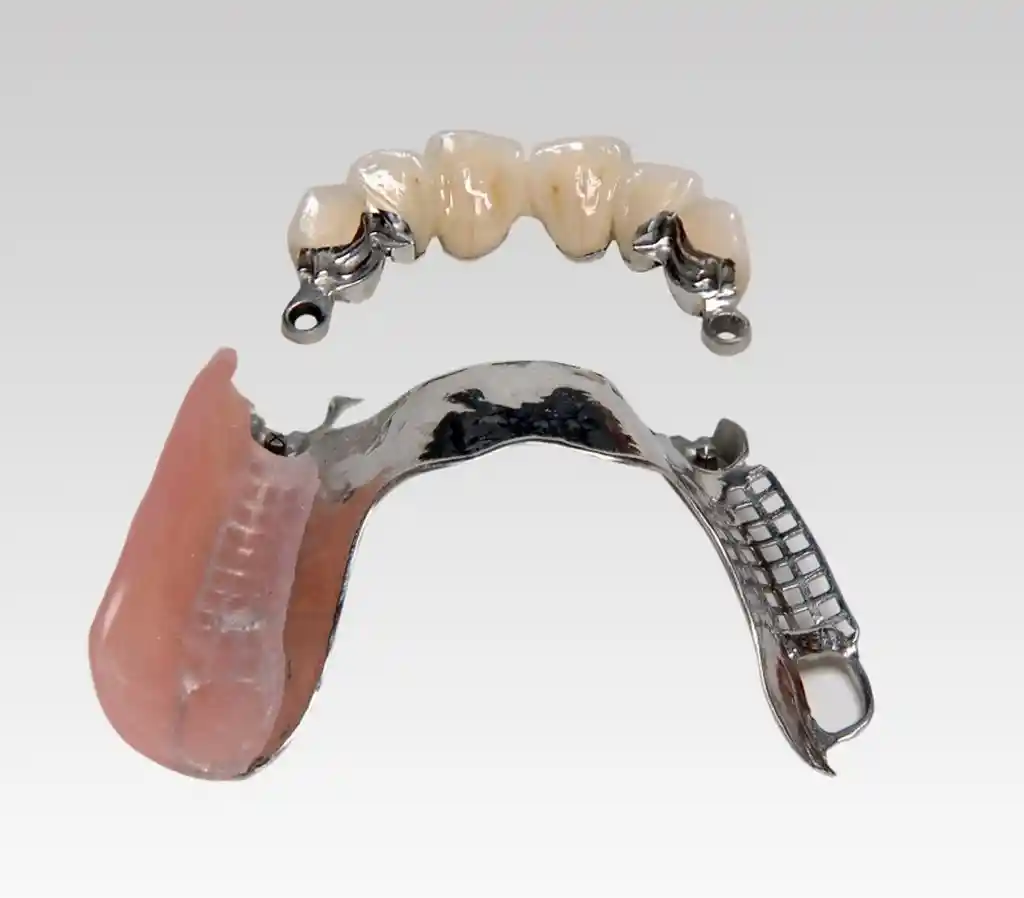
What are Precision Attachment Dentures?
Precision attachment dentures (popularly known as snap-on, slider, or clasp-free hidden dentures) are a semi-fixed, semi-removable (combined) dental restoration model applied in cases where multiple teeth have been lost but the mouth is not completely edentulous. This system consists of two main components: The fixed part comprises zirconium or porcelain crowns fabricated over the remaining natural teeth after they are reduced, and micro-projections called “male” (patrix) parts are mounted onto the proximal walls of these crowns. The removable part is the artificial framework replacing the missing teeth, and “female” (matrix) sockets that fit perfectly over the crown projections are placed inside this framework. When the prosthesis is inserted into the mouth, these two parts engage like a sliding lock, constructing a hidden mechanical retention line that is completely invisible from the outside.
- Combined Engineering: Integrated operation of fixed crown restorations and a removable partial denture base.
- Hidden Locking System: Establishing retention not on the tooth surface, but within invisible sockets inside the anatomical boundaries of the tooth.
- Passive Frictional Force: An adhesive friction coefficient that completely absorbs vertical and horizontal deflections of the appliance during chewing.
Who is Suitable for Precision Attachment Dentures?
Precision attachment partial denture applications are medically suitable for partially edentulous adult individuals who have gaps too wide to accommodate a bridge (fixed prosthesis), yet do not wish to use complete dentures. Since it harbors no surgical operation or intra-bone scalpel incisions, it is the most rational conservative alternative for patients who cannot undergo dental implant surgeries due to their general health status (uncontrolled diabetes, severe osteoporosis, blood clotting disorders) or bone volume limitations. It is the most ideal removable prosthesis philosophy for professionals with high aesthetic sensitivity who are disturbed by the appearance of metal clasps along the smile line.
- Those with Partial Tooth Loss: Patients who have completely lost their posterior molars and have no vital anchor tooth remaining at the back for a fixed bridge,
- Those Not Undertaking Implantation Risks: Individuals who are anxious about advanced surgical techniques or whose budget parameters fit conventional systems,
- Aesthetic-Oriented Consultants: Individuals who strictly do not want to see the metallic gray reflection of clasps while speaking or smiling.
In Which Situations are Precision Attachment Dentures Preferred?
Incorporating hidden-lock partial dentures into the clinical workflow as an alternative to traditional clasp dentures or implant-supported solutions is indicated according to the dental alignment geometry in the mouth and the periodontal ligament quality of the anchor teeth. Particularly in “free-end edentulism” cases where the chewing molars at the very back of the dental arch are completely lost and no vital teeth remain at the posterior to secure a bridge restoration, this method is utilized to preserve aesthetics by drawing power from the health of the anterior group teeth. The clinician rationally decides on this approach to elevate the patient’s bolus-grinding efficiency and protect the temporomandibular joint (TMJ).
The primary clinical conditions where precision attachment dentures are definitively preferred are as follows:
- When a collapse (aging wrinkles) begins in the facial cheek profile due to the absence of posterior molars while the teeth in the anterior region are preserved,
- In cases where patients using clasp dentures seek comfort because the clasps constantly shake and abrade the anchor teeth,
- In borderline cases where the surgical bone thickness does not accommodate the implant diameter and heavy operations like sinus lifting are medically contraindicated (objectionable),
- In patients with crowding, when it is desired to both correct existing teeth with aesthetic crowns and replace missing ones using the same appliance.
What are the Advantages of Precision Attachment Dentures?
The verified advantages of precision attachment engineering compared to traditional removable partial dentures do not merely create immediate visual privacy, but also directly elevate the stabilization power of the prosthesis and the periodontal lifespan of the anchor teeth. Lateral shearing (leverage) stresses placed on the enamel wall of the tooth, as seen in clasp systems, are completely eliminated in this model. Computerized precision laboratory elements ensure that the prosthesis transmits vertical hydraulic shocks directly down the long axis of the root during chewing, offering maximum bone protection.
- Superior Aesthetic Secrecy: No metal parts, clasps, or lines holding the prosthesis in the mouth are visible from the outside.
- Maximum Retention Quality: Thanks to the sliding lock mechanism, it does not launch out of the mouth while speaking, yawning, or chewing hard foods.
- Tissue-Friendly Margin Fit: Prevention of gingival bruising as a result of the prosthesis boundaries seating over the crowned finish lines with zero leakage.
- Protection of Anchor Teeth: Preventing mobility of the teeth thanks to distributing the load collectively (by splinting) across multiple crowned teeth.
How are Precision Attachment Dentures Applied?
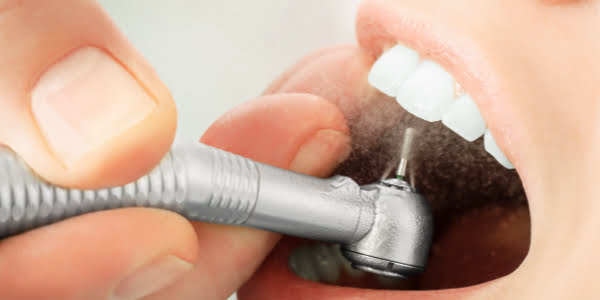
Precision attachment denture application is a highly technical combined prosthetic procedure carried out progressively in clinical environments subject to full sterilization protocols under comfortable anesthesia, integrating digital and mechanical device ecosystems. During the initial sessions, the perimeters of the natural teeth that will serve as anchors for the lock system are circularly reduced using diamond burs. Digital impressions captured with 3D intraoral scanners are transmitted to the laboratory; while porcelain crowns are manufactured for the teeth here, manufactured micro-sliders are welded to the margins of the crowns. After the crowns are permanently bonded in the mouth, the removable framework fitting perfectly into these sliders is tested intraorally to verify the locking mechanism.
- Preparation Phase: Numbing the anchor teeth and shaving them millimetrically to suit the crown thickness.
- Parallelometer Calibration: Adjusting the slider insertion axes (path of placement) in the laboratory to be perfectly parallel to each other; otherwise, the prosthesis will not seat in the mouth.
- Teflon Socket Replacement: The phase of placing flexible plastic matrices (couplings) that absorb wear inside the removable part.
- Locking Test: Checking the quality of the appliance seating in place with a snap sound when pushed into the mouth with finger pressure.
How is the Oral Evaluation Conducted Before Precision Attachment Dentures?
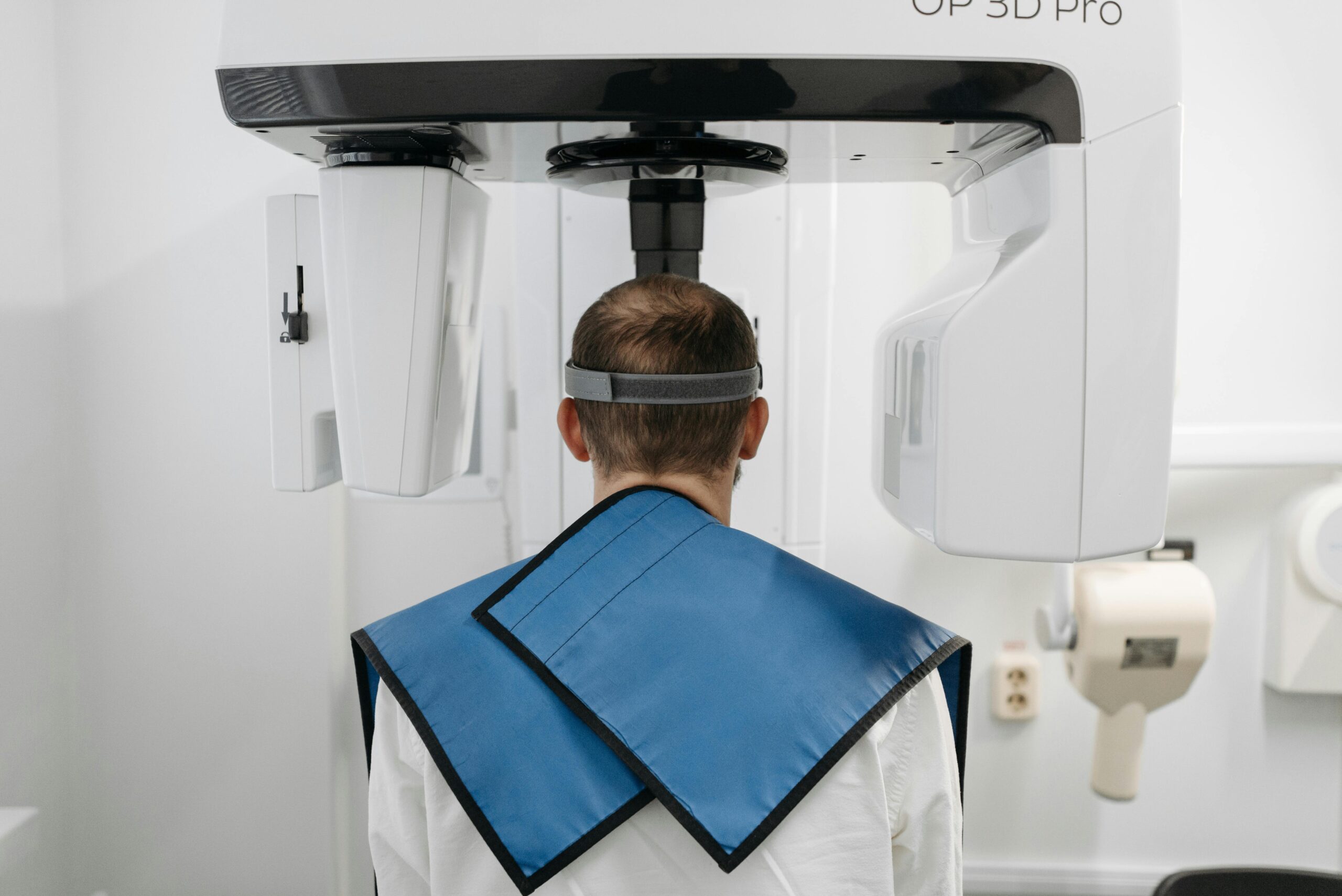
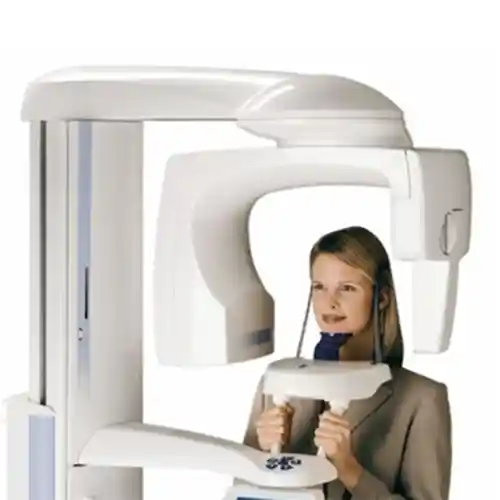
The clinical evaluation carried out before the surgical and prosthetic process schedule is finalized is the most vital analysis stage scanning the skeletal load-bearing capacity of the anchor teeth and guaranteeing long-term relapse-free permanence. During the examination, the physician inspects the root lengths, mobility degrees (mobility indexes) of the teeth to be selected as locking anchor points with the help of periodontal probes; because since the precision attachment system applies a high frictional force to the tooth, full bone support of the anchor teeth is a medical necessity. At this stage, digital panoramic radiograph data are scanned layer by layer to eliminate invisible root-tip abscesses and insidious cyst foci.
- Calibration of Anchor Count: The decision to crown at least 2 or 3 teeth in front of the gap by connecting them together (splinting) to balance the leverage force of the prosthesis.
- Mucosa and Ridge Analysis: Scanning the soft tissue thickness in the edentulous areas regarding stabilization where the prosthetic base will seat.
- Vertical Dimension Measurement: Determining whether the bite distance between the upper and lower jaws possesses sufficient vertical space to accommodate the micro-slider elements.
What are the Attachment Systems Used in Precision Attachment Dentures?
Precision attachments that provide retention and locking rigidity in combined prosthetic architecture are selected in different industrial designs according to the geometry of the defect, the structure of the dental arch, and the targeted friction coefficient. These attachments are manufactured from micron-level precision metals and flexible plastics by international medical brands (e.g., Rhein83, Bredent). Which attachment type is selected directly dictates the long-term non-dislodgement stability of the prosthesis.
The primary attachment systems actively utilized in modern prosthetic dentistry are as follows:
- Sliding (Anchor) Attachments: Systems that settle like a linear rail line on the proximal wall of the crown, locking with vertical friction,
- Snap-On (Ball/Autologue) Attachments: A micro-spherical head and a flexible plastic socket assembly wrapping around this head; it allows rotational movements,
- Sliding Lock (Sextant) Systems: Advanced engineering elements with a micro-latch that can be opened and closed by the clinician or patient once the prosthesis is in place,
- Telescopic Crowns: The technique of locking two crowns fitted into each other over the tooth (one bonded to the tooth, the other inside the prosthesis) via frictional force.
How are Precision Attachment Dentures Different from Clasp Dentures?
The most radical difference between precision attachment systems and old-type clasp (partial) dentures is the mechanical working principle of the retentive elements keeping the appliance in the mouth and their aesthetic reflection character. In clasp dentures, cast metal clasps wrap around the outer enamel perimeter of the tooth; this situation leads to grey metal lines appearing while speaking and stretches the tooth sideways with every chew, tearing periodontal fibers and loosening the tooth. The precision attachment system zeroes out all these mechanical damages and visual pollution with hidden snap-on sockets concealed inside the tooth. The comparison table below lists the clinical characteristics of both prosthesis classes:
| Clinical, Aesthetic, and Mechanical Comparison Parameter | Precision Attachment Denture (Snap-On/Sliding) | Traditional Clasp Dental Prosthesis (Partial) |
|---|---|---|
| Visibility from Outside and Aesthetic Quality | Flawless; the entire mechanism is hidden inside the tooth, metal is invisible. | Poor; grey metal clasps passing over the front and side teeth are visible. |
| Horizontal Pressure Applied to Anchor Teeth | None; it transmits the load vertically to the long axis of the tooth via occlusal rests, protecting the tooth. | High; it constantly deflects and shakes the anchor teeth sideways via leverage effects. |
| Necessity of Shaving / Crowning Natural Teeth | Mandatory; anchor teeth must be crowned so the lock system can be attached. | Not mandatory; clasps can wrap over perfectly sound natural teeth as well. |
| Retention and Power to Remain Stable in Mouth | Maximum level; snaps lock the prosthesis to the jaw, no deflection occurs. | Medium level; the back of the prosthesis can lift slightly with hard and sticky foods. |
| Ease of Renewing Worn Parts | Practical; loose internal plastic teflons are renewed within seconds chairside. | Difficult; if a metal clasp breaks, the prosthesis must be re-welded from scratch in the laboratory. |
How Do Precision Attachment Dentures Affect Aesthetic Appearance?
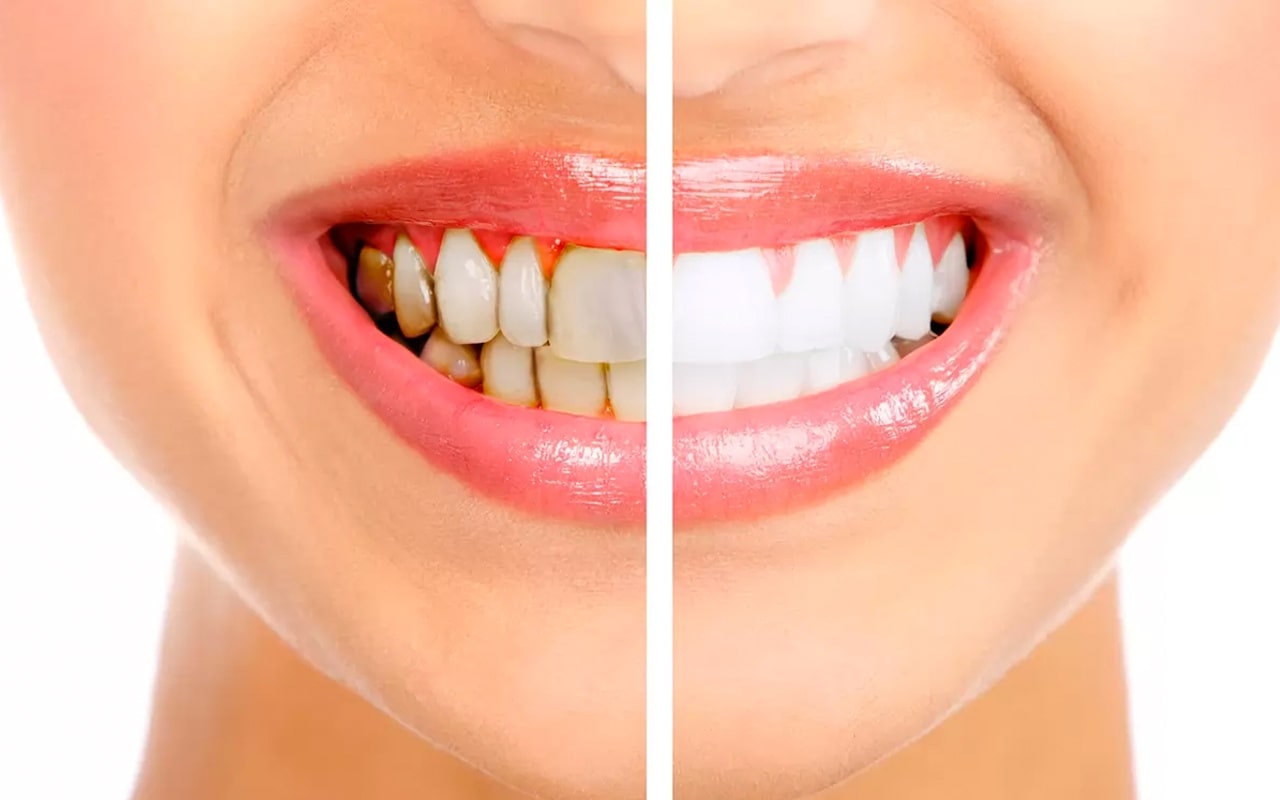
The greatest contribution provided by snap-on combined dentures to lower face facial aesthetics is completely camouflaging depressions (aging lines) developing along cheek and lip walls due to multiple tooth losses, while imparting an absolute natural enamel clarity to the smile line. Since those artificial grey metal lines, which are the greatest flaw of clasp systems, are completely eliminated in this design, the individual completely forgets that they carry a removable prosthesis in their mouth while speaking or smiling in public. Because the anchor teeth in the anterior region are also re-woven with zirconium crowns according to facial golden ratio lines, a symmetric illumination and smoothness are instantly imparted to the expression.
- Zero Metallic Reflection: Aesthetic purity thanks to hiding all locking components within the posterior blind spots of porcelain crowns.
- Cheek Volume Support: The luxury of stretching a sunken, hollowed cheek profile resulting from posterior molar absence by filling it from the inside with an acrylic framework.
How Do Precision Attachment Dentures Affect Oral Functions?
The greatest clinical support of the precision attachment prosthesis workflow on oral functions is elevating chewing efficiency to over 80%, carrying it far beyond traditional complete dentures. The sliding lock mechanism mechanically blocks the appliance from swaying sideways or moving vertically at the moment of chewing. The patient can comfortably grind foods like hazelnuts and tough meat without carrying concerns of painful ulcers being opened in the underlying tissues; fully crushing nutrients in the mouth alleviates the mechanical digestion load on the stomach, protecting the patient from chronic gastrointestinal disorders too.
- Secure Masticatory Crushing: Balanced transfer of chewing pressure to the periodontal fiber network of the crowned anchor teeth.
- Clear Speech Accord: Ensuring the tongue’s movement area is not restricted and letters exit without lisping, thanks to the ability to design thin palatal bars for the prosthesis.
How Does the Impression Taking Process Progress in Precision Attachment Dentures?
The impression taking stage in combined dentures is a highly delicate engineering phase that must reflect solid tooth preparation finish lines and flexible soft tissue margins into the mold with the same micron resolution. The procedure is executed in two stages: After teeth are reduced, the initial impression is captured and a “Custom Impression Tray” individual to the patient is manufactured in the laboratory. During the definitive impression session, functional waxes recording muscle movement lines are applied to the borders of this custom tray; the physician places the tray in the mouth and instructs the patient to perform swallowing and tongue extension gestures, errorlessly recording the boundary lines of the mobile mucosa onto fluid hydrophilic silicones.
- Precise Elastomer Selection: Capturing the impression with proprietary silicones that will not display shrinkage or deviation while plaster is poured in the laboratory.
- Verification of Axis Parallelism: The phase of analyzing the plaster model obtained from the impression on parallelometer devices that trace the lock insertion paths.
What are the Fabrication Stages of Precision Attachment Dentures?
The laboratory and clinical production chain of snap-on dentures includes an integrated workflow inspecting micro-errors that human hands might introduce using artificial intelligence algorithms. Fabricating the fixed crowns and manufacturing the removable framework are executed simultaneously and with millimetric coordination to lock onto each other; each step verifies the accuracy of the next production phase.
The main clinical and technical stages executed in the precision attachment denture fabrication schedule are as follows:
- Clinical Preparation: Circular shaving of anchor teeth under local anesthesia to trace finish lines.
- Double Impression Capture: Extracting a 1:1 negative mold of the prepared teeth and edentulous ridge lines with fluid silicone elastomers.
- Metal / Zircon Framework Try-In: Controlling the intraoral fit of the crown frameworks onto which manufactured precision attachment sliders are welded.
- Wax Tooth Try-In: Live testing of the artificial teeth arranged over the wax framework locked onto the sliders regarding occlusion and height.
- Glaze and Permanent Assembly: Permanent bonding of the crowns to the teeth and delivering the snap-on removable part by seating it into place with a click sound.
How Does the Acclimation Process to Using Precision Attachment Dentures Progress?
The first weeks following the delivery of the appliance constitute a dynamic neuromuscular adaptation phase where the intraoral mucosa, tongue muscles, and central nervous system learn to accept this sliding metal mechanism entering the mouth as an organic part rather than a foreign object. The initial feeling of fullness created by metal bars in the palate or temporary increases in salivary secretion are completely normal physiological reflex responses; the brain maps out the boundary lines of the prosthesis within an average of 2 to 3 weeks, automating muscle movements.
- The First Week (Tissue Adaptation Phase): Small sore spot ulcers that acrylic boundaries can cause on the gums are normal; they are instantly defused via clinician adjustments.
- Correct Insertion Rhythm Discipline: Avoiding attempts to close the snaps by biting on them with teeth while placing the prosthesis in the mouth; sliders can break, and the appliance must strictly be seated by pushing linearly with two-finger pressure.
- Soft Chewing Training: Practicing bilateral simultaneous chewing coordination during the first days with soft foods such as purees and vegetables instead of tough meats.
How Should Precision Attachment Dentures Be Maintained?
Daily care of snap-on combined dentures is a protective medical protocol that must be implemented with discipline every day to prevent microscopic fungal breeding along the acrylic framework and to protect the natural tooth integrity under the anchor fixed crowns around which the locking mechanism wraps. The most vital care rule is not to keep the removable part in the mouth uninterruptedly for 24 hours, strictly removing it before sleep at night to allow the mucosal bed to breathe; nourishment is compromised in tissues remaining under continuous pressure, accelerating insidious bone resorptions.
- Hygiene of Fixed Crowns: Meticulous cleaning of the lower finish line boundaries and slider entries of the porcelain crowns bonded in the mouth using a normal brush and dental floss.
- Night Rest Protection: The necessity of storing the removable framework taken outside the mouth in containers filled with clean water to prevent it from undergoing dimensional deformation by drying out.
- Eliminating Falling Risks: Since precision slider mechanisms include fine workmanship, conducting the process over a sink filled with water to avoid it slipping from hands and breaking during cleaning.
How Should Precision Attachment Dentures Be Cleaned?
Cleaning sliding dental appliances must be executed using gentle methods completely free of normal toothpastes and harsh chemicals like home bleaches and washing powders, which carry the risk of scratching the glaze layer of the acrylic. Micro-granules inside classic toothpastes sand down the acrylic surface to form invisible micro-scratches, and these areas accelerate stain retention in the future; therefore, cleaning should be managed with liquid soaps and soft-bristled specialized brushes.
- Non-Abrasive Liquid Soap Base: Gently brushing the appliance including the insides of the snap-on sockets via liquid soap foams under running cold water after every meal.
- Effervescent Cleaning Tablets: The phase of chemically verifying microbial purification by soaking the prosthesis for 15 minutes 2-3 times a week in antiseptic prosthesis tablets (e.g., Corega) dropped into a water container.
- Boiling Water Ban: To disinfect the prosthesis, it must strictly never be dropped into boiling water; high heat subjects the polymer structure to warping, and the locking mechanism will never engage together again.
How Long Does It Take to Prepare Precision Attachment Dentures?
The laboratory and clinical production schedule of precision attachment dentures necessitates a specific biological time hierarchy in medical literature, depending on the preparation accuracy of the parallel axes where the fixed crowns and removable framework interlock. Metallurgical welding of slider elements, porcelain sintering, and acrylic curing stages included, the total preparation time for a snap-on prosthesis spanning from the initial examination day to the permanent delivery moment usually encompasses 5 to 6 clinical sessions and is comfortably completed within 12 to 14 days on average.
- Technical Waiting Periods: Technical work durations averaging 2-3 days take place between sessions for adjusting sliding parallel axes with parallelometer devices in the laboratory.
- Temporal Efficiency: The process flows quite rapidly since those 3-4 month bone fusion waiting periods in surgical implant healing timelines are eliminated in this conventional system.
What are the Factors Affecting the Lifespan of Precision Attachment Dentures?
The ability of snap-on combined prostheses to remain inside the mouth for decades without losing locking power relates directly to the physiological changes the living “jawbone biology” and the health of anchor crowned teeth undergo over time, rather than the material of the appliance. The metal framework of the prosthesis does not structurally change dimensions; however, the living edentulous alveolar bone tissue underneath the prosthesis loses volume (resorbs) by a micron level every year due to aging and the continuous pressure exerted by the prosthesis. With bone resorption, the prosthesis base sinks down, the load shifts entirely onto the hidden snap-on sockets, and anchor teeth begin to loosen due to excessive vertical leverage pressure.
- Reline (Astarlama) Routine: The relationship of permanently closing gaps resulting from bone resorption by pouring new acrylic linings into loosened prosthesis bases once every 1-2 years, removing the load from the snap-on sockets.
- Functional Plastic Socket Replacement Discipline: The necessity of renewing the flexible plastic matrices inside the slider once a year in a clinical environment to maintain retention in case they wear out via friction.
How is the Fit Check Performed in Precision Attachment Dentures?
Periodic fit inspections following delivery include precise clinical calibration steps measuring the friction coefficient the prosthesis applies to anchor teeth and clarifying mucosal pressure lines. During the follow-up session, the physician maps out the balance of upper and lower jaw chewing contact points with the help of “Occlusal Articulation Papers.” If an excessively thick acrylic area squeezing soft tissue to open a sore spot wound is detected over the inner surface of the prosthesis, that region is shaved millimeter by millimeter with the help of diamond burs in prophylaxis motors, smoothly re-stabilizing tissue comfort.
- Elimination of Clasp Pliers: Unlike clasp dentures, retention calibration is performed not by bending metals, but by changing the hardness grades of the internal female plastic matrices (yellow, pink, green teflons).
- Passive Insertion Verification: Verification by the physician that the appliance does not shake anchor teeth while being inserted and removed from the mouth, sliding smoothly along a linear axis.
With Which Treatments Can Precision Attachment Dentures Be Applied Jointly?
Precision attachment denture technology can be planned within a combined synergy with other modern restorative and periodontal dental protocols to holistically elevate facial functional comfort, bone rigidity, and smile integrity. While underlying mucosal and dental foundations are reinforced through treatment, form defects in the upper layers can be treated simultaneously with different technologies; the combination schedule is designed according to the result of the detailed facial analysis to be performed by the specialist physician.
- Zirconium Aesthetic Crowns: Bringing white aesthetics to the pinnacle by weaving anchor teeth, which will serve as the binek points of the sliding system, with monolithic zirconium crowns exhibiting the highest light transmittance.
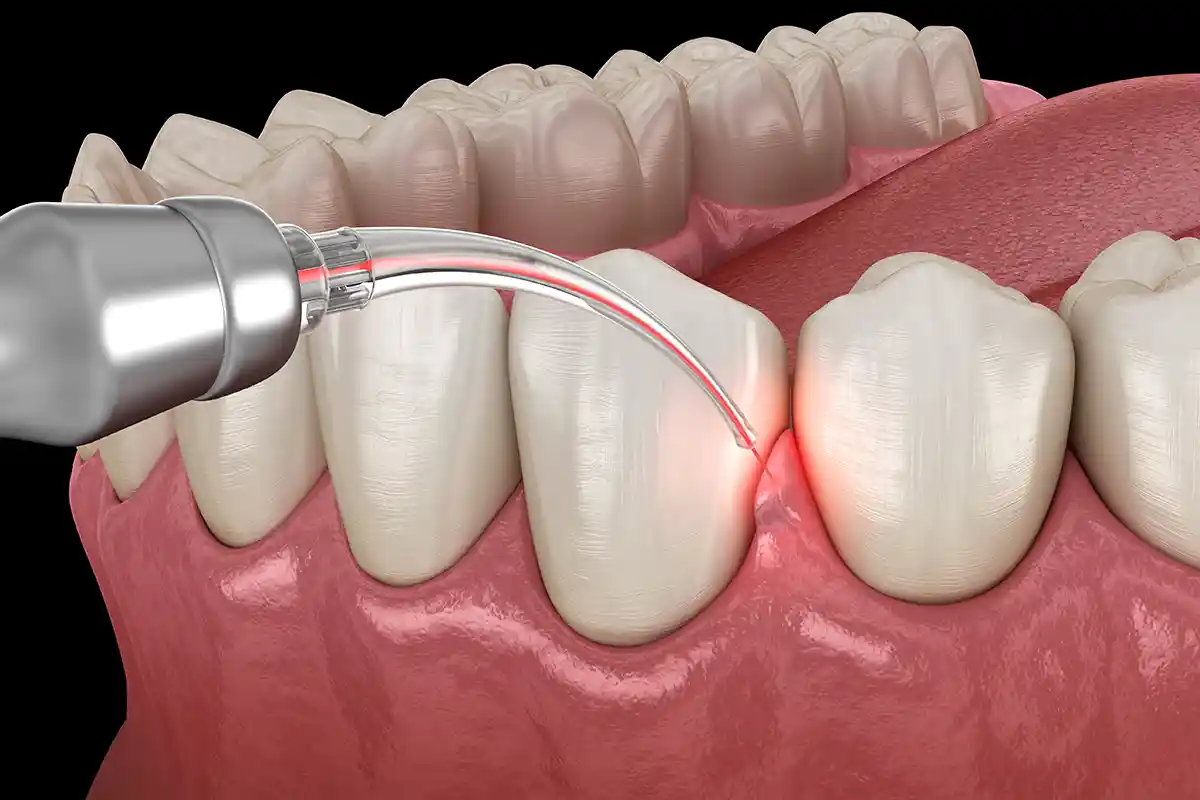
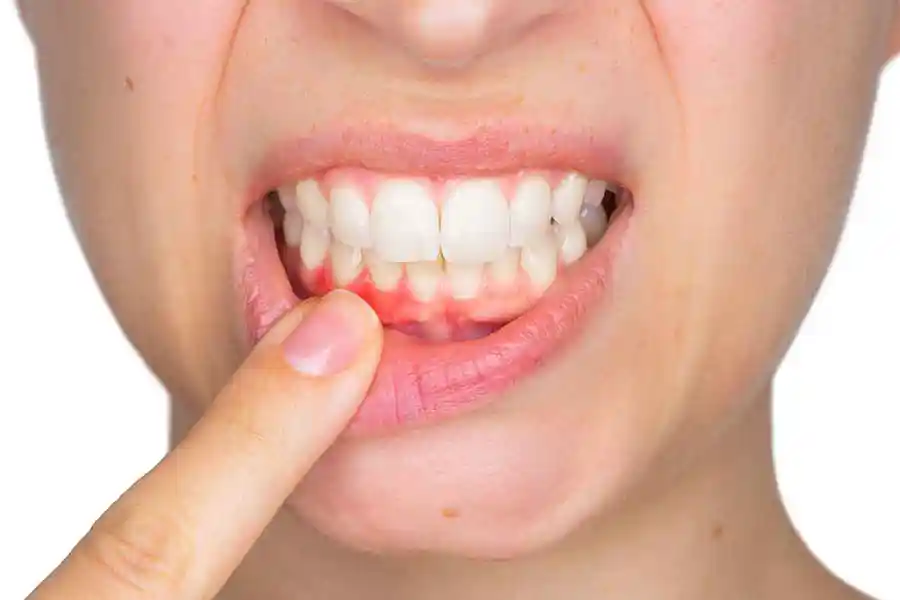
- Pink Aesthetics (Gingivectomy): Equalizing zenith points by cutting undulating asymmetries of the gums in the anterior region with lasers, followed by assembly of the combined prosthesis.
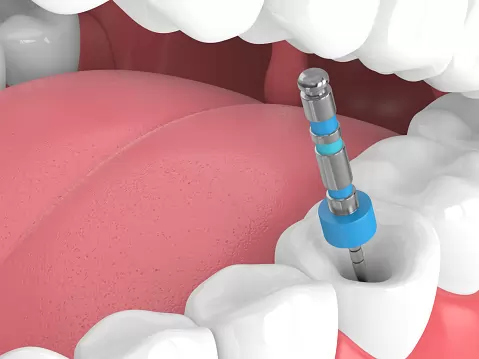
- Root Canal Treatment (Endodontics): The process of completing root canal treatments under a microscope to prevent sensitivity shock during the reduction stage of highly rotated or carious anchor teeth.
What are the Frequently Asked Questions About Precision Attachment Dentures?
Presented below are the most common practical concerns arising in the minds of consultants planning to restore multiple tooth losses with the comfort of hidden sliding snap-on dentures, along with their polyclinic medical answers:
Do those hidden snap-on sockets of the precision attachment prosthesis wear out and loosen over time, and will the prosthesis fall out of my mouth if they do?
Depending on the prosthesis being inserted and removed multiple times every day, the flexible plastic teflon sockets (matrices) inside the removable part can wear out over time due to mechanical friction, and the retention of the prosthesis (that tight snap power on the first day) may loosen slightly. This is a completely normal and expected wear and tear of a consumable material; during your 6-month routine checks, these plastic sockets are replaced with new ones within seconds by our physician chairside, painlessly and at a very economical cost, instantly regaining the firmness of the prosthesis on its first day.
Is it mandatory to reduce and crown my sound natural teeth to fabricate a sliding prosthesis, and does it damage my teeth?
Yes, it is a medical and technical necessity to place porcelain or zirconium crowns over anchor teeth and weld the slider to the metallurgical framework of this crown so that the precision attachment (snap-on) mechanism can stand in the mouth; therefore, your anchor teeth must be reduced circularly. However, this reduction process does not damage the tooth; on the contrary, it zeroes out fracture risks by bringing weakened teeth with multiple fillings under a protective crown shield.
Why is sleeping at night with my prostheses in my mouth objectionable according to medical and periodontology standards?
Removing the appliance from the mouth at night is the most critical periodontal rule dictating the lifespan of the jawbone and the authentic natural teeth around which the snaps wrap. Throughout the day, the prosthesis applies tons of dynamic pressure onto the mucosal bed and anchor teeth; if you do not remove the prosthesis at night and sleep with it in your mouth, the periodontal ligament networks of the anchor teeth remain under uninterrupted pressure for 24 hours and cannot be nourished with blood; vessels constrict, bone resorption accelerates, and teeth loosen and shed within a short time; tissue must breathe at night.
Will I feel a lot of pain while my teeth are being reduced during the fabrication stages of precision attachment dentures?
No, you will definitely not feel the slightest pain or discomfort. Strong numbing gels are applied to the gingival mucosa prior to the procedure, followed by the administration of local solutions at a speed suitable for tissue resistance via computer-controlled digital anesthesia units to ensure full desensitization; since nerve conduction lines are completely closed throughout the session, you only perceive the light touch of the instruments and the coolness of the water, and the procedure is completed with high comfort.
Can I return to my normal social and professional life immediately on the day a precision attachment denture is fitted?
Yes, combined prosthesis assembly and delivery appointments are completely local and non-invasive steps harboring no needles, scalpels, surgical wounds, or numbing cascades; therefore, the exact minute your prosthesis is fitted and locked into your mouth, you can return to your daily, academic, or professional life rhythm instantly and with a high confidence freshness; performing reading-aloud practices at home solely during the initial days to acclimate the tongue to the bars while speaking is recommended.
Who We Are & Panorama Ankara Oral and Dental Health
Panorama Ankara is a licensed oral and dental health center offering institutional health assurance to its patients by combining an academic expert staff and the latest global bio-technological digital infrastructure under a single roof across oral, dental, and maxillofacial surgery, advanced implantology, microscopic endodontics, periodontology, and specialized prosthetic dental treatment specialty branches. Attaching vital importance to bringing partially edentulous patients—who experience facial collapse and nutritional restrictions due to tooth loss, yet cannot undergo implant surgery due to systemic risks or skeletal anatomical boundaries—to permanent chewing comfort by centering “biomechanical vertical dimension” principles through evidence-based medical disciplines instead of condemning them to despair, our center operate conventional and precise Precision Attachment Denture (Çıtçıtlı / Sürgülü Protez) ecosystems presenting high success rates within the clinical prosthesis workflow.
Under the roof of Panorama Ankara, absolute sterilization, high patient safety, transparency, and honesty principles are operated with uncompromising determination by regulation in all diagnosis, radiological scanning, design, and laboratory production interventions. In our clinical practices, periodontal probing calipers analyzing the patient’s jawbone boundaries on an mm basis along with premium polymerization units errorlessly casting anatomical boundary lines are meticulously administered under the supervision of our expert prosthodontist staff. Our aim is not to impose fabricated complete dentures upon our patients that rub, fall, and stand artificial with generic shapes; but rather to analyze each individual’s facial golden ratio boundaries, lip smile lines, and jaw occlusion mechanics on a virtual screen during the preliminary examination, achieving maximum session comfort without harming surrounding soft tissues and sensitive vascular pathways, a sutureless comfort standard, and smooth partial restorations to be used with lifelong sealing and unwavering locking power. If you worry about surgical interventions or pain risks despite being tired of facial collapse brought by multiple tooth losses when looking in the mirror, and want to initiate your smart restoration process with scientific assurance in an expert institutional center environment; you can safely protect your health and smile integrity by contacting the expert staff of Panorama Ankara for your detailed intraoral examination and partial denture comfort.