
What is the All-on-4 implant technique?
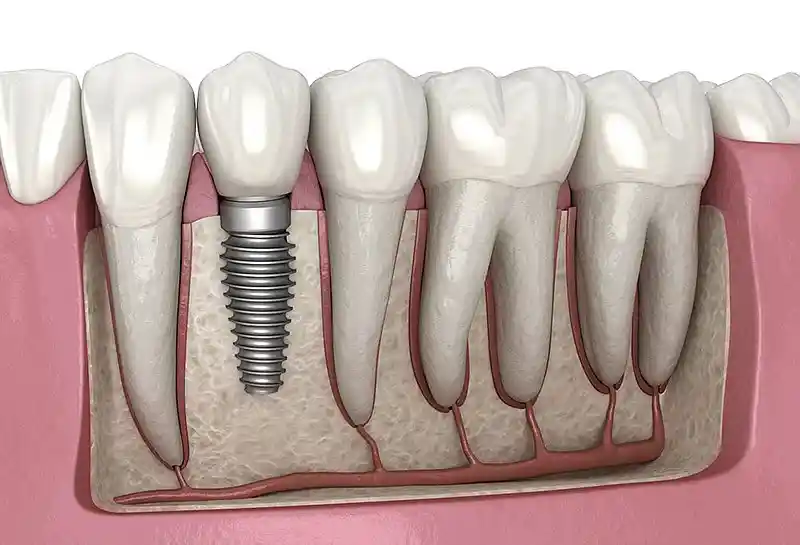
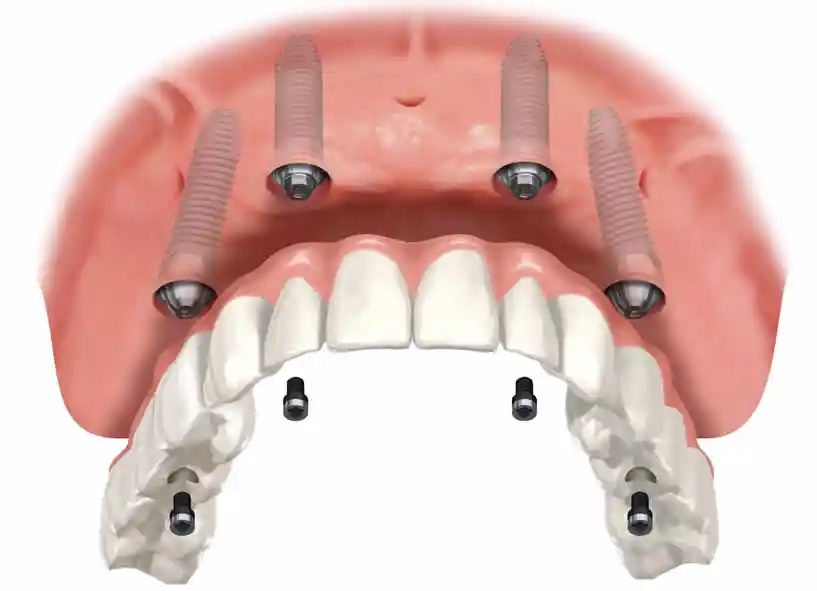
The All-on-4 implant technique is a modern implantology concept based on biomechanical principles that revolutionizes dentistry. While traditional methods require 6 to 8 implants to make a full jaw functional, this technique involves placing only 4 titanium implants at strategic points. Two straight implants are placed in the anterior part of the jawbone, and two tilted implants are positioned at angles of 30 to 45 degrees in the posterior part to avoid anatomical cavities (sinuses and nerve channels). This specialized angled placement maximizes the contact surface with the bone, ensures the implants remain much more stable, and allows the patient to have fixed teeth attached on the same day the surgery is performed.
- Angled Posterior Implants: Placing the posterior implants at an angle ensures the most efficient use of bone volume.
- Monoblock / Multi-Unit Abutment: Thanks to specialized angled abutments attached over the tilted implants, the plane where the prosthesis will seat is rendered completely parallel.
- Anatomical Protection: Eliminates the risk of damaging the maxillary sinuses in the upper jaw and the inferior alveolar nerve canal in the lower jaw.
| Component | Structural Feature | Clinical Function |
|---|---|---|
| Anterior Implants | Straight (90-degree) standard screws | Resists vertical loads in the anterior region of the jaw. |
| Posterior Implants | 30-45 degree angled specialized long screws | Prevents the need for bone grafting and provides posterior chewing support. |
In which situations is the All-on-4 implant technique applied?
The All-on-4 implant technique is applied in patients who have lost all teeth in their jaws, or in patients for whom the extraction of all teeth is clinically mandatory due to wobbling, widespread decay, or advanced bone loss. It is indicated particularly in patients who have severe vertical bone resorption (atrophy) in the posterior molar region and who do not want grafting procedures such as bone powder addition or sinus lifting for standard implants, or whose systemic condition cannot tolerate these lengthy surgeries. It is accepted as the primary solution protocol in the treatment of patients who have been using removable complete dentures (false teeth) for many years and complain about the denture constantly shifting or causing sore spots in the mouth.
- Widespread Periodontal Destruction: Situations where all teeth in the mouth have lost their function due to gum disease.
- Severe Posterior Atrophy: Absence of bone volume to place standard implants in the posterior parts of the dental arch.
- Total Edentulism: Patients who have no teeth at all and are dissatisfied with the comfort of removable prostheses.
| Clinical Situation | Anatomical Pathology | All-on-4 Approach |
|---|---|---|
| Maxillary Sinus Sagging | Sinuses descending due to upper jawbone resorption | The operation is completed graft-free by passing in front of the sinuses at an angle. |
| Mandibular Alveolar Resorption | Nerve becoming superficial due to thinning of the lower jawbone | Implants are placed in front of the nerve exit hole (mental foramen). |
Who is suitable for All-on-4 implant treatment?
This treatment method is medically suitable for every completely edentulous adult individual who has completed jawbone growth and skeletal development, and whose general health status permits dental surgical interventions. It can be safely applied with physician consultation in individuals possessing chronic illnesses such as controlled diabetes or hypertension. Patients with bone resorption (osteoporosis) are excellent candidates for this treatment provided that local cortical density solely in the anterior region of the jawbone is sufficient. Furthermore, it is a highly ideal procedure for patients who do not wish to remain toothless for months due to a busy work schedule and want to return to their social life with fixed teeth on the same day.
- Adults Who Have Completed Growth: Edentulous patients of any age group with stabilized skeletal structure.
- Those Unable to Undergo Graft Surgery: Individuals for whom advanced bone surgery is risky due to medical reasons.
- Those Seeking Rapid Results: Individuals wishing to regain chewing and aesthetic function with fixed teeth on the same day.
| Patient Profile | Suitability Level | Clinical Rationale |
|---|---|---|
| Those Receiving Active Radiotherapy to the Head-Neck Region | Not Suitable | Contraindicated due to bone healing and osseointegration risk. |
| Elderly Individuals Using Long-Term Dentures | Completely Suitable | Ends soft tissue trauma, improves quality of life. |
How is the All-on-4 implant technique applied?
The application of the All-on-4 implant technique is a complex procedure where surgical and prosthetic steps are executed with millimetric synchronization, usually completed within a single day. On the day of the operation, after the patient is placed under local anesthesia or sedation, teeth that are problematic and require extraction are extracted first. Subsequently, the jawbone is exposed, and 2 straight implants are placed in the front and 2 angled implants in the back according to pre-prepared surgical guides. Primary stability (tightness) values of the implants as they are placed into the bone are measured; if the target torque value (usually a minimum of 35 Ncm) is reached, the surgery is concluded by screwing fixed temporary prostheses made of acrylic material onto the implants.
- Surgical Stage: Tooth extractions, bone corrections, and torqueing 4 implants into the bone.
- Multi-Unit Connection: Attaching corrective intermediate pieces onto the angled implants.
- Same-Day Fixation: Screwing the temporary prosthesis to the implants in the laboratory or clinical environment.
| Application Step | Method Used | Process Output |
|---|---|---|
| Implantation | Angled surgical guidance instruments | Maximum mechanical retention to the bone is provided. |
| Screwing the Temporary Prosthesis | Trans-occlusal (through the tooth) screw system | Ensures the patient leaves the operatory with teeth. |
How is evaluation conducted before All-on-4 implant treatment?
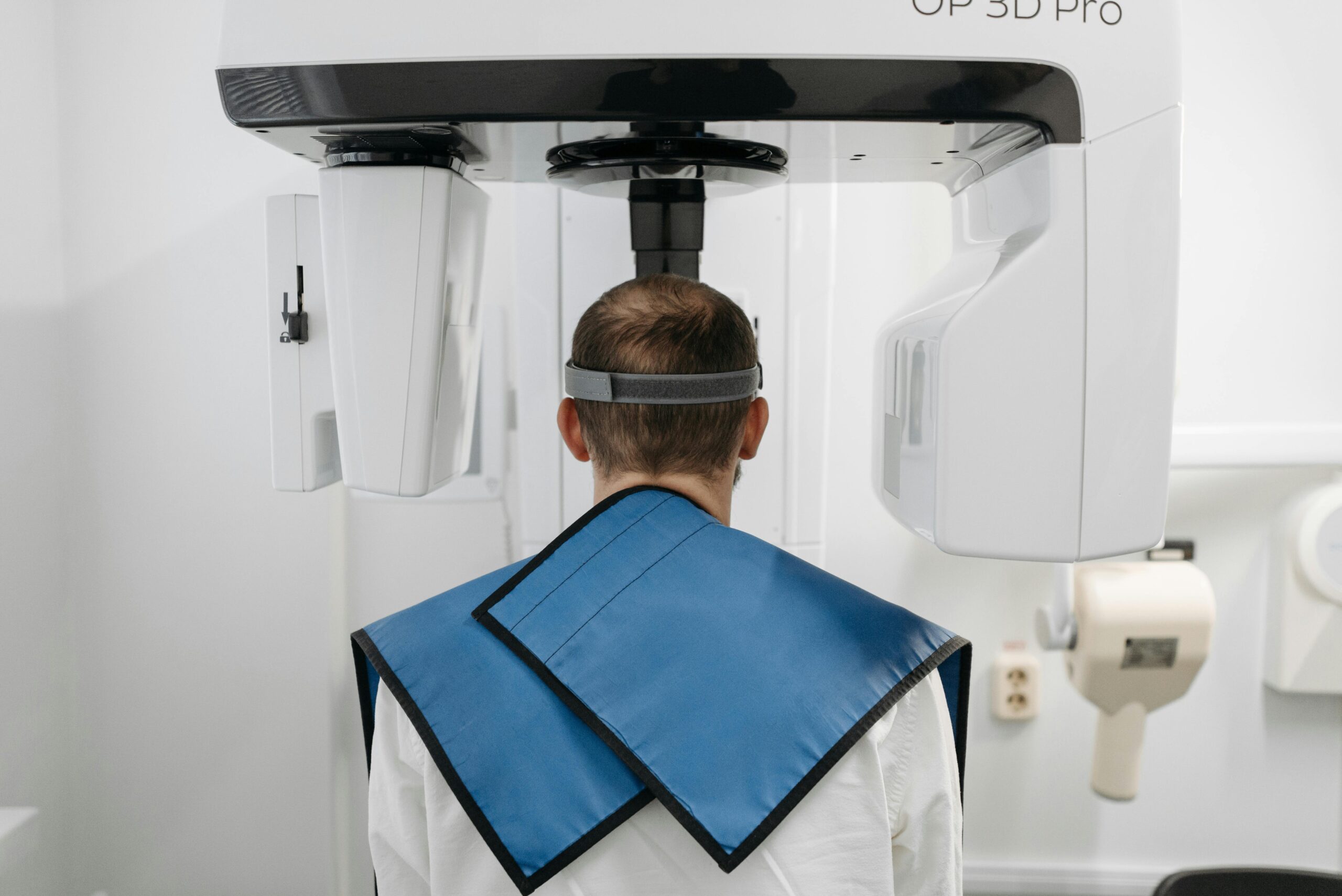
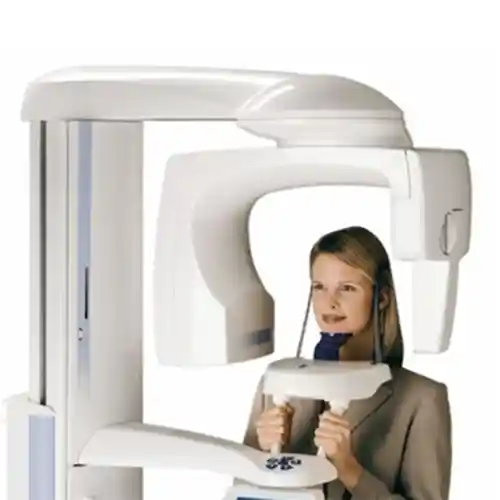
Clinical evaluation before the treatment is one of the most critical stages that directly determines the success of the operation. In this process, the patient’s general systemic status, drugs used regularly (especially bisphosphonates or anticoagulants), and the health of intraoral soft tissues are queried in detail after performing a detailed intraoral examination to check the general status of the gums, vertical distance between jaws, and occlusal relationships of existing prostheses. In radiological evaluation, 3D cone-beam computed tomography (CBCT) scans are taken to analyze the millimetric height, width, bone quality (density), and positions of anatomical structures of the jawbone in a computer environment.
- Medical Profile Examination: Detecting conditions that might pose an obstacle to surgery and anesthesia.
- Bone Volume Mapping: Selection of bone beds where implants will be placed with the help of tomography.
- Smile Line Analysis: Measurement of lip distances so that the junction line (lip line) of the prosthesis is not visible while speaking.
| Evaluation Tool | Parameter Measured | Clinical Necessity |
|---|---|---|
| 3D Dental Tomography (CBCT) | Bone thickness and nerve canal distances | Error-free selection of implant length and angle. |
| Digital Photography | Facial symmetry, lower face height, and lip support | Aesthetic and natural-looking prosthesis design. |
How is All-on-4 implant treatment planned?
Planning for All-on-4 implant treatment is based entirely on the principle of backward planning focused on the prosthesis. According to this principle, first, the ideal dental alignment and prosthesis design suitable for the patient’s face structure are executed digitally, then the positions of the implants within the bone that will carry this prosthesis are determined. The patient’s tomography data and intraoral scanner data are merged in specialized implant planning softwares. The physician simulates the parallel distribution of implants in the anterior region and the inclination degrees of angled screws in the back within this software; thus, all surprises that might be encountered during surgery are eliminated in advance.
- Backward Planning: Mathematical calculation of implant positions starting from prosthesis design.
- Angular Optimization: Determining whether posterior implants will be placed at 30 or 45-degree angles.
- Surgical Guide (Template) Design: Designing plates to ensure virtual planning is transferred to the mouth error-free.
| Planning Component | Technical Detail | Advantage Provided |
|---|---|---|
| Virtual Positioning | Implant simulation in CAD softwares | Zeroes out the risk of damaging critical anatomical structures. |
| Occlusal Alignment Plan | Centrifugal calculation of chewing forces | Guarantees balanced load-bearing on implants. |
Why are four implants used in the All-on-4 implant technique?
The reason for using four implants in this technique is the biomechanical engineering of achieving maximum mechanical resistance and stability with a minimum number of implants. Two straight implants placed in the anterior region of the jaw arch and two angled implants placed in the posterior region connect to each other with a wide base area, creating a “four-point support bridge” (trapezoidal arrangement). Thanks to this arrangement, the angled implants in the back spread chewing forces to the widest surface of the bone and prevent force from concentrating at a single point. Clinical studies have proven that 4 implants placed at correct angles can successfully carry all occlusal loads in a completely edentulous jaw without leading to bone loss.
- Polygon Effect: The support geometry created by four points preventing prosthesis wobble.
- Reduction of Leverage Arm: Thanks to angled screws extending posteriorly, the length of the cantilever extensions at the back shortens.
- Biological Conservation: Preserving bone biology by avoiding unnecessary implant positioning.
| Implant Position | Count | Mechanical Contribution |
|---|---|---|
| Anterior (Front Region) | 2 Pieces | Offers vertical resistance against cutting and tearing forces. |
| Posterior (Back Region) | 2 Pieces (Angled) | Absorbs grinding forces, prevents sagging in the posterior region. |
How is digital planning performed in All-on-4 implant treatment?
Digital planning is the highest technology phase that ensures the All-on-4 technique is applied flawlessly, rapidly, and comfortably. The patient’s intraoral structure is scanned in 3D using high-resolution intraoral scanners (optical impression) and merged with tomography (CBCT) data in specialized software. Thanks to these smart softwares, the surgeon and prosthodontist rotate the patient’s jawbone 360 degrees to virtually determine the micron-level rotation, depth, and angles of the implants within the bone. Following finalization of planning, patient-specific surgical guidance templates are produced using computer-controlled CAD/CAM milling devices or 3D printers, and this template is fitted to the patient’s mouth on the day of surgery, allowing implants to be screwed into the planned point without even a millimetric deviation.
- 3D Data Integration: Combination of soft tissue (STL) and bone (DICOM) data on the computer.
- Virtual Surgery: Simulating the operation on the computer screen before physically performing it.
- Guided Surgery: Zeroing the surgeon’s error margin thanks to templates emerging from the 3D printer.
| Software Phase | Technological Tool | Clinical Benefit |
|---|---|---|
| Data Overlay | DICOM and STL format merging softwares | Provides simultaneous viewing of bone and gum relationship. |
| Guide Plate Printing | Medical 3D Printers (SLA Technology) | Ensures implants are shifted to the millimetrically correct angle during surgery. |
How is temporary prosthesis application performed in the All-on-4 implant technique?
Temporary prosthesis application is one of the greatest advantages of the All-on-4 concept, aimed at protecting the patient’s social life. Immediately after the implants are surgically placed into the jawbone, intermediate pieces called “Multi-Unit” are screwed onto the implant bodies. The acrylic temporary prosthesis prepared in the laboratory prior to the surgery according to the digital impressions taken from the patient is modified in the mouth according to the positions of these intermediate pieces. The prosthesis is directly fixed to the implants via titanium screws, and the screw holes are closed with aesthetic filling materials; thus, the patient attains completely fixed, non-wobbling teeth while leaving the clinic.
- Immediate Loading: Attachment of the prosthesis within the first 2-24 hours after the surgery finishes.
- Screw-Retained System: Fixing the temporary prosthesis to the implants using screws without utilizing adhesive (cement), protecting tissue health.
- Soft Tissue Contouring: Temporary teeth aesthetically maturing the gums until the permanent prosthesis is fabricated.
| Prosthesis Type | Material Structure | Duration in Mouth |
|---|---|---|
| Temporary All-on-4 Prosthesis | Metal-supported or unsupported Acrylic | 3 – 6 Months (Throughout the osseointegration period) |
| Permanent All-on-4 Prosthesis | Porcelain on Zirconium or Titanium framework | Long years (Aimed for lifelong use) |
How is bone structure evaluated in All-on-4 implant treatment?
Evaluation of bone structure in All-on-4 treatment is handled multidisciplinarily, not just in terms of quantity (volume) of bone, but also in terms of quality (density). Bone density is measured radiologically on tomography in “Hounsfield Units” (HU) and classified as D1 (very dense), D2, D3, and D4 (very soft/spongy). In the All-on-4 technique, sufficient bone density and at least 10-12 mm of vertical bone height in the anterior region of the jaw (interforaminal or anterior maxillary area) are desired to accommodate angled posterior implants; during the surgery, the surgeon also clinically verifies bone quality by measuring the mechanical resistance (torque value) the bone exhibits while compressing the implant into the threads.
- Vertical and Horizontal Measurement: Checking the compliance of bone thickness with screw diameters.
- Mechanical Resistance (Primary Stability): The potential of the bone structure to grip the implant tightly at the first moment.
- Anatomical Proximity Analysis: Calculating a safe distance to the nerve and sinus floor in areas where bone has resorbed.
| Bone Class | Structural Feature | Clinical Status for All-on-4 |
|---|---|---|
| D1 – D2 Bone | Dense cortical and hard bone structure | Provides excellent grip, most ideal for immediate loading. |
| D4 Bone | Extremely porous, thin, and soft bone | Must be cautious; if necessary, wait without immediate loading. |
What are the advantages of the All-on-4 implant technique?
The clinical advantages offered by the All-on-4 implant technique contain solutions that maximize patient comfort in both the surgical phase and the prosthetic phase compared to traditional methods. Its greatest advantage is eliminating the bone graft (bone powder) addition surgery—and its associated additional cost and 6-month waiting periods—in patients with advanced bone loss. It significantly reduces the number of surgical interventions and the total treatment duration; completely edentulous patients attain fixed teeth within the same day, instantly regaining chewing and speaking functions. Furthermore, thanks to its specialized anatomical design that facilitates cleaning of the prosthesis, long-term hygiene maintenance is much more practical.
- Cost and Time Saving: A more economical solution with fewer implants and zero bone graft surgery.
- Same-Day Fixed Tooth Comfort: Ends the necessity of the patient using removable complete dentures even temporarily.
- Aesthetic Profile Support: Reduces facial wrinkles thanks to an infrastructure mimicking lost bone and soft tissue volume.
| Treatment Criterion | Traditional Full-Jaw Implant | All-on-4 Implant Technique |
|---|---|---|
| Required Number of Implants | 6 – 8 Pieces (per jaw) | Only 4 Pieces |
| Advanced Bone Surgery | Frequently mandatory (Graft/Sinus Lift) | Almost never required in any case |
How long does All-on-4 implant treatment take?
The total duration of All-on-4 implant treatment is scheduled in two main phases: the day of the surgical operation and the subsequent bone fusion (osseointegration) period. In the traditional workflow, the operation day, including extracting problematic teeth surgically, placing 4 implants, and screwing the temporary fixed prosthesis for a single jaw, takes an average of 2 to 3 hours. Following the operation, there is a 3-month waiting period for titanium screws to fuse to the bone; after this 3-month period is completed, the patient’s digital impression, design, and robotic production phases are smoothly finished within a short time frame of usually just 7 to 10 days before the permanent (definitive) zirconium or metal-porcelain prostheses are fitted.
- First Day Surgical Duration: Approximately 120 – 180 minutes for a single jaw.
- Bone Fusion Period: A 3-month waiting phase during which implants biologically unite with the bone.
- Permanent Prosthesis Fabrication Duration: The laboratory stage beginning after 3 months and taking approximately 1.5 – 2 weeks.
| Treatment Phase | Duration Spent | Clinical Procedure Performed |
|---|---|---|
| Phase 1 (Surgical Day) | 1 Day (3 Hours) | Implantation + Screwing Temporary Fixed Prosthesis |
| Phase 2 (Permanent Prosthesis) | After 3 Months (10 Days) | Impression taking, aesthetic try-ins, and fitting permanent teeth |
How does the healing process progress after All-on-4 implant treatment?
The healing process following the All-on-4 operation, although harboring slightly more edema than simple implants placed without flaps, progresses much more rapidly and comfortably compared to major operations involving bone grafting. The formation of swelling (edema) or slight bruising on the face, cheeks, and around the lips during the first 48-72 hours following the operation is a completely normal reaction expected due to tissue trauma; consistent cold compression (ice application) prevents the swelling from increasing; at the end of the first week, sutures and soft tissue wounds heal to a great extent, and facial swelling subsides. However, the true healing (biological adaptation) of the implants within the bone continues silently for the next 12 weeks.
- First 3 Days: Control of edema via cold compression and the rest period in the hospital.
- 7th Day: Clinical check-up, removal of intraoral sutures (if non-resorbable sutures were used), and soft tissue repair.
- 1st Month: The patient completely adapting to their temporary fixed teeth and chewing muscles acclimating to the new vertical dimension.
| Timeline | Expected Symptoms | Recommended Healing Support |
|---|---|---|
| Post-Op Days 1 – 3 | Mild leakage-type bleeding, feeling of pressure | Consumption of moist soft foods, analgesic usage |
| Post-Op Month 3 | Zero symptoms, fully natural tooth sensation | Apply to clinic for definitive permanent prosthesis impression |
What should be considered after All-on-4 implant treatment?
In the early period following the operation, specific rules must be meticulously adhered to in order to preserve implant integrity within the bone and not reduce the success rate. During the first 24 hours following the operation, activities such as spitting, rinsing, or drinking with a straw that could create negative pressure in the mouth and increase bleeding must strictly be avoided. Prescribed antibiotics, painkillers, and anti-inflammatory medications must be used without omission according to the hourly schedule specified by the physician; to ensure oral surgical incision lines do not become infected, the use of cigarettes and tobacco products must be terminated completely throughout at least the early healing period; furthermore, exhausting activities such as heavy sports and pressure-exerting activities like straining and lifting heavy loads should be avoided for the first few weeks.
- Oral Hygiene Control: Brushing should not be performed on the first day; specialized antiseptic mouth rinses should be started from the second day.
- Sleeping Position: Sleeping in a double-pillow position so the head remains erect/elevated for the first two weeks to reduce edema.
- Not Straining the Prosthesis: Not intervening in suture areas under the temporary fixed teeth with toothpicks or hard objects.
| Area of Application | Correct Conduct to be Performed | Incorrect Conduct to Avoid |
|---|---|---|
| Wound Care | Gently rinsing the mouth with lukewarm water after every liquid food | Constantly checking the wound with fingers or tongue |
| Physical Activity | Light-paced short walks | Entering excessively hot and pressurized environments such as saunas, Turkish baths |
How should nutrition be after All-on-4 implant treatment?
Nutrition management in All-on-4 treatment is one of the clinical phases where the most discipline is required, because the teeth fitted on the day of surgery are “temporary” and the implants have not yet biologically united with the bone. For the first 3 to 4-month period following the operation, the patient must strictly apply a “Soft Diet”; foods that can be easily crushed with a fork and do not create chewing loads (yogurt, puree, soups, soft omelet, well-cooked vegetables, fish meat) should be consumed. Hard and fibrous foods such as nuts, tough meat, apple, chips, or dried bread can impose excessive micro-forces on the implants and disrupt the fusion process inside the bone, leading to implant losses; however, after permanent teeth are fitted, all types of solid foods can be consumed freely.
- Clear Liquid Period (Days 1-15): Bone broth soups, compotes without pulp, freshly squeezed strained fruit juices.
- Soft Puree Period (Days 15-30): Blended vegetable meals, custard, meat in puree form.
- Calorie Tracking: High-protein and high-calorie nutritional regimen to prevent weight loss and muscle wasting.
| Post-Op Period | Food Consistency | Forbidden Foods |
|---|---|---|
| First 1 Month | Completely pulpless Liquid / Fluid | Bread, meat, any solid food requiring chewing |
| 2nd Month | Soft Solids (Crushable with a fork) | Nuts, chips, hard-shelled or fibrous foods |
How should maintenance of All-on-4 implant-supported prostheses be performed?
The maintenance of All-on-4 implant-supported fixed prostheses requires the use of significantly more delicate instruments and a different methodology compared to natural teeth. Since these prostheses are fixed entirely to the jawbone, food remnants can accumulate in the bridge-underneath areas where the base of the prosthesis meets the gums. For cleaning, after the prosthesis surfaces are brushed at least twice a day with soft-bristled toothbrushes, an “Oral Irrigator” (Waterpik) must definitely be used; pressurized water sprayed by the oral irrigator cleans the unreachable areas under the prosthesis flawlessly. Furthermore, specialized thick-bodied implant-supported dental floss (Superfloss) must be passed under the bridge to purify the bacterial plaque along the implant necks.
- Oral Irrigator Usage: Providing mechanical cleaning by spraying water onto the prosthesis-gingiva junction line.
- Superfloss Dental Floss: Cleansing spaces underneath the bridge by scraping via the spongy thick middle body.
- Interdental Brushes: Plaque cleaning of narrow indentations around implant support pillars.
| Maintenance Tool | Application Method | Daily Frequency |
|---|---|---|
| Soft Standard Brush | Sweeping the outer and inner surfaces of the prosthesis facing the street | Twice a day |
| Oral Irrigator (Water Flosser) | Spraying water at medium pressure onto the gum line under the prosthesis | Every night before sleep (Mandatory) |
What are the factors affecting the long-term success of All-on-4 implant treatment?
The ability of All-on-4 implant-supported prostheses to remain safely inside the mouth for a lifetime depends on the stability of many clinical and biological factors. The most decisive factor is the patient’s daily oral hygiene habits; diseases termed “peri-implantitis” that develop around poorly cleaned implants lead to bone destruction and can collapse the system. The patient’s level of cigarette consumption directly affects bone nourishment around the implant by disrupting blood flow in capillaries. Furthermore, the presence of uncontrolled bruxism (night teeth clenching and grinding) in the patient, as it imposes excessive mechanical stress on titanium screws, requires the regular use of night guards or protective splints and adherence to regular 6-month physician follow-ups in long-term tracking.
- Peri-implant Health: Keeping the bone and gingival tissue surrounding the implant away from bacteria.
- Cigarette Consumption Amount: Daily intensive tobacco usage shortening implant lifespan by half.
- Preservation of Occlusal Balance: Controlling and balancing worn prosthesis surfaces by the physician over time.
| Risk Factor | Negative Long-Term Effect | Clinical Precaution Strategy |
|---|---|---|
| Poor Oral Hygiene | Infection, gum recession, and implant loss | Professional dental hygienist check-ups (every 6 months) |
| Bruxism (Teeth Clenching) | Framework fracture or implant body cracking | Masseter Botox or hard night guard applications |
What are the differences between All-on-4 implant technique and traditional implant treatment?
The fundamental differences between the All-on-4 implant technique and traditional implant treatment concentrate on the number of implants used, the angles at which implants are placed into the bone, and the duration the patient remains edentulous. In the traditional method, 6 to 8 implants are placed into a completely edentulous jaw at entirely straight (90-degree) angles, and advanced bone surgeries (sinus lift, bone block transplant) are applied if there is no bone in the posterior regions; whereas in the All-on-4 technique, only 4 implants are used, and these major surgeries are bypassed by placing the posterior ones at an angle. While the patient waits entirely toothless or with a removable temporary prosthesis for 3-6 months for the implants to fuse to the bone in the traditional treatment, the patient attains fixed teeth on the same day the operation is performed in the All-on-4 technique.
- Implant Count Difference: 6-8 screws in traditional treatment vs. only 4 screws in All-on-4 treatment.
- Surgical Complexity: High frequency of bone powder and sinus surgery in traditional treatment vs. graft-free in All-on-4.
- Prosthesis Concept: While temporary teeth are mostly removable in traditional, they are fixed from the very first day in All-on-4.
| Criterion | Traditional Implant Treatment | All-on-4 Implant Technique |
|---|---|---|
| Total Treatment Duration | 6 Months – 1 Year (Including bone grafts) | Approximately 3 – 3.5 Months (Definitive Solution) |
| Tooth Status on Surgery Day | Patient remains temporarily toothless or uses a plate | Fixed temporary teeth are screwed on the same day |
How does All-on-4 implant technique support chewing and speaking functions?
The All-on-4 implant technique reaches the closest level to natural tooth quality in oral functions thanks to its rigid (non-wobbling) structure screwed directly to the jawbone. Since it does not possess a wide acrylic vault closing the palate entirely as in removable complete dentures, the sense of taste and swallowing reflex return to their natural form in the upper jaw. Since the fixed prosthesis does not move at all during chewing, patients can grind foods such as nuts, tough meat, or apples comfortably without carrying fear of pain, stinging, or the prosthesis shifting; this rational functional support enables the digestive system to work healthily. In speech function, air leaks are prevented thanks to the prosthesis providing full support to lip and cheek muscles, and sounds produced by the tongue striking the teeth (phonetics) are pronounced smoothly without lisping.
- Chewing Stabilization: Ability to consume hard foods comfortably by zeroing out the risk of the prosthesis shifting.
- Open Palate Comfort: Speaking comfort and increase in taste sensation by leaving the palate exposed in the upper jaw prosthesis.
- Facial Aesthetic Support: Mechanical improvement of diction by correcting the sunken lower face height (vertical dimension).
| Function | Former Removable Plate Status | Functional Status After All-on-4 |
|---|---|---|
| Chewing Force | Low (Swallowing without fully grinding food) | High (Easily crushing meat and hard vegetables, close to natural tooth) |
| Diction / Speech | Lisping/whistling sounds due to prosthesis shifting | Clear, stable, and fluent speech without snagging |
What are the frequently asked questions about the All-on-4 implant technique?
Can the All-on-4 surgery be performed under general anesthesia?
Yes, All-on-4 operations can be performed comfortably under local anesthesia in clinical conditions, or they can be successfully realized under sedation or general anesthesia for patients who have dental phobia (fear of the dentist), exhibit excessive gagging reflex, or who strictly do not wish to remember the surgical process.
How long do temporary teeth fitted after surgery stay in the mouth?
Temporary fixed teeth fitted on the day of surgery remain in the mouth for the first 3 months, during which the implants provide full biological integration with the bone. After this duration is complete and implant stability is verified radiologically, the temporary teeth are removed from their screws and transition is made to the permanent definitive prosthesis fabrication stage.
What is the lifespan of All-on-4 implants, do they fall out in the future?
All-on-4 implants are designed to remain in the mouth for a lifetime, provided that full attention is paid to oral hygiene, tobacco is not used, and regular 6-month physician controls are not neglected. However, a risk of loss can emerge for any implant in situations of severe degradation of systemic health or chronic care neglect.
From what material are the permanent teeth in the superstructure fabricated?
Permanent All-on-4 prostheses fabricated at the end of the 3-month waiting period are produced using zirconium crowns or high-strength porcelain (ceramic) teeth over a titanium or computer-aided CAD/CAM milled cobalt-chrome metal infrastructure, according to the patient’s aesthetic expectations and budget.
| Question Focus Area | Clinical Answer Summary |
|---|---|
| Anesthesia Options | Local anesthesia, Conscious Sedation, or General Anesthesia are suitable. |
| Permanent Prosthesis Material | Generally biomimetic Zirconium or Metal-supported Ceramic systems. |
| Treatment Age Limit | There is no upper age limit; it can be performed on any elderly person whose general health status is suitable. |
Who We Are? Panorama Ankara Oral and Dental Health Polyclinic
As Panorama Ankara, we provide high-standard healthcare services in craniofacial surgery and advanced implantology by combining world-class digital dental laboratory infrastructure and an expert academic physician staff. In our modern clinic in Ankara, we manage all diagnostic, virtual planning, and prosthesis production processes of our patients requiring the All-on-4 implant technique in an integrated manner under a single roof. With our three-dimensional cone-beam computed tomography (CBCT) devices and high-precision intraoral optical scanners, we transfer our patients’ jaw structures entirely to a digital environment, and produce custom surgical guide templates that zero out the margin of error during surgery using computer-aided implantology softwares (Guided Surgery); we make it our fundamental mission to return our patients to their fixed, functional, and aesthetically-ready new teeth within the same day without exposing them to lengthy surgical waiting periods.
- Full Digital Workflow: 3D tomography-supported virtual All-on-4 planning and CAD/CAM prosthesis production.
- Same-Day Fixed Tooth Guarantee: Screwing the fixed temporary teeth prepared in our laboratory immediately following the surgical operation.
- Multidisciplinary Expert Staff: Joint case management by Oral and Maxillofacial Surgery specialists and Prosthetic Dental Treatment (Prosthetics) specialists.
| Clinic Name | Service Focus Area | Technological Infrastructure Applied |
|---|---|---|
| Panorama Ankara Oral and Dental Health | Ankara | 3D Intraoral Scanners, Digitally Titrated CAD Design Systems |