

Which Teeth Are Inlay and Onlay Dental Restorations Applied To?
In modern dentistry, conservative approaches aim to keep the natural tooth tissue in place as much as possible. The loss of tooth structure can sometimes be too large to be solved with a simple filling, but too limited to require reducing the entire tooth and placing a crown. This is where inlay and onlay restorations, also known as “ceramic fillings,” come into play.
Application Area: Which Teeth Are Prioritized?
Inlay and onlay restorations, by their nature, perform exceptionally well in areas subjected to high chewing pressure. Therefore, the teeth located in the back of the mouth are the primary target area for this application. Back teeth are subjected to significant mechanical forces during the food grinding process. Traditional composite fillings are likely to wear down or cause micro-leakage over time under these forces. Inlays and onlays, prepared in a laboratory environment, offer a structure resistant to this pressure.
1. Molars
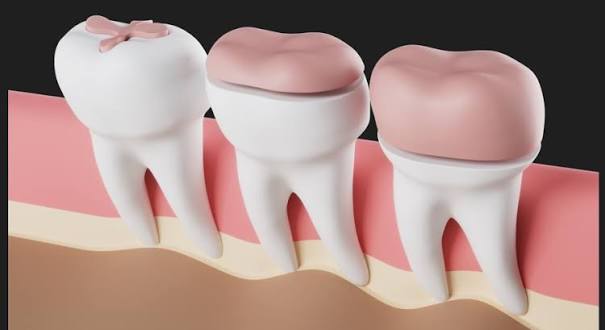
Molars, located at the very back of the mouth, are the center of chewing function. The small peaks called cusps on these teeth can be damaged over time due to decay or trauma. If the damage does not include the cusps of the tooth, an “Inlay” restoration is preferred; if it is large enough to include one or more cusps, an “Onlay” restoration is preferred. The large surface area of molars allows porcelain or reinforced structures to bond perfectly to the tooth.
2. Premolar Teeth
Premolar teeth are located in a transition zone that is both aesthetically and functionally important. Because they are part of the smile line, the color and light transmittance of the restoration used on these teeth are critical. Inlays and onlays, thanks to their ceramic structure that mimics natural tooth enamel, provide much more aesthetic results than metal-supported systems. Especially the perfect creation of contact points (interfaces) with adjacent teeth is vital to prevent food accumulation in premolar teeth.
Application Criteria and Selection Table
When deciding which method to use for restoring a tooth, dentists consider certain parameters. The following table summarizes the key differences in restoration selection:
| Situation Analysis | Inlay Application | Onlay Application |
|---|---|---|
| Damage Area | Central, pitted area of the tooth | Large area including the apex of the tooth |
| Material Loss Rate | Medium level (30-50%) | Advanced level (50% and above) |
| Force Distribution | Provides support in the vertical direction | Horizontal and Protects the tooth against vertical forces |
| Which Tooth Group? | Molars and Premolars | Molars and Premolars |
Why are they preferred over fillings in these teeth?
When the loss of substance in the posterior teeth increases, the capacity of the filling to hold the tooth decreases. While the filling material hardens, it shrinks slightly; this shrinkage can put pressure on the tooth walls in large restorations, leading to microscopic cracks over time. Inlay and onlay restorations, on the other hand, are prepared outside the mouth (in the laboratory or digitally), so this shrinkage problem does not occur. The fit with the tooth is as precise as one-tenth of a millimeter.
Situations Where the Application Provides Advantages:
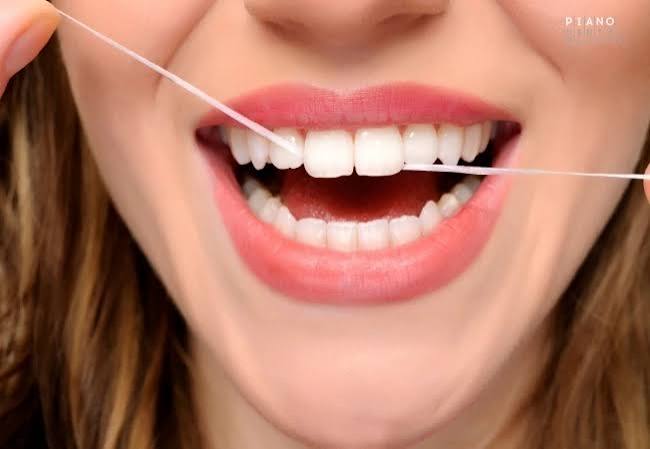
- Interproximal Caries: In cases of tooth loss on the surfaces facing each other, a smooth surface suitable for flossing is created.
- Teeth with Root Canal Treatment: In teeth that become fragile after root canal treatment, it protects the tissue and keeps the tooth intact.
- Tooth Deformities: Used to correct deformities caused by congenital conditions or wear.
- Replacing Old Fillings: It is the healthiest alternative to very large and leaking old amalgam or composite fillings.
Criteria: Can it be Applied to Every Tooth?
For the success of inlay and onlay restorations, it is essential that a certain amount of healthy tooth tissue is preserved. If the portion of the tooth remaining above the gum line is completely destroyed, a full crown may be more suitable. However, if at least two walls of the tooth are healthy, specialists generally prefer to protect the tooth with an onlay rather than reducing its size. This maximizes the biological lifespan of the tooth.
In conclusion, if you have significant loss of tooth structure, functional weakness, or aesthetic concerns in your posterior molars…If this is the case, your dentist will evaluate the inlay and onlay methods. These restorations are considered one of the most durable and biocompatible solutions offered by modern technology.