

How to Ensure Long-Term Protection After Orthodontic Treatment?
Orthodontic treatment is a long and demanding journey undertaken to address individuals’ aesthetic concerns and provide them with a functional chewing system. The use of brackets, sometimes even years, the wearing of clear aligners, and regular check-ups result in a straight tooth alignment, which is a great source of success and happiness for both the patient and the dentist. However, the day the brackets are removed or the last aligner is fitted is not the end of treatment; it is actually the beginning of the “protection” phase. This period, called “retention” or “reinforcement treatment” in dental literature, is critically important for ensuring the permanence of the achieved result. Because the human body is dynamic, not static. Bone structure, muscle functions, and the biological memory of teeth tend to change over time. If the necessary precautions are not taken, it is a scientific fact that teeth tend to return to their old positions (relapse).
Biological Fact: Why Do Teeth Want to Return to Their Original Position?
To understand the importance of post-orthodontic maintenance, it’s necessary to understand the biological basis of tooth movement. Teeth don’t remain fixed like concrete within the jawbone; they are suspended from the bone by elastic fibers called “periodontal ligaments.” When orthodontic force is applied, these fibers stretch, and the bone remodels, allowing the tooth to move to its new position. However, once treatment is complete, it takes a long time for certain tissues, particularly the “supracrestal fibers” located just below the gums, to adapt to the new position and lose their elasticity. These fibers, like a stretched rubber band, tend to pull the tooth back to its original position as soon as the force is removed. This is called “periodontal memory.”
Furthermore, the bone tissue around the tooth roots continues to harden and complete its mineralization for some time after the brackets are removed. During this process, teeth are extremely sensitive to the pressure balance created by the muscles of the lips, cheeks, and tongue. Swallowing patterns, tongue position, or changes in facial muscles due to aging can threaten the stability of teeth. Even in individuals who have never received orthodontic treatment, there is a tendency for physiological crowding in the anterior region of the lower jaw to develop with age (physiological mesialization). Therefore, long-term protection is necessary not only to prevent recurrence but also to build resistance against the natural effects of aging.
What is Retention Treatment?
Retention treatment is a passive treatment process that begins as soon as active tooth movement ends and aims to keep the teeth stable in their new positions. At this stage, no forces are applied to move the teeth; instead, stabilizing mechanisms are used to hold the teeth in place. These mechanisms are called “Retainers” (Retention Devices). The retainer protocol, which the dentist will determine according to the difficulty of the case, the type of initial disorder, and the patient’s age, determines the sustainability of the treatment’s success. Today, the modern understanding of orthodontics embraces the concept of “lifelong retention”. Therefore, it is accepted that if you want your teeth to remain straight, protective measures must continue for life in some way.
Fixed Retainers: Invisible Safety Line
The areas where teeth are at the highest risk of shifting are usually the front six teeth of the upper and lower jaws. The most common method used to ensure stability in this area is the “Fixed Lingual Retainer”. This procedure involves attaching a very thin and passive wire to the tongue side (back) of the teeth, which is completely invisible from the outside. Fixed retainers are considered the gold standard because they eliminate the patient’s responsibility of putting them in and taking them out, and provide 24-hour uninterrupted protection. The patient does not feel the wire, it does not affect their speech, and it does not create an aesthetic concern.
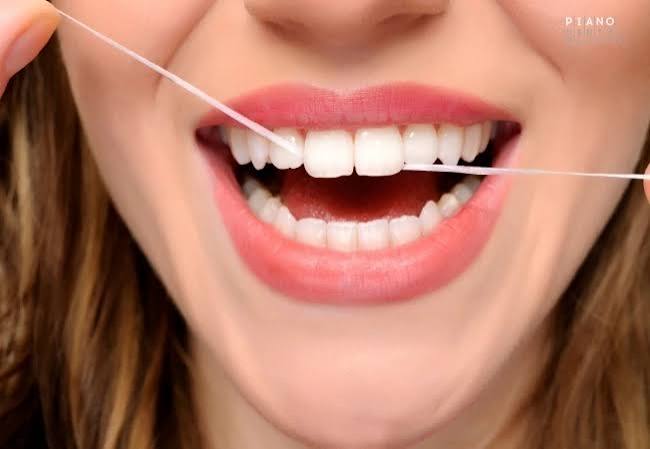
However, the presence of fixed retainers requires extra care regarding oral hygiene. Plaque accumulation around the wire and between the teeth can pave the way for tartar formation and gum problems. Therefore, it is essential for individuals with fixed retainers to regularly clean under the wire using special dental floss (superfloss) and interdental brushes. There is also a risk of the adhesive on the wire breaking when biting hard foods with the front teeth. If the wire breaks or becomes dislodged, it is vital to consult a dentist immediately to ensure the continuity of the braces, as the teeth can move rapidly.
Removable Retainers: Clear Aligners and Palatal Appliances
In addition to fixed braces, or in some cases alone, removable appliances that the patient can put on and take off are also used. The most common of these are clear retention aligners known as “Essix Aligners”. These aligners are exact replicas of the final teeth and hold the teeth in a casing.They prevent teeth from moving by wrapping around them. Because they are transparent, they do not create aesthetic problems. Another type is the classic appliance known as “Hawley aligners,” which have an acrylic palate section and metal wires at the front. Hawley aligners are preferred in certain cases due to their durability and ability to allow teeth to fit together perfectly (settling).
The success of removable retainers depends entirely on “patient compliance.” The dentist usually recommends that the aligners be worn 24 hours a day, excluding meals, for the first 6 months, and then only during sleep. If the aligners are worn irregularly or not worn for a long time, micro-movements will begin in the teeth, and the aligner may no longer fit properly. In this case, a new aligner may need to be made or active treatment may need to be resumed. Cleaning removable aligners is also important; they should be washed with cold water and soap after each use, kept away from hot water (as they may deform), and stored in their special case.
Table: Comparison of Fixed and Removable Retainers
The following table presents a comparative overview of the advantages, disadvantages, and usage characteristics of the two main methods used in long-term retention:
| Feature | Fixed Retainer (Lingual Wire) | Removable Retainer (Clear Plate/Hawley) |
|---|---|---|
| Patient Responsibility | Low (No need to put it in and take it out). | High (Required to be worn regularly). |
| Aesthetic Appearance | Invisible (Behind the tooth). | Clear The aligners are less visible, the Hawley wire is visible. |
| Ease of Hygiene | Difficult (Requires special dental floss). | Easy (Removed and teeth brushed). |
| Protection Duration | Provides 24-hour continuous protection. | Protects only while worn. |
| Risk Factor | If the adhesive breaks, it may not be noticed. | May get lost or break. |
Relationship Between Wisdom Teeth and Recurrence
Long-term after orthodontic treatment One of the most debated issues in dental preservation is the role of wisdom teeth (impacted teeth). The question of whether impacted or erupting wisdom teeth disrupt the alignment of the front teeth has been researched for years. While current literature doesn’t fully support the theory that wisdom teeth “alone” cause crowding, it acknowledges that the forward pressure force (mesial force) they create in the dental arch is a contributing factor to the risk of recurrence. Therefore, panoramic X-rays taken at the end of treatment are used to evaluate the position of wisdom teeth. If these teeth do not fit into the jawbone, are pressing on the tooth roots, or have a risky eruption potential, extraction may be recommended as part of the preservation strategy.
Managing Bad Habits
The factors that cause teeth to shift again are not only biological memory; external factors and parafunctional habits also play a significant role. For example, the habit of “bruxism” (teeth clenching and grinding) can cause teeth to shift by applying excessive and uncontrolled forces to them. In patients with this condition, retention plates may need to be made of thicker and more durable material so that they also function as night guards. Furthermore, if habits such as “tongue thrusting” (pressing the tongue against the teeth while swallowing) or lip biting persist, the teeth will inevitably spread apart or protrude forward again. For long-term protection, it is essential to identify these habits and, if necessary, correct them with myofunctional therapies.
Important Reminder: Feeling your retainers (plates) starting to tighten is the most important signal that you are not wearing them regularly enough and that your teeth are starting to shift. In such a case, you should try to realign your teeth by increasing the wearing time and consult your dentist.
Conclusion: A Lifelong Discipline
In conclusion, maintaining the excellent results achieved after orthodontic treatment is a stage that requires as much seriousness as the active treatment process itself. The biological potential for teeth to move lasts a lifetime. Therefore, the most accurate answer to the question “When can I throw away my retainers?” is, “You should use them for as long as you want your teeth to stay straight.” Regular check-ups of fixed braces, disciplined use of removable aligners, and attention to oral hygiene are the only guarantees of maintaining this beautiful smile for a lifetime. It should be remembered that maintenance treatment is not a burden, but insurance for an invaluable investment.