

Why is Personalized Planning Essential in Implant Treatments?
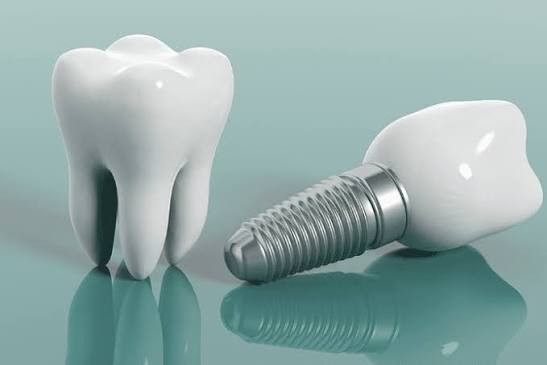
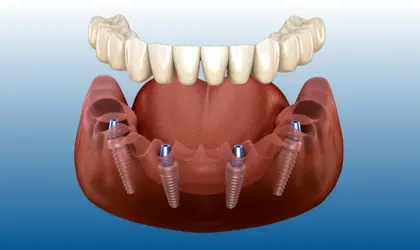
Implant treatments, one of the most important achievements of modern dentistry, offer revolutionary solutions in addressing missing teeth. However, the success of these treatments is not limited only to the quality of the titanium screw used or the technical success of the surgical procedure. Every individual has a unique anatomical structure, different bone density, unique systemic health conditions, and varying aesthetic expectations, all as unique as a fingerprint. Therefore, the “one-size-fits-all” approach is an outdated concept in implantology. Placing an implant in the jawbone is actually similar to laying the foundation of a building; a foundation laid without a soil survey, without calculating the load-bearing capacity, and without drawing an architectural project can cause the building to collapse. Similarly, implants applied without personalized planning carry the risk of encountering biological or mechanical complications in the long term.
Anatomical Variations and Bone Quality
The primary determinant of implant success is the condition and quality of the “alveolar bone” tissue where the implant will be placed. However, bone structure varies greatly from individual to individual, and even within different regions of the same individual’s mouth. In the literature, bone density is classified into four different categories: D1 (very hard, cortical bone) to D4 (very soft, spongy bone). For example, the anterior region of the lower jaw generally has a hard bone structure, while the posterior regions of the upper jaw are dominated by a softer and more porous structure. Individualized planning allows for the prior determination of this bone quality and the selection of an appropriate implant design. In soft bone, an implant with an aggressive thread structure is used to increase retention; in very hard bone, implants with more passive threads that do not impair bone nutrition are preferred. Failure to make this distinction can lead to implant failure to fuse with the bone (osseointegration failure).
Furthermore, anatomical risk factors are also unique to each individual. The “mandibular nerve” canal, which provides lip sensitivity in the lower jaw, and the “maxillary sinus” cavities in the upper jaw are located in different positions in each patient. In some patients, the nerve canal passes very close to the surface of the bone, while in others it is deeper. Sinus cavities can sag downwards after tooth loss, reducing bone volume. Personalized analyses performed with three-dimensional tomography allow for millimeter-precise mapping of these anatomical relationships. Thus, the surgeon can create a roadmap (surgical guide) that minimizes the risk of damaging the nerve or entering the sinus cavity during implant placement. In unplanned procedures, these anatomical structures are at serious risk.
Systemic Health Status and Biological Response
Although the implant is a non-living material, the environment in which it is placed is a living organism. The patient’s overall health status is a variable that directly affects the success of the implant. Diabetes, osteoporosis, hypertension, or immune system diseases are factors that fundamentally alter implant planning. For example, in a patient with uncontrolled diabetes, wound healing will be slow, so the implant fusion time with the bone should be extended, and special precautions should be taken for infection control. In a patient who smokes, tissue blood supply is reduced, so the surgical procedure should be as trauma-free (minimally invasive) as possible. Personalized planning involves analyzing these systemic risk profiles of the patient and modifying the treatment protocol according to the patient’s biological capacity. A standard protocol may result in failure in a patient with systemic risk, while the same patient can be successfully treated with a customized protocol.
Aesthetic Expectations and Smile Design
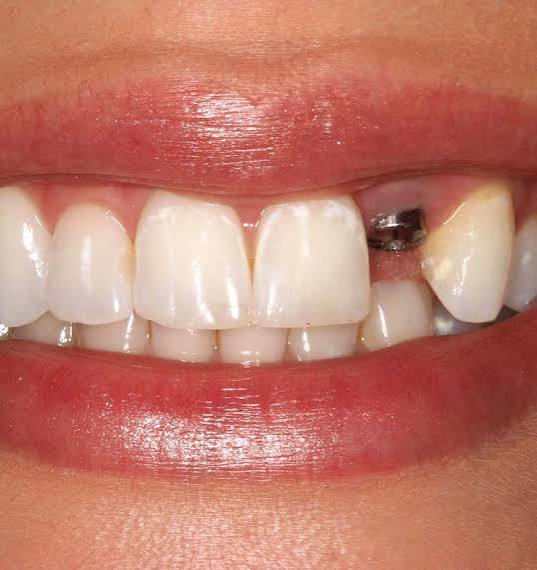
The ultimate goal of implant treatment is not only to restore chewing function but also to provide a natural and aesthetic appearance. Gum harmony, referred to as “pink aesthetics,” and tooth form, referred to as “white aesthetics,” vary from person to person. If a patient’s smile line is high (gum visible when smiling), the position and angle of the implant are vitally important aesthetically. In these patients, the implant needs to be planned to be slightly deeper or hidden under the gum. Otherwise, a metallic reflection at the gum line or an unnatural tooth length may occur.
Furthermore, facial shape, lip support, and the position of opposing teeth also affect planning. A male patient with an angular facial contour should have different tooth shapes and alignments than a female patient with an oval facial contour. Personalized planning simulates the prosthetic phase digitally before surgery. In this approach, called “prosthetic-driven implantology,” the ideal tooth position is first determined, and then the location of the implant that will support this tooth is planned.This prevents surprises such as “we placed the implant but we can’t put a tooth on it” or “the tooth is too long.”
Digital Dentistry and Surgical Guides
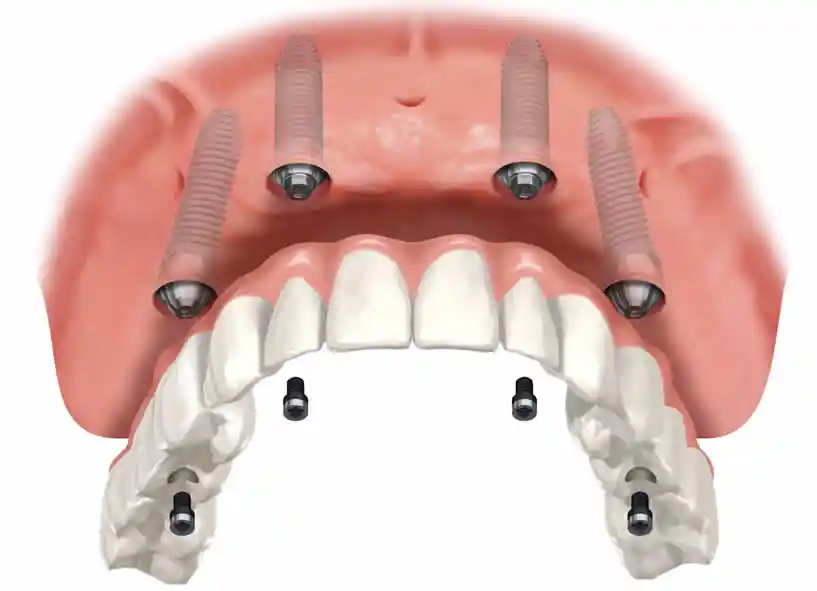
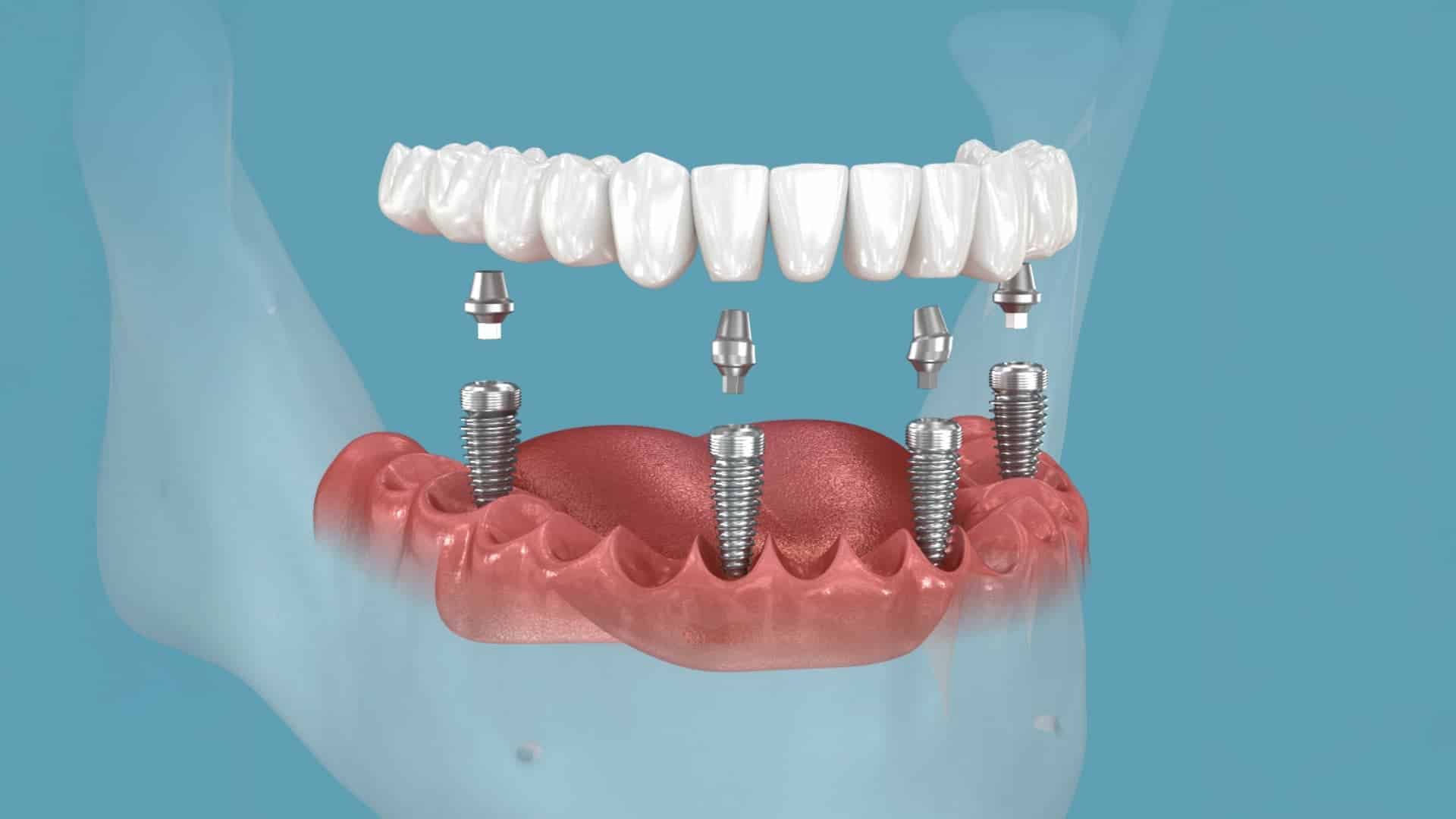
The most powerful tool for personalized planning is digital dentistry technologies. In traditional methods, the dentist makes a plan in their mind by looking at the X-ray and applies this plan manually during surgery. However, in the digital workflow, the 3D tomography (bone data) and intraoral scan (gum data) taken from the patient are superimposed on the computer. In this way, the dentist performs a virtual surgery by seeing the bone volume and soft tissue thickness at the same time. This virtual planning is converted into templates called “surgical guides.” These guides, which are placed in the patient’s mouth during the operation, ensure that the implant is placed at the exact planned angle, depth, and position. This technology offers a completely personalized surgical experience that leaves no room for error.
Comparison of Traditional and Personalized Approaches
The following table summarizes the differences and patient outcomes between unplanned or standard approaches and personalized digital planning:
| Parameter | Traditional / Standard Approach | Personalized / Digital Planning |
|---|---|---|
| Analysis Method | 2D X-ray (Panoramic). Depth and width are not fully visible. | 3D CT scan (CBCT) + Intraoral scan. 360-degree analysis. |
| Surgical Precision | Depends on the surgeon’s hand dexterity and instantaneous decision-making. | Micron-level precision with surgical guides. |
| Operation Time | May be longer due to the decision-making process. | Very short because everything is determined beforehand. |
| Risk of Complications | Risk of nerve/sinus damage, open to anatomical surprises. | Risk is minimal because risky areas are determined beforehand. |
| Aesthetics Result | Sometimes it can be unpredictable, difficulties may arise during the prosthetic phase. | The result is seen beforehand (Mock-up), there are no surprises. |
Distribution of Biomechanical Forces
The forces generated during chewing in the mouth vary from person to person. In some individuals, chewing forces are much higher than normal due to habits such as bruxism (teeth grinding). Individual planning determines the number, diameter, and location of implants according to these forces. For example, in a patient with strong chewing muscles, larger diameter implants should be placed in the posterior region or the number of implants should be increased. If a standard plan uses a thin or insufficient number of implants, mechanical complications such as bone resorption at the implant neck, screw loosening, or implant fracture may occur due to overload. Even distribution of the load to the bone requires an engineering calculation that conforms to the laws of physics for the implant to have a long lifespan.
In summary; Implant treatment is not just about filling a void; it is about biologically, functionally, and aesthetically reconstructing a lost organ. Because each individual has a unique biological fingerprint, the treatment protocol must be perfectly tailored, like a garment made specifically for that person.
Conclusion: Analysis for Sustainable Success
In conclusion, personalized planning in implant treatments is not a luxury, but a medical necessity. Avoiding leaving treatment success to chance, minimizing the risk of complications, and achieving aesthetically satisfying results are only possible with a detailed preliminary analysis and an individualized roadmap. 3D imaging techniques, systemic health analysis, and a prosthesis-focused approach are the cornerstones of this process. Patients requesting a detailed planning process from their physicians before implant treatment is the greatest investment they can make in their own health. An implant placed with proper planning can be a part of the patient for life, while an implant placed without planning can be the source of bigger problems in the future.