
Ankara Advanced Implant Surgery
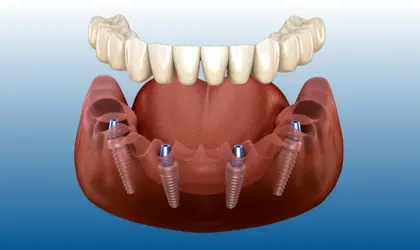
Ankara advanced implant surgery, positioned at the intersection of dentistry and oral, dental, and maxillofacial surgery, is a high-level medical practice focused on complex cases in which conventional methods, standard implant dimensions, and routine bone grafting procedures prove insufficient and anatomical limits become extremely narrow. Years of complete edentulism, severe osteoporosis, facial traumas such as traffic accidents, oncological (tumor) resections, or congenital syndromes can lead to extreme resorption (advanced atrophy) in the upper and lower jawbones. In these specific patient groups, there may be no alveolar bone tissue available to support an implant—even at a millimetric level. While standard protocols may label such cases as “implants cannot be placed,” Panorama Ankara’s multidisciplinary surgical vision—applying advanced implantology concepts—reconstructs both aesthetics and vital chewing functions by obtaining support from other anatomically preserved bone regions of the facial skeleton.
The fundamental philosophy of advanced implant surgery is to go beyond the limits of the jawbones (maxilla and mandible) and utilize highly resistant, dense (cortical) bone areas within the cranial skeleton that can withstand chewing forces biomechanically. This approach involves not only replacing missing teeth, but also three-dimensionally rebuilding facial proportions and restoring collapsed lip and cheek tissues. These complex operations performed at Panorama Ankara represent maxillofacial (face and jaw) reconstruction processes carried out under general anesthesia or deep sedation in fully equipped, sterile operating-room conditions—rather than routine dental applications. Thanks to these advanced techniques, dependence on extremely heavy and traumatic autograft operations—previously requiring the harvesting of large bone blocks from the hip or tibia over months or even years—has been dramatically reduced, and cellular healing capacity has been maximized.
Anatomical Dynamics of Zygomatic (Cheekbone) and Pterygoid Implants
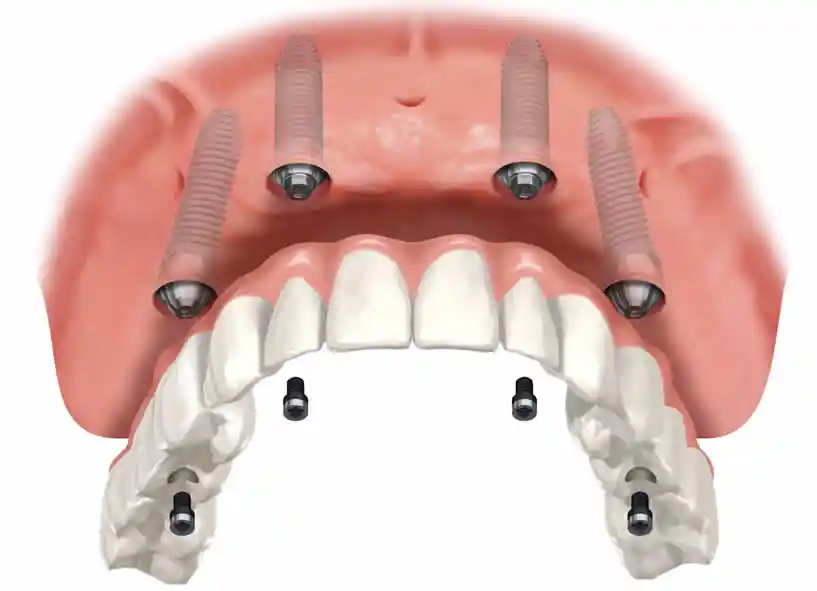
In cases where the upper jawbone (maxilla) has completely resorbed and the sinus cavities have expanded excessively and descended toward the floor of the mouth, there is no remaining vertical distance to place standard implants. In such extreme situations, the most powerful tool incorporated into Panorama Ankara’s surgical protocols is zygomatic implants. Named after the cheekbone (os zygomaticum) into which they are anchored, these specialized implants are much longer than standard implants (between 35 mm and 55 mm). They are guided intraorally and fixed into the cheekbone—one of the hardest and most resorption-resistant regions of the facial skeleton—by passing alongside or through the sinus cavity. The cheekbone has extraordinary cortical density that is not affected by factors such as aging or tooth loss. For this reason, zygomatic implants can provide outstanding “primary stability” (initial fixation) even in patients with virtually no jawbone, allowing fixed permanent prostheses to be loaded on the same day of surgery or within a few days.
Another advanced surgical material used to rehabilitate the posterior regions (molar area) of a severely atrophic upper jaw is pterygoid implants. These implants are placed into the “pterygoid process” of the sphenoid bone—one of the foundational bones of the skull—an anatomically deep region rich in vascular and neural networks, yet ideal in terms of bone density. Pterygoid implants, which can only be performed by clinicians with advanced maxillofacial surgical training, create a strong posterior support point in the far back of the upper jaw, enabling the formation of a complete chewing platform extending to the last molars. By combining zygomatic and pterygoid implants according to the patient’s radiological anatomy, Panorama Ankara specialists can establish a graftless (without bone powder) and permanent biomechanical framework even in the most hopeless cases.
Analysis of Conventional Implantology vs. Advanced Surgical Protocols
Although every implant treatment is a surgical intervention, there are major gaps between standard procedures performed under routine outpatient conditions and advanced surgical concepts requiring hospital-level discipline—particularly in diagnosis, planning, equipment used, and clinician expertise. Panorama Ankara carefully reviews the patient’s medical history and bone map to define the most rational treatment roadmap according to the level of case complexity. The table below provides a comparative, detailed overview of the clinical parameters of these two medical approaches—often confused with one another—from both patient and clinician perspectives.
| Clinical and Surgical Parameters | Conventional (Routine) Implantology | Advanced Implant Surgery (Maxillofacial) |
|---|---|---|
| Bone Requirement and Anchorage Point | Alveolar jawbone (maxilla and mandible) is used. Adequate height and width are required. | Anatomical structures beyond the jawbone (cheekbone, sphenoid bone, nasal floor) are used. |
| Implant Dimensions Used | Average length ranges from 8 mm to 14 mm. | Length can reach 35 mm to 55 mm (zygomatic). Requires specialized angled abutments. |
| Surgical Equipment and Technology | A standard physiodispenser and routine dental instruments are sufficient. | Piezoelectric surgery devices, dynamic 3D navigation systems, and specialized ridge expanders are essential. |
| Anesthesia and Operating Environment | Safely performed in a clinical setting under routine local anesthesia. | Performed in a fully equipped sterile environment, often under IV sedation or general anesthesia. |
| Target Patient Profile | Patients with partial tooth loss or fully edentulous patients with sufficient bone. | Cases with extreme bone resorption, post-tumor surgery bone defects, or trauma from accidents. |
Reducing Error Margin to Zero with Dynamic 3D Navigation and Piezo Surgery
The anatomical regions involved in advanced implant surgery are adjacent to the most critical structures of the human face—such as the eye socket (orbit), extensions of major vessels, major nerve networks, and sinus membranes. In such high-risk areas, even a deviation as small as one-tenth of a millimeter can lead to unwanted complications. To eliminate this risk, Panorama Ankara uses “Dynamic 3D Navigation” systems adapted from aerospace technologies into medicine. Much like a vehicle being guided by a GPS system, this technology matches the patient’s 3D tomographic data with optical cameras during surgery. The surgical instrument’s position, angle, and depth inside the bone are tracked in real time on the operating-room monitor by the clinician. As a result, invisible deep-tissue anatomical obstacles can be safely navigated, and the implant can be placed into its ideal position from the virtual plan with zero-tolerance precision.
In addition, for bone cutting and shaping procedures in advanced surgeries, “Piezoelectric Surgery” (Piezosurgery) devices are preferred instead of motor-driven rotating burs. Piezo technology uses ultrasonic vibrations to cut only hard tissues (bone) at a microscopic level, while operating at a selective frequency that does not harm soft tissues (nerves, vessels, and membranes) upon contact. For example, in an operation that must pass very close to the sinus membrane, piezo tips do not tear the membrane; they gently displace it. This ultrasonic bone-surgery approach applied at Panorama Ankara significantly reduces postoperative swelling (edema), hematoma (bruising), and tissue trauma compared to conventional methods, turning even the most challenging cases into a highly comfortable healing process for patients.
A Multidisciplinary and Holistic Approach for Complex Cases
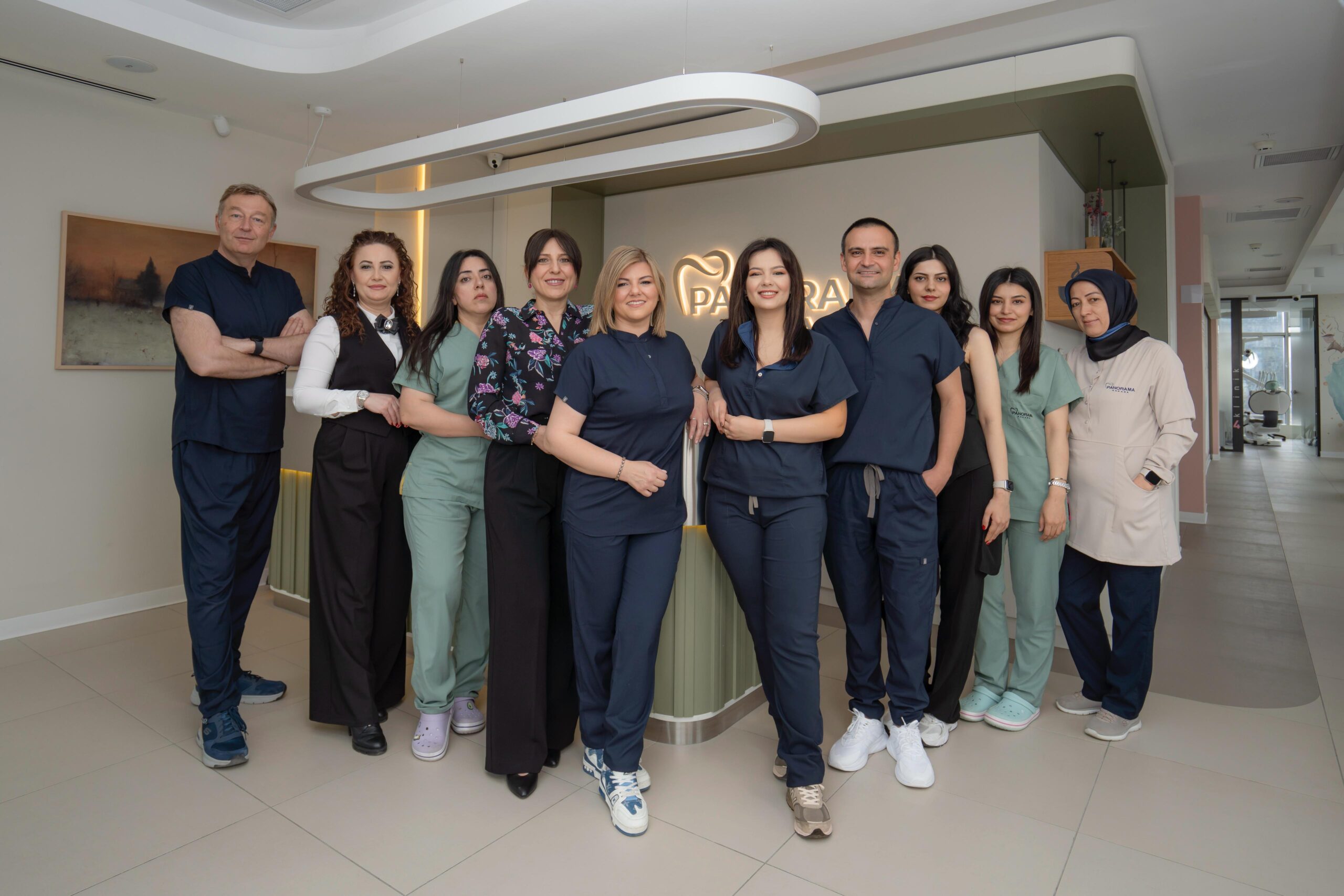
Advanced implantology applications require a council-style approach in which different medical disciplines work in harmony, rather than relying on the initiative of a single dentist. In these cases—where the tissue loss is not limited to teeth—the goal is to simultaneously restore the collapsed vertical dimension of the face, speech phonation, respiratory dynamics, and aesthetic proportions. Panorama Ankara evaluates patients through an integrated team consisting of oral, dental and maxillofacial surgeons, advanced prosthetic dentistry specialists (prosthodontists), and digital smile design technicians. Patients with the specific medical and anatomical profiles listed below represent the primary target group for advanced implant surgery in our clinical practice and the individuals who benefit most from the transformative power of this technology:
- Elderly patients with severe bone resorption (atrophy) in the upper jaw where the gum line has completely flattened and bone loss has progressed up to the nasal floor—so extensive that standard bone powder applications cannot achieve retention,
- Oncology patients who have developed large bone defects and regional voids following the surgical removal (resection) of cysts or tumors in the jawbones,
- Individuals with congenital anatomical syndromes such as ectodermal dysplasia or cleft lip and palate, in whom jawbone development is insufficient and standard implants cannot be performed,
- Revision cases who have experienced serious bone infections due to unsuccessful standard implant surgeries or improper bone grafting procedures in the past and have completely lost existing bone infrastructure.
Smile Designs That Go Beyond Medical Limits with Panorama Ankara
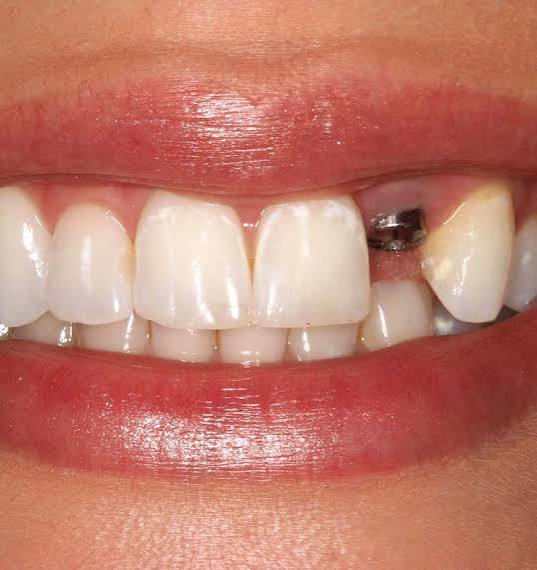
Thanks to revolutionary advances in health technologies, a new light of hope has emerged for patients who were once considered hopeless cases and had to spend the rest of their lives with unstable dentures that would not hold and caused sore spots. In the field of Ankara advanced implant surgery, Panorama Ankara—bringing cranial anatomy together with high-level prosthetic engineering—has the equipment and vision to reconstruct a permanent, fixed, and natural-feeling oral structure even in the most severe bone loss cases. With the power of zygomatic implants, the millimetric precision of navigation surgery, and the aesthetic possibilities of digital dentistry, hopelessness is replaced by confidence and a high quality of life.
If you have previously been told that implants cannot be placed due to insufficient bone tissue, or if major and intimidating operations such as harvesting bone from the hip were presented as the only option, it is time to become acquainted with the minimally traumatic and rational solutions offered by advanced implantology. Through a detailed maxillofacial consultation at Panorama Ankara accompanied by your 3D tomography analysis, you can discover the anatomical potential of your jaw structure and confidently create—together with our physicians—a personalized advanced surgical roadmap that will restore your health, speech freedom, and rejuvenated facial contours.