
Ankara Lingual Orthodontics
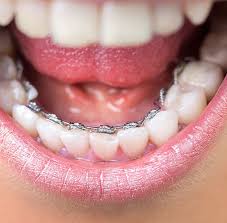
Dental crowding, skeletal bite discrepancies, and malocclusions are complex dental problems that go far beyond aesthetic concerns; they profoundly affect an individual’s chewing function, temporomandibular joint health, and overall oral hygiene. For many years, the gold-standard treatment for these anomalies has been conventional orthodontic approaches performed with metal or ceramic brackets bonded to the front (labial) surfaces of the teeth. Today, however—especially adult patients with active social and professional lives—many have legitimate aesthetic reservations about wearing orthodontic materials that are clearly visible on their teeth throughout treatment. This aesthetic barrier has caused many individuals to postpone the orthodontic care they need for years. The highest scientific and technological answer modern dentistry has provided to this well-founded aesthetic demand is “Lingual Orthodontics.” By integrating international standards into its clinical practice for Ankara lingual orthodontic treatments, Panorama Ankara offers a high-level orthodontic rehabilitation process that enables patients to completely conceal their treatment by placing brackets and archwires on the inner (tongue-facing) surfaces of the teeth, making them entirely invisible from the outside.
The fundamental philosophy of lingual orthodontics, as implied by the term “lingua” (tongue), is to relocate orthodontic mechanics to the inside of the oral cavity—the surfaces contacted by the tongue. This system uses the full biomechanical power of fixed orthodontics in severe crowding cases where even clear aligners may be insufficient, in deep bite anomalies, and in complex clinical situations requiring sophisticated root movements (torque and angulation), while reducing aesthetic concerns to zero. Because the brackets are placed on the back surfaces of the teeth, patients do not see any wires or metal appliances when they look in the mirror or smile in public. Meticulously managed by Panorama Ankara’s experienced orthodontic specialists, this process represents one of the most sophisticated fields of orthodontic science—requiring far different clinical skill than conventional orthodontics, specialized hand precision, and advanced digital laboratory stages.
Lingual Biomechanics: Invisible Force from the Inner Surfaces of the Teeth
There are major biomechanical differences between applying orthodontic force from the front (labial) surface of a tooth versus from the inner (lingual) surface. The tongue-facing posterior surfaces of the teeth do not have the same smooth, standardized form as the front surfaces; on the contrary, each tooth’s inner surface contains patient-specific indentations, prominences, and anatomical variations. In addition, the contact points where upper and lower teeth meet during occlusion are typically located on these lingual surfaces. While conventional brackets can be easily adapted to the front surfaces through standardized factory production, placing lingual brackets onto these complex and narrow inner surfaces requires highly specific engineering. In the lingual technique, the point of force application is much closer to the tooth’s center of resistance. This anatomical proximity provides Panorama Ankara clinicians with an outstanding biomechanical advantage and control, particularly when moving the roots of the anterior teeth within the jawbone (intrusion and retraction). In cases where teeth need to be retracted or excessively upright front teeth require angle correction, the internal forces generated by lingual systems can create a more efficient and tissue-friendly tooth movement profile compared to forces applied externally in conventional systems.
Beyond these biomechanical advantages, the enamel on lingual surfaces is inherently more resistant to caries formation (decalcification) than the front surfaces due to its anatomical characteristics. Because the ducts of the salivary glands are concentrated largely in the sublingual region, the lingual surfaces of the teeth are exposed to continuous and natural salivary rinsing (self-cleansing). This anatomically minimizes the risk of bacterial plaque accumulation around brackets during orthodontic treatment, which can otherwise damage enamel and cause white spot lesions. Therefore, lingual orthodontics not only provides an aesthetically invisible treatment, but also acts as a physiological barrier in protecting enamel health.
Fully Personalized Manufacturing with 3D Scanning and CAD/CAM
The most important feature that radically distinguishes lingual orthodontic systems from conventional braces is that the materials used are produced digitally and entirely customized for the individual patient (custom-made). While standard orthodontics relies on prefabricated brackets, lingual systems are built upon extensive laboratory technology using digital impressions taken from the patient’s mouth. At Panorama Ankara, the patient’s existing dentition is transferred into a digital environment with millimetric precision using advanced 3D intraoral scanners. With specialized CAD/CAM (Computer-Aided Design and Manufacturing) software, the ideal final positions of the teeth are determined virtually (set-up). Based on this ideal alignment, bracket bases are designed to match the anatomical map of the back surface of each tooth precisely—customized for that patient and for that specific tooth alone.
After bracket production, the next step is preparing the archwires that will move the teeth. Unlike conventional wires, lingual wires cannot be manually bent chairside by the clinician; because each tooth’s inner surface thickness varies, the wire form must be microscopically curved and stepped. For this reason, archwires are prepared in the laboratory using robotic wire bending systems according to the patient’s 3D planning. The finished customized brackets are not bonded one by one; instead, they are integrated onto the inner surfaces of all teeth in a single session with virtually zero tolerance for error using special transfer trays through a technique called “indirect bonding.” This high-technology digital workflow eliminates chairside error while ensuring the treatment progresses along a predictable and flawless route from start to finish.
Clinical Comparison: Lingual Orthodontics vs. Conventional (Labial) Systems
For patients to choose the method that best suits their social lives and medical expectations when deciding on orthodontic treatment, transparent evaluation of clinical alternatives is essential. Panorama Ankara supports patients in making a conscious and informed start to their treatment journey. The table below summarizes the key technical, biological, and operational differences between lingual (inside) bracket systems and conventional labial (outside) metal/ceramic bracket systems.
| Clinical and Operational Features | Conventional Labial Orthodontics (Outside) | Lingual Orthodontics (Inside/Invisible) |
|---|---|---|
| Aesthetics and Visibility | Clearly visible when smiling or speaking (noticeable even if ceramic). | 100% invisible from the outside because it is on the back surfaces of the teeth. Delivers full aesthetics. |
| Material Production and Design | Uses prefabricated (standard) brackets and ready-made archwires. | Manufactured with robotic systems and customized to the patient’s dental anatomy using CAD/CAM technology. |
| Clinical Application and Clinician Expertise | A standard part of routine orthodontic practice; applied by all orthodontists. | Requires specialized laboratory infrastructure and specific advanced training/certification in lingual technique. |
| Enamel Health and Caries Resistance | Higher risk of white spot lesions (caries) due to plaque accumulation on front surfaces. | Anatomically very low risk of caries and staining thanks to natural salivary rinsing of the back surfaces. |
| Lip and Cheek Irritation | May cause sores on the inner lips/cheeks, especially in athletes or wind-instrument players. | No contact with lips or cheeks. Only tongue adaptation is required. |
Adaptation Period and Sustainable Oral Hygiene in Lingual Treatment
As with any new medical restoration in the mouth, lingual brackets also require a short anatomical adaptation period after placement. The tongue is the most mobile and sensitive muscular tissue in the oral cavity. Because it constantly contacts the back surfaces of the teeth during speaking and swallowing, it may react with sensitivity to these new and slightly rough foreign materials in the first days. In lingual orthodontic patients, a mild change in pronunciation (phonetic adaptation)—especially for consonants such as “S,” “T,” “D,” and “Z,” which are produced with the tongue touching the back of the teeth—during the first 1–2 weeks is entirely physiological. Panorama Ankara specialists recommend reading aloud exercises to accelerate this temporary phonetic adaptation and provide special orthodontic protective wax (dental wax) that can be applied over brackets to prevent tongue irritation. Typically, by the end of the second week, the tongue fully adapts to the presence of the brackets, and speech returns to a completely normal and fluent pattern.
Another critical factor determining the success of invisible braces is the patient’s oral hygiene protocol. Because the brackets are on the inner surfaces, brushing requires slightly more visual attention. To maintain optimal gum health throughout treatment and prevent food accumulation between brackets, our patients should integrate the following steps into their routines:
- At least twice daily, perform detailed mechanical cleaning with orthodontic brushes angled at 45 degrees toward the areas above and below the brackets,
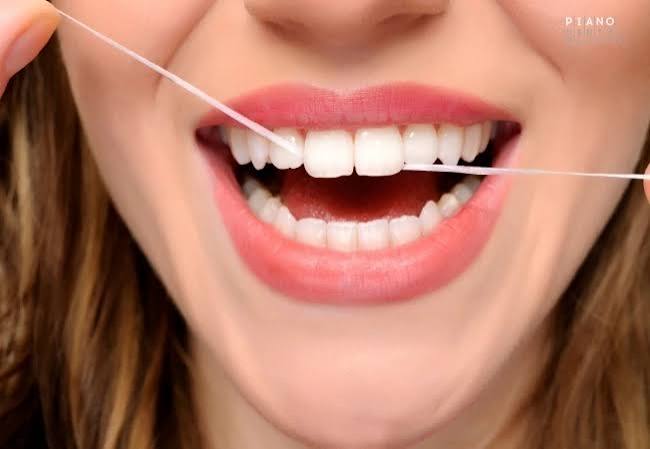
- Use special interproximal brushes to clean narrow spaces between wires and the gingival margin where a regular brush cannot reach,
- Incorporate a water flosser into the daily routine to remove debris adhering to inner tooth surfaces with pressurized water and to provide gentle tissue massage,
- Strictly avoid acidic beverages, sticky caramels, and very hard foods that require biting (e.g., whole apples, hard-shelled nuts) throughout treatment, as these can cause bracket debonding.
Concealing Orthodontic Treatment in a Professional Social Life
The greatest psychological barrier for adult patients seeking orthodontic treatment is the concern of having a “braces” appearance at work, in meetings, or in social settings. Conventional braces—no matter how modern their design—often become the first noticeable physical feature when a person speaks or smiles. Ankara lingual orthodontic applications completely eliminate this visual concern, creating a perfect invisible barrier between the treatment of dental crowding and the patient’s social confidence. For CEOs, on-camera professionals, teachers, lawyers, and those who interact directly with clients, lingual systems are the most prestigious key to achieving a perfect smile in total discretion—without compromising professional image.
With these advanced, patient-specific orthodontic systems, Panorama Ankara promises a comfortable and invisible transformation for patients who never want to compromise on aesthetics. If you want to resolve bite problems caused by crowded teeth, safeguard your jaw health, and continue smiling freely while keeping the entire medical process completely hidden from the outside world, you can contact our orthodontic specialists and create your personalized lingual treatment plan with our three-dimensional digital scanning systems.