

Ankara Space Maintainer Application
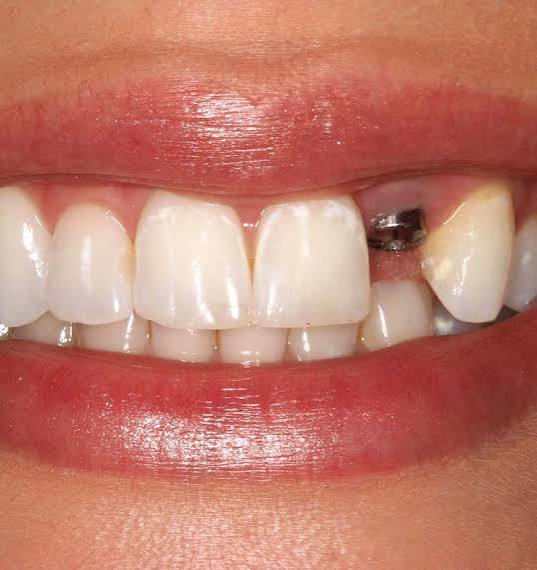
Although primary (baby) teeth in childhood are often perceived across society as unimportant with the idea that “they will fall out anyway and new ones will come in,” they actually have extremely critical and multi-dimensional biological functions from the perspective of medical science and pedodontics (pediatric dentistry). In addition to enabling a child’s nutrition and speech articulation, primary teeth act as mechanical cornerstones that stimulate the three-dimensional growth of the jawbones (skeletal development). Perhaps their most vital—and least known—role is that they serve as “natural space maintainers” and eruption guides for the permanent (adult) teeth developing just beneath their roots within the depths of the jawbone. When a primary tooth must be extracted months or even years before its physiological shedding time due to severe bottle caries, infections beyond treatability, cystic lesions, or physical trauma (such as accidents while playing), this is referred to in the medical literature as “premature primary tooth loss.” In the field of Ankara space maintainer applications, Panorama Ankara—meticulously monitoring children’s jaw development with millimetric precision—offers personalized pediatric appliances that mechanically preserve the volume of the vacated space to prevent the destructive orthodontic consequences of early tooth loss. This proactive (preventive) approach is one of the most valuable medical investments for securing a child’s future smile.
When a primary tooth is lost prematurely, the perfect biomechanical balance within the jawbone is immediately disrupted. In human anatomy, teeth naturally tend to move forward along the dental arch and lean against one another (mesial drift/mesialization). Once the extraction space appears, the teeth behind that space begin—over the course of months—to tip into it or slide forward, since there is no longer a physical barrier. At the same time, the opposing tooth in the opposite jaw may start to over-erupt (elongate) into the empty space because it can no longer find an occlusal contact surface. All of these unwanted anatomical migrations can completely close the physical space needed for the permanent tooth that is supposed to erupt from underneath, leading to what is known as “loss of arch length.” When its space is closed, the permanent tooth may remain trapped within the jawbone and become “impacted,” or it may erupt toward the only available opening—toward the palate side or the cheek side—creating severe “crowding.” With passive medical devices (space maintainers) placed immediately after extraction or simultaneously with the planned extraction appointment, Panorama Ankara specialists physically block these unwanted movements of adjacent teeth and provide the underlying permanent tooth with a complete biological corridor so it can erupt in a healthy way.
Biomechanical Consequences of Premature Primary Tooth Loss and the Risk of Crowding
Tooth eruption occurs through microscopic pathways in the jawbone known as the “gubernacular canal.” Premature loss of a primary tooth not only causes a reduction in space along the horizontal axis, but can also lead the gum tissue over the eruption pathway to become thicker and harder than normal, forming fibrous scar tissue. This tough tissue can consume the eruptive energy of the underlying permanent tooth and slow its eruption rate. The longer eruption is delayed, the greater the likelihood and speed with which adjacent teeth will tip into the space. In particular, the “first permanent molars,” which erupt around age six, are the keystones of the dentition. If the primary molars directly in front of them are lost early and no space maintainer is placed, these large six-year molars can drift forward rapidly and irreversibly disrupt the entire architecture of the dental alignment.
The clinical outcome of this domino effect can be that, by ages 12–13, the child becomes “locked into” a very complex orthodontic treatment with braces that may last for years and could even require tooth extractions (sacrificing healthy teeth) or jaw surgery. Yet a space maintainer—an easy, painless, and highly economical prophylactic intervention—solves this complex web of problems at its source before it even forms. Thanks to the integrated work of Panorama Ankara’s pedodontics and orthodontics departments, every child with early tooth loss undergoes a detailed radiographic (panoramic X-ray) analysis. By evaluating the root development stage of the underlying permanent tooth (Nolla stages) and calculating the thickness of the overlying bone, it is scientifically determined whether the child truly needs a space maintainer—and if so, how long (months or years) it should remain in the mouth.
Types of Space Maintainers: Clinical Analysis of Fixed and Removable Systems
Space maintainers used in pediatric dentistry are not standard, one-size-fits-all products. They are custom-designed in a laboratory according to the child’s oral anatomy, based on the location of the missing tooth (front or back region), the number of missing teeth (single tooth or multiple teeth), the child’s age, and their level of cooperation (compliance). At Panorama Ankara, space maintainer appliances selected according to each patient’s medical needs are generally classified into two main categories: “Fixed” and “Removable” systems. To help parents better understand the treatment options and how they may affect a child’s daily life, we summarized the clinical dynamics of both systems in the comparative table below.
| Clinical and Operational Features | Fixed Space Maintainers (Band-Loop / Lingual Arch) | Removable Space Maintainers (Acrylic Appliances) |
|---|---|---|
| Indication Area and Extent of Tooth Loss | Typically used for single-tooth or two adjacent-tooth loss, applied unilaterally or bilaterally (arch form). | Preferred in broad spaces where many teeth are lost consecutively or where no posterior support teeth remain. |
| Method of Use and Patient Control | Bonded/cemented to the tooth by the clinician with special dental cements. The child cannot remove it. | Can be inserted and removed by the child. Use during meals or brushing depends on the child’s initiative. |
| Suitable Age Group and Cooperation | The most reliable “guaranteed” option for very young children or those who refuse to wear appliances. | Suitable for older children who can take responsibility, will not lose it, and can follow a regular wear routine. |
| Esthetics and Chewing Function | Only preserves the space; does not replace the missing tooth with an artificial tooth, does not actively contribute to chewing, and does not aim for esthetics. | Artificial teeth can be added to provide esthetics (especially in anterior gaps) and support chewing function. |
Digital Impression and Personalized Design at Panorama Ankara
In the past, making a space maintainer required taking a physical impression from a child’s mouth using dough-like impression materials. This process was one of the most unpleasant experiences for small children, often triggering a gag reflex, retching, and fear of the clinic (dental phobia). Panorama Ankara, using advanced digital technologies in Ankara space maintainer applications, has completely moved this traumatic process into history. In our clinic, compact and comfortable 3D intraoral optical scanners—capturing thousands of frames per second—create a digital copy of the child’s dental arch instantly on a computer screen. The scan takes only a few minutes and becomes a highly engaging digital experience for the child—almost like watching an animated film.
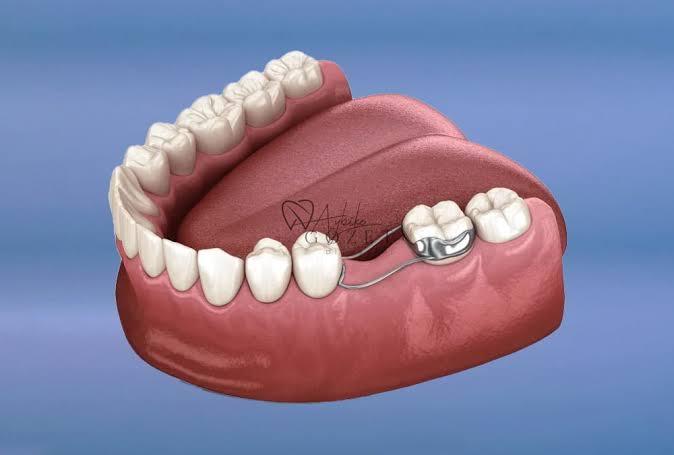
This millimeter-precise 3D virtual model is then sent to our advanced in-house laboratories. For single-tooth gaps, the “Band-Loop” fixed space maintainer is commonly preferred: it consists of a thin metal ring surrounding a support tooth and a metal arm that extends across the space to contact the neighboring tooth. If there are bilateral losses in the lower jaw, the “Lingual Arch” design may be chosen—featuring a thicker wire that runs along the inner (tongue-side) surfaces of the teeth. Each wire bend is fabricated to match the child’s tooth anatomy and soft tissue boundaries at a microscopic level, ensuring it never presses into the gum tissue or causes sores. Made from stainless medical-grade steel, these small devices remain completely passive in the mouth; they do not apply orthodontic forces (pushing or pulling). Therefore, they do not cause any pain or aching at the time of placement or afterwards.
Parent Guide: Adaptation and Oral Hygiene with a Space Maintainer
Space maintainer appliances can be thought of as new medical “organs” placed in the mouth. The child’s tongue and cheeks typically adapt to these new stainless-steel materials within only 2 to 3 days. After this short adaptation phase, the child often forgets the appliance is even there and continues natural functions such as speaking and swallowing without any restriction. However, for these passive devices to remain safely in the mouth for the intended period and fulfill their role effectively, there are critical points parents must pay attention to in daily routines. To ensure treatment success and protect tooth tissues, Panorama Ankara specialists outline home-care management with the following essential rules:
- Especially when fixed (cemented/bonded) space maintainers are used, children should be prevented from consuming sticky candies (gummies, caramel, chewing gum), because these strongly adhesive foods can weaken the dental cement bonding the metal band to the tooth and may cause the appliance to detach or even be swallowed.
- Because the junctions where the appliance metal meets the tooth create ideal retention areas for bacterial plaque, the child’s brushing routine should be supervised by parents, and the area around the space maintainer should be cleaned meticulously to definitively prevent enamel caries and gum inflammation (gingivitis).
Invest in Future Healthy Smiles with Panorama Ankara
A prematurely lost primary tooth is only the visible tip of the iceberg. The real danger underneath is the collapse of the three-dimensional architecture of the jawbones and the restriction of the growth potential of healthy permanent teeth that have not yet emerged. By creating a protective shield in pediatric dentistry through Ankara space maintainer applications, Panorama Ankara prevents a simple neglect from turning into massive orthodontic problems later on. Thanks to these prophylactic devices—applied painlessly, without needles, and with digital comfort—your child’s skeletal development remains uninterrupted and each new tooth can naturally and effortlessly find its correct place within the dental arch.
If your child has lost a primary tooth prematurely for any reason, instead of waiting with the thought that “another one will come in,” you should secure this biological transition period with an expert pedodontic vision. To stop future crowding, arch narrowing, and years-long braces treatment before they begin, you can schedule a detailed digital scan and radiological analysis appointment at Panorama Ankara and help your child continue their growth journey with a complete and healthy smile.