
Ankara Orthodontic Treatment
Orthodontics, one of the most established and visionary disciplines in dentistry, is often perceived by the general public simply as “aligning crooked teeth to create an aesthetic smile.” In reality, the chewing system (the stomatognathic system)—which dominates the lower third of the human face—is an extraordinarily complex form of biological engineering that requires the jawbones, muscles, tooth roots, and the temporomandibular joint (TMJ) to work together in millimetric harmony. When the alignment of teeth within the jawbone and the occlusal relationship between the lower and upper jaws is disrupted, the result is not merely an aesthetic loss. These asymmetrical bite relationships can transmit chewing forces to the TMJ with unilateral and destructive pressure, cause chronic spasms in the neck and back muscles, lead to digestive problems due to insufficiently ground food, and contribute to airway (breathing) narrowing. In Ankara orthodontic treatment, Panorama Ankara approaches the jaw skeleton and teeth with a multidisciplinary perspective, freeing patients from hearsay cosmetic “quick fixes” and rebuilding the golden ratios of facial anatomy, muscle physiology, and chewing function through biomechanical forces. Thanks to advanced treatment protocols that transform micro-forces applied to the teeth into a cellular healing cycle, our clinic offers not only a smile that looks beautiful from the outside, but also a physiologically flawless, joint-friendly, and lifelong “craniofacial harmony.”
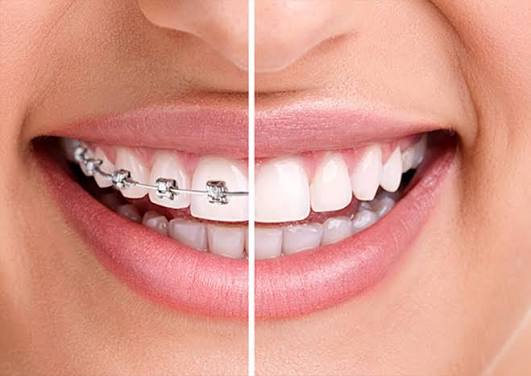
The miraculous mechanism behind orthodontic treatment—explaining how teeth can be guided through hard jawbone (the alveolar ridge) almost like an iceberg drifting—lies in the body’s cellular capacity for “Remodeling.” Tooth roots are not rigidly fused to the jawbone. Between the bone and the root, there is an elastic cushion formed by thousands of microscopic fibers called the “Periodontal Ligament” (PDL), which suspends the tooth like a hammock and allows it to flex. When orthodontists apply a gentle, constant, uninterrupted pressure (orthodontic force) in a specific direction—via braces or clear aligners—this elastic cushion compresses in the direction of the force and stretches on the opposite side. Cells in the compressed area transform into “Osteoclast” cells that microscopically resorb bone, opening the pathway for the tooth to move forward. Cells in the stretched, tensioned area transform into “Osteoblast” (bone-forming) cells that fill the space behind the moving tooth with new, living, healthy bone tissue. This extraordinary biological synchronization—known in medical literature as “osteoclastic resorption and osteoblastic formation”—is the essential medical foundation that allows teeth to relocate safely within bone, millimeter by millimeter, without harming tissues or causing destructive bone loss. Panorama Ankara clinicians calibrate the magnitude of force so precisely that blood flow (oxygenation) within the tooth roots is never compromised, pain is minimized, and cellular vitality is preserved at 100% throughout treatment.
Skeletal and Dental Malocclusions: Angle Classification
A patient’s need for orthodontic treatment includes anatomical variations far too deep to be defined simply by saying, “my teeth are crooked.” The “Malocclusion (Bite Disorder) Classification,” introduced by Dr. Edward Angle—the founder of orthodontic science—and still the backbone of diagnosis today, determines the skeletal position of the lower and upper jaws in three-dimensional space. This position influences not only how teeth will be aligned, but also the patient’s lip support, the appearance of the nose, and cheek fullness (soft-tissue drape). To provide transparent clinical awareness, Panorama Ankara details the major skeletal classifications used in orthodontic diagnosis in the scientifically framed table below.
| Angle Classification (Type of Malocclusion) | Skeletal and Dental Anatomical Characteristics | Orthodontic and Surgical Treatment Strategy |
|---|---|---|
| Class I Malocclusion | Harmony between the lower and upper jawbones is ideal, and the facial profile is normal. The issue is limited to crowding or spacing among the teeth. | The easiest treatment group. No skeletal intervention (surgery) is required; teeth are positioned into ideal arches with standard brackets or clear aligners. |
| Class II Malocclusion | A convex profile in which the upper jaw is excessively forward and the lower jaw is positioned much farther back than normal relative to the skull (often described as a “bird-like face”). | In growth-age patients, functional appliances are used to bring the lower jaw forward. In adults, orthodontic camouflage or, in advanced cases, orthognathic mandibular surgery may be required. |
| Class III Malocclusion | A skeletal reverse bite in which the lower jaw is excessively prominent (prognathism) or the upper jaw is retrusive, producing a flatter “bulldog-like” profile. | At early ages, facemask therapy is used to protract the upper jaw. In adulthood, orthodontic preparation is typically followed by jaw surgery (osteotomy) for correction. |
| Open Bite & Deep Bite | Open bite: a large gap remains between the front teeth while posterior teeth contact. Deep bite: upper teeth cover lower teeth so much that they become barely visible. | In open bite, tongue habits (swallowing patterns) are corrected and teeth may be intruded; in deep bite, posterior vertical dimension is managed to rebalance chewing. |
Diagnosis and Digital Treatment Planning: Cephalometric Profiling
A correct orthodontic diagnosis cannot be made simply by looking inside the mouth. Placing braces without identifying root inclinations within bone, the millimetric angles formed by the jaws relative to the cranial base, and the direction of growth is equivalent to setting sail without a compass. At the center of Panorama Ankara’s advanced diagnostic protocols are “Cephalometric Analysis” and 3D Volumetric Tomography (CBCT). A cephalometric radiograph is a specialized orthodontic imaging system that shows the patient’s head from the side and clearly reveals the proportional relationships among bones, teeth, nose, and lips.
Using hundreds of reference points on these images (for example, angles such as SNA and SNB), our specialist orthodontists map the geometric blueprint of your jaw skeleton. Is your mandible growing downward (vertical) or forward (horizontal)? Do the angulations of your incisors within bone adequately support your lips? If extractions are performed, will your facial profile collapse or become more balanced? The answers to these critical biomechanical questions are clarified through this digital cephalometric mapping performed before treatment. This evidence-based diagnostic phase ensures that the orthodontic pathway is never random—rather, it is designed precisely according to your bone mathematics and your soft-tissue “visagism” (character-driven facial aesthetics).
Biological Maintenance After Treatment: The Retention Phase
The most misunderstood stage of orthodontic therapy is the happy day when brackets or clear aligners are removed. Removing braces does not mean the treatment is over; on the contrary, the invisible yet most vital second half—known as the “Retention Phase”—begins on that very day. Once teeth are moved into their new, straight positions, the gingival fibers connecting them (especially the transeptal fibers) behave like a stretched elastic band and try to pull the teeth back into their former crooked arrangement at the first opportunity. This painful scenario, called “Orthodontic Relapse” in the medical literature, must be fully prevented. To imprint the outstanding aesthetic and functional result into lifelong “bone memory,” Panorama Ankara’s orthodontic board requires patients to follow these two passive protection disciplines (the retention protocol) precisely at the end of treatment:
- Ultra-thin, flexible titanium “Fixed Lingual Retainer” wires—completely invisible from the outside and not affecting speech or eating—should be permanently bonded with dental composites to the inner (tongue-facing) surfaces of the front teeth and kept in place safely until the clinician advises otherwise (often for many years).
- In addition to the fixed retainer, to preserve the full integrity of the dental arch (including the chewing surfaces) and to prevent unwanted movement during sleep due to involuntary clenching (bruxism), custom-made transparent “Essix Retainer Trays,” thermoformed for the patient, must be worn at bedtime according to the schedule prescribed by the orthodontist (especially every night during the first 6 months).
Skeletal Confidence Built from the Roots with Panorama Ankara
The complex arrangement of your teeth—or a bite that does not harmonize with your face—is a deep skeletal burden that silently wears down not only your smile, but also your nutrition, breathing, and TMJ health over the years. In Ankara orthodontic treatment, Panorama Ankara goes beyond the boundaries of conventional braces and approaches the issue with a craniofacial architectural vision, freeing you from these functional and psychological burdens with scientific elegance. By stimulating osteoblastic (building) cellular mechanisms within your jawbone, we guide your teeth patiently, safely, and comfortably toward the targeted golden ratio.
It is time to say goodbye to the crooked teeth you want to hide every time you look in the mirror—or to the clicking sounds coming from your joints. To create the 3D cephalometric map of your jaw skeleton, determine your malocclusion class, and engineer—together with our expert orthodontists—the digital blueprint of that strong, characteristic smile profile you will carry proudly for life, you can schedule a detailed craniofacial orthodontic consultation appointment at Panorama Ankara and discover the biological, unshakable power of change on your own face.