
Ankara Pediatric Dentistry Clinic
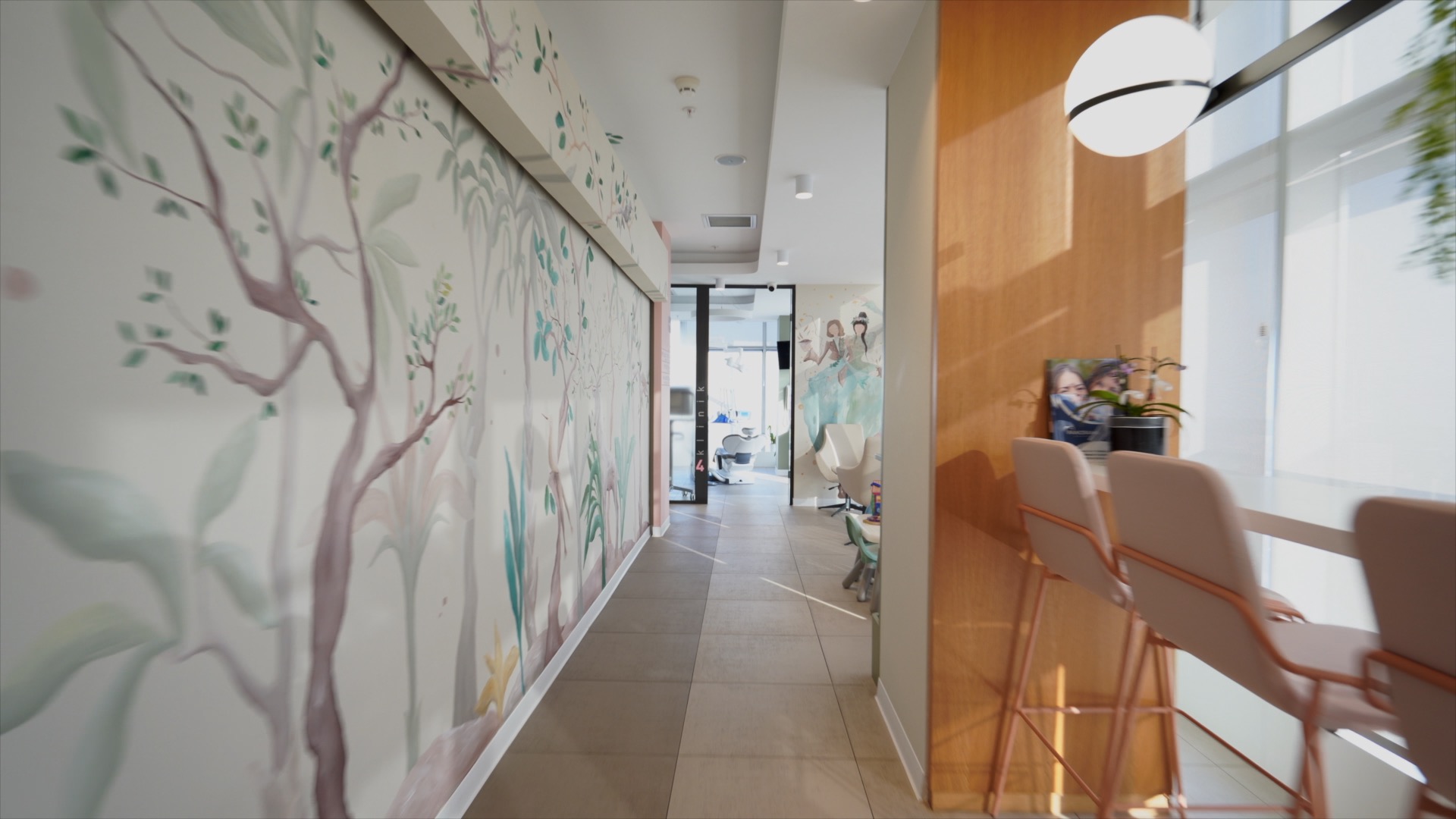
The deepest and most enduring marks in human psychology are formed during the delicate contacts we establish with the outside world in the earliest years of life. “Dental fear” (Dental Anxiety)—known popularly as “white coat syndrome”—which persists even in a large portion of adults, is often the indelible reflection left in the mind by a traumatic childhood medical intervention, a sense of not being understood, or being forced to remain in the chair. Children are not miniature copies of adults; their perception of the world, pain thresholds, fear of the unknown, and communication abilities are rooted in a neuro-psychological plane uniquely their own. A standard adult dental clinic environment—sterile, cold, hospital-scented, and filled with loud devices—can be perceived as an enormous threat within a child’s sensory world. By redefining Ankara pediatric dentistry clinic standards far beyond the simple idea of colorful walls and basic decoration, Panorama Ankara reconstructs the experience with an advanced “Multisensory Adaptation” philosophy, building our young patients’ biological and psychological safe zone (comfort zone) before any treatment begins. Our clinic offers a special pediatric ecosystem that speaks to a child’s five senses, is free of hospital odors, absorbs harsh sounds, and turns every medical device into a playful element in the child’s imagination. Our aim is to heal your child’s teeth without leaving a single scratch on their spirit, and to instill an unshakable awareness of “fearless dentistry” that will help them care for their oral health throughout life.
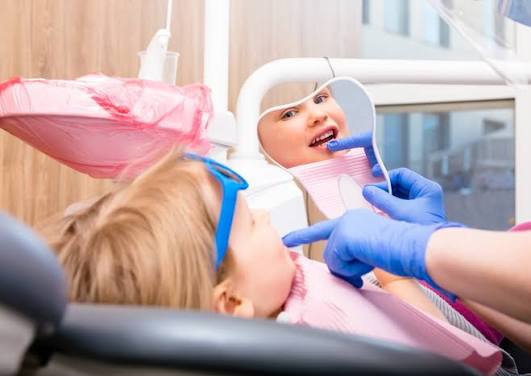
The medical success of a pediatric dentistry (pedodontics) clinic begins long before the clinician’s manual skills—it starts with the sense of belonging and trust the child feels in the very first second they walk through the door. In Panorama Ankara’s specially designed pediatric department, the process does not begin by seating the child directly in an intimidating dental chair; instead, it is structured around a play-and-introduction phase tailored to the child’s age group, cognitive development, and personality. As a reflection of years of academic training in child psychology, our specialist pediatric dentists activate extremely sensitive communication strategies known in the literature as “Behavior Management Techniques.” The first contact made at the child’s eye level, the tone of voice, and the softened atmosphere of the clinic gradually lower the child’s defense mechanisms. The mouth mirror becomes a “magic wand,” the saliva suction becomes a “tiny vacuum cleaner,” and the air-and-water syringe becomes a “water gun” that washes the tooth—translated into the child’s mental universe. Through this deep “Desensitization” (gradual acclimatization) process, a child who initially arrives crying or resisting the clinician can, within minutes, realize that the dental chair has transformed into a safe play area under their own control. No cutting or drilling instrument is allowed to touch the tooth before this mental approval (cooperation) is obtained—because the golden rule in pediatric dentistry is to win the child’s heart first, and their tooth second.
Clinical Classification: The Ecosystem Difference Between Adult Dentistry and Pediatric Dentistry Expertise
One of the biggest misconceptions parents commonly fall into is assuming that a trusted general dentist who provides their own treatment must also be the best choice for their child. In reality, the anatomy of a primary tooth, the treatment materials used, and—most importantly—the clinical management of the child are separated from adult dentistry by profound lines. To clearly summarize why children should be treated in a dedicated specialist department devoted to this age group, Panorama Ankara presents the differences below with transparent scientific and psychological parameters.
| Clinical and Psychological Operational Dynamics | Standard (Adult) Dental Clinic Atmosphere | Panorama Ankara Pediatric Dentistry Specialist Clinic |
|---|---|---|
| Environmental Stimuli and Sensory Atmosphere | A tense medical environment dominated by sharp disinfectant odors, loud device sounds, and gray/white tones. | A multisensory area with dedicated ventilation (odor isolation), child-engaging colors, screens, and a play-based theme. |
| Communication and Behavior Guidance Philosophy | The clinician gives logical, direct commands adults can understand, such as “Open your mouth, it won’t hurt, just hold on.” | The clinician uses the “Tell–Show–Do” technique, turns medical terms into stories, and applies positive reinforcement and rewarding. |
| Biological Approach and Anatomy Knowledge | Primary teeth are treated like small permanent teeth; the developmental dynamics of the underlying permanent tooth often remain secondary. | Restorations and pulp medicaments (resorbable materials) are selected specifically according to primary-tooth physiology and the eruption timeline of the permanent tooth. |
| Dental Phobia and Management of Uncooperative Children | Treatment of a child who cannot cooperate (crying) is often abandoned halfway or may be forced with physical pressure. | Physical restraint (forcing) is never used. For uncooperative children, an integrated sedation or general anesthesia unit is activated. |
The Art of Tell-Show-Do and Breaking Negative Thoughts
The greatest toxin at the core of childhood dental fears is the “Unknown.” A child seated in the chair adopts a defensive psychology because they do not know what those shiny instruments will do, or whether it will hurt. The most frequently and successfully applied communication masterpiece used by Panorama Ankara’s pediatric dentistry specialists is the technique known internationally as “Tell–Show–Do.” This method completely clears the fog of uncertainty in the child’s brain and creates the feeling that control belongs to them. Before treatment begins, the clinician takes the instrument they will use (for example, a vibrating cleaning brush) and “Tells” (Tell) the child—in a story-like language they can understand—that it is a magical brush that tickles and washes the tooth.
Immediately afterward, the clinician “Shows” (Show) how the instrument works—its sound and sensation—by gently running it on the child’s hand or fingertip before it goes into the mouth. The child hears the sound, feels the vibration, and becomes convinced that it is truly painless, harmless, and even funny. Once the child’s mental approval is obtained—anxiety dropping to zero and a smile appearing—the same instrument is brought to the tooth and the treatment is calmly “Done” (Do). If, during the procedure, the clinician senses a slight fear in the child’s eyes or a tightening of facial expressions, the clinician stops immediately and proves once again that control (and safety) is entirely with the child by saying, “If you give me the stop sign, I will stop right away.” These micro-psychological maneuvers can transform an ordinary extraction or filling into a fun, pride-filled game scene in the child’s mind.
Pre-Clinical Phase: The First Visit (First Year) and the Parent’s Biological Responsibility
The International Association of Paediatric Dentistry (IAPD) accepts as a gold standard that a child’s first introduction to a pediatric dentistry clinic should occur together with the eruption of the first primary tooth (typically between 6 months and 1 year of age). The aim of this first meeting is not to perform treatment; it is to seat the child in the chair “when nothing hurts,” to encode the clinic as a safe place, and to educate parents about the child’s caries risk profile. However, building this first trust correctly depends—before the clinician—on the energy parents reflect at home. To prevent this sensitive mental preparation from being “poisoned,” Panorama Ankara’s pediatric dentistry board strongly asks parents to make the following two rules a way of life:
- Destructive threats that code the clinic and the clinician as a “punishment center” and a “fear figure” must never be used at home, such as: “If you don’t brush your teeth, I’ll take you to the dentist, and they’ll give you an injection and pull your tooth with pliers.”
- When talking with the child the day before the visit, parents should not project their own past traumas. Instead of using phrases containing negative root words (“fear,” “hurt,” “needle”) such as “Don’t be afraid, it won’t hurt, they won’t give you a needle,” parents should choose fully positive, normalizing language like: “Tomorrow the dentist will count your beautiful teeth, look at them with a mirror, and make them shiny.”
Safe Steps Toward a Trauma-Free Future with Panorama Ankara
A child’s tears in the dental chair are not only a sign of a momentary difficulty; they are also the clearest indicator that the foundation of a huge phobia is being laid—one that may cause the child to neglect dental health throughout life, endure pain for months, and hide their smile in social settings. By elevating Ankara pediatric dentistry clinic standards far beyond medical equipment and placing child psychology at the center, Panorama Ankara transforms the chair from a stress zone into a colorful, joyful developmental platform where heroic stories are written. With our multisensory adaptation techniques, specialist clinicians fluent in the “language of children,” and sedation/anesthesia units that are activated in the safest manner when needed, even the most challenging cavities can be treated without leaving a single mark on your child’s spirit.
To map the healthy development of your child’s primary teeth, prevent hidden nursing-bottle caries from reaching the nerves, and—most importantly—raise them as a conscious individual who can visit the dentist fearlessly throughout life, you can schedule a detailed first-meeting and pediatric dentistry consultation appointment at Panorama Ankara and touch their clean world with the compassionate face of medicine.