

Ankara Membrane Application
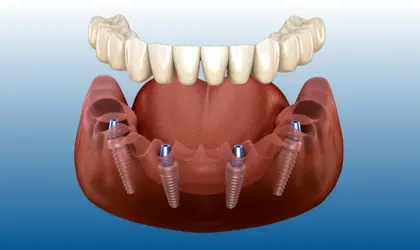
In dentistry and oral & maxillofacial surgery, rebuilding lost bone tissue (augmentation) is the most fundamental biological prerequisite that
determines the success of implantology. However, bone particles (grafts) placed into the jaw do not easily transform into new bone on their own, because
of the aggressive cellular competition inside the oral environment. Soft-tissue cells in the mouth (gingival cells) can proliferate and migrate up to ten
times faster than bone-forming cells (osteoblasts). If the grafted area is left unprotected, gingival cells rapidly invade the site, fill the spaces
between the graft particles, and cause fibrous soft tissue to form instead of bone. The way to overcome this biological barrier—known in the medical
literature as Guided Tissue Regeneration (GTR)—is the use of high-technology barriers called membranes. In Ankara membrane
application, Panorama Ankara adopts microscopic surgical protocols and places these special barriers over the grafted bone to physically block gingival cell
infiltration. In doing so, it provides bone cells with the calm and protected environment they need (an osteoconductive space), enabling the jawbone to be
reborn in both volume and quality.
The biomechanical philosophy behind membrane technology is not only to serve as a cover, but also to manage blood supply (angiogenesis), which is vital for
newly forming bone tissue. An ideal membrane must have a semi-permeable (selective) architecture: it should keep unwanted cells out while allowing micro-nutrients
and oxygen to diffuse into the graft matrix beneath. Panorama Ankara’s experienced maxillofacial surgeons select membranes with different molecular structures
depending on the severity of bone loss and the surgical goal. If bone loss is small and localized, naturally resorbable collagen membranes that dissolve in the
body are preferred; if there is a massive collapse or vertical bone gain (vertical augmentation) is targeted, synthetic barriers—sometimes reinforced with titanium
frameworks—that maintain space unshakably for months are utilized. These advanced membranes act as a “mold” that keeps the graft stable, maximizing the mechanical
resistance and biological density of the site where the implant will be placed.
Clinical Classification: Barrier Membrane Types and Their Biological Behavior
Surgical success is directly related to choosing the barrier material that best matches the patient’s bone metabolism and healing speed. Each membrane differs
in its in-tissue lifespan and rigidity. To help patients understand this advanced surgical process transparently, Panorama Ankara presents the most commonly used
membrane systems in the clinical setting in the comparative table below.
| Membrane Category | Biological Structure and Source | Clinical Advantage and Indication |
|---|---|---|
| Resorbable Membranes | Produced from highly purified type I collagen fibers (commonly bovine- or porcine-derived). | They are absorbed by the body after healing is complete, so no second surgery is needed for removal. They are the gold standard in routine cases. |
| Non-Resorbable Membranes | Made of dense PTFE (d-PTFE) or pure titanium meshes. | They preserve their shape for months without deformation. They are indispensable in very large defects and vertical bone gain procedures. |
| Titanium-Reinforced Membranes | Contain an ultra-thin titanium framework integrated into a synthetic membrane. | Resist pressure from the gingiva, preventing graft collapse; they provide a three-dimensional “architectural” form to the regenerated bone. |
| L-PRF (Derived from Your Own Blood) | A fibrin membrane obtained by centrifuging the patient’s own blood, rich in growth factors. | 100% natural. It dramatically accelerates wound healing and provides excellent biological compatibility with bone graft material. |
The Bone–Membrane Interface: Cellular Integration and Vascularization
[Image showing the layered structure of bone graft, membrane, and gingival tissue during healing]
The most critical phase of membrane application is securing the membrane tightly to the bone surface using a method called stabilization.
If the membrane moves over the graft (micro-movement), bone formation underneath stops, and failure becomes inevitable. To ensure stabilization, Panorama Ankara
specialists use miniature titanium pins or micro-screws. Once the membrane is locked onto the bone, it forms an unshakable unity with the graft particles beneath.
After this stage, the body initiates angiogenesis, sending new capillaries from surrounding tissues along the membrane. These vessels pass between
the graft particles, delivering fresh blood and stem cells to the area. The membrane manages this process like a traffic officer: it allows vascular passage while
blocking aggressive gingival fibers from entering the bone compartment. When the healing period ends, a granite-hard, living, and vascularized real human bone
forms beneath the membrane—creating the most stable foundation for an implant to carry load for a lifetime.
Post-Operative Tissue Integrity and Protection Discipline After Membrane Application
After the surgery is completed and sutures are placed, 50% of success depends on the clinician’s technical skill, and the remaining 50% depends on the patient’s
discipline during this sensitive healing period. The “integration” of the membrane and underlying graft into the body is a silent biological labor that takes months.
To prevent any wound opening (dehiscence) or infection risk during this process, the Panorama Ankara surgical board presents the following two fundamental rules as
non-negotiable principles:
- To prevent mechanical displacement of the sutures and the membrane beneath them, the patient should not pull the lips to inspect the surgical area for the first
two weeks; in situations such as sneezing or blowing the nose, the mouth should be kept open to prevent intra-sinus pressure from pushing against the membrane. - To keep the area sterile and prevent the formation of a hidden bacterial plaque (biofilm) on the membrane, suture lines should be gently cleaned with special
surgical brushes as recommended by the clinician, and smoking—which slows healing and disrupts tissue nutrition—must be strictly discontinued during this critical period.
Build the Future of Your Bone with the Power of Science at Panorama Ankara
A resorbed jawbone is not an obstacle to implant treatment—it is simply a restoration field that requires advanced engineering and biological vision. In Ankara
membrane application, Panorama Ankara combines world-standard barrier technologies with microsurgical precision, freeing you from failed implant experiences and
concerns about insufficient bone volume. We do not merely “fill” your bone; we re-create it through the right membrane selection and guided tissue
regeneration protocols.
If you have been told you do not have enough bone for implants or you are concerned about collapses in your jaw structure, you can schedule a detailed surgical
consultation at Panorama Ankara to map your bone anatomy with our 3D tomographic analyses and determine the most suitable collagen or titanium membrane strategy—so
you can build your health and smile on an unshakable foundation.