

Ankara Intraradicular Fiber Post
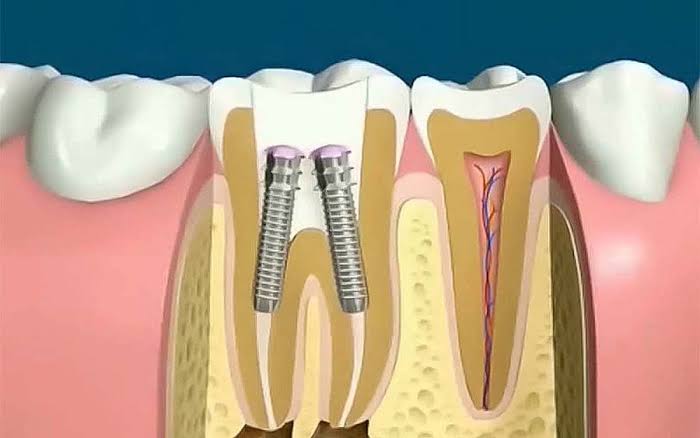
In modern restorative dentistry, the ability of teeth that have experienced significant structural loss and undergone root canal treatment to withstand chewing forces inside the mouth depends on how the internal architecture of the tooth is reinforced. Teeth that receive root canal treatment lose their “vitality” with the removal of the neurovascular bundle (nerves and blood vessels) inside them, and over time they become more brittle as their water content decreases. Applications known in medical literature as “Intraradicular Fiber Posts” involve placing nanotechnological glass fibers inside the root canal so that they function in harmony with the natural flexibility coefficient of the tooth (the dentin elasticity modulus), reinforcing the tooth root internally like protective armor. Redefining Ankara intraradicular fiber standards with the vision of “Differential Modulus Compatibility” and “Adhesive Monoblock Integration”, Panorama Ankara offers patients professional root engineering that prevents vertical root fractures and creates an extremely stable foundation for the porcelain restorations placed above. The systems applied in our clinic support the tooth internally while also distributing chewing stress evenly down to the root apex, representing an advanced tissue-preservation discipline.
The true scientific achievement behind intraradicular fiber technology lies in the physical principles known in medical literature as “Stress Distribution and Wedge Effect Elimination.” In the advanced restorative unit of Panorama Ankara, passive anchorage systems that do not apply mechanical pressure on the tooth root are preferred instead of the metal screws used in the past. Because metal posts are extremely rigid, when they are inserted into the tooth they can behave like a wedge rather than absorbing forces, potentially splitting the root into two parts. In contrast, fiber posts have flexibility values very similar to dentin, the tooth’s natural tissue. Therefore, when chewing forces are transmitted to the tooth root, the fiber post flexes microscopically together with the tooth, dissipating stress. This system, which chemically locks into the root canal through adhesive bonding, transforms the tooth root into a unified structure (a monoblock) and maximizes resistance. This vision transforms intraradicular reinforcement applications in Ankara from a simple “post and core” procedure into a tissue engineering center that scientifically extends the biological lifespan of the tooth.
Clinical Classification: Intraradicular Anchorage Systems and Biomechanical Compatibility Analysis
Whether a tooth should be supported with a fiber post or another method depends on the thickness of the remaining tooth walls, the width of the root canal, and the patient’s chewing habits. Each case requires its own unique stress analysis. To help patients clearly understand this advanced root reinforcement process, Panorama Ankara presents the anchorage methodology applied in our clinic within the scientific framework shown in the table below.
| Intraradicular Anchorage Material | Biomechanical Reaction and Tissue Compatibility | Panorama Ankara Clinical Application Goal |
|---|---|---|
| Glass Fiber Post | Has a flexibility coefficient similar to dentin; transmits light to preserve esthetics and increases fracture resistance. | Used particularly in anterior and premolar teeth to protect root health and create an esthetic base beneath all-ceramic crowns. |
| Quartz Fiber Post | Possesses very high tensile strength and is preferred especially in molar teeth exposed to excessive chewing forces. | To internally stabilize weakened molars after deep decay so that they can withstand the vertical loads of porcelain crowns. |
| Ribbond (Fiber Ribbon) Application | Integration of specially woven polyethylene fibers into the root canal and the coronal restoration. | Provides customized reinforcement when the root canal is excessively wide or when standard posts do not fit the anatomy. |
| Zirconia Posts (Rigid) | Very rigid and non-flexible; highly translucent but carries a risk of stress accumulation in the root. | Rarely preferred only in specific esthetic situations and in very wide root canals, with root health monitored through tomography. |
Micro-Retention and Adhesive Locking: Leak-Free Internal Root Restoration
The most important factor determining the success of an intraradicular fiber post is not simply inserting the fiber rod physically into the canal but locking it to the canal walls at the micron level using adhesive resin systems. In the protocols applied at Panorama Ankara, the surface of the fiber post is activated with special silanization agents to establish a chemical bonding bridge. Special dental cements applied into the root canal penetrate all the way to the apex and surround the fiber post completely. This hermetic seal not only provides physical support but also prevents microleakage—the infiltration of bacteria into the root canal system, which is the greatest enemy of endodontically treated teeth—thus biologically sealing the infrastructure of the tooth. This represents one of the most refined restorative engineering practices capable of extending the lifespan of a restoration for decades.
Functional Stabilization and Maintenance After Fiber Post Placement
Although a tooth strengthened with a fiber anchorage inside the canal and restored with an esthetic crown becomes biomechanically very strong, it should not be forgotten that it contains an artificial reinforcement. The Panorama Ankara restorative dentistry board presents the following two fundamental rules as a usage guideline to preserve the root health of your tooth and the integrity of the restoration:
- Because the resistance provided by the fiber post is designed according to the natural flexibility limits of the tooth, sudden and excessive traumas on the tooth (such as crushing ice, opening packages with the teeth, or cracking nuts) should be avoided, as such forces may damage the root structure rather than the fiber itself.
- To prevent the adhesive bond (bonding interface) that integrates the fiber post into the tooth from weakening due to acids and bacteria in the oral environment, maximum attention must be paid to gum health and the margins of the restoration should be monitored by the dentist through regular six-month professional check-ups.
Prepare the Foundation of Your Teeth for the Future with Panorama Ankara
Teeth weakened after extensive decay or root canal treatment are not a risk you must live with under the fear that they may “break and need extraction.” On the contrary, in expert hands they can be strengthened through nanotechnological intraradicular fiber systems and restored to exceptional durability. In your search for intraradicular fiber treatment in Ankara, Panorama Ankara combines differential modulus compatibility and passive anchorage protocols, freeing you from outdated metal screws that fracture tooth roots and from premature tooth loss with scientific elegance. We respect the natural root structure of your tooth 100% and reinforce your smile from the inside outward by redistributing chewing forces according to nature’s perfect balance.
To map the remaining tooth structure and root canal width through our digital analyses, determine the most suitable pathway with glass fiber or quartz anchorage, and regain the comfort of chewing freely with your preserved tooth, you can schedule a detailed restorative consultation appointment at the Panorama Ankara clinic and entrust your health to the safe hands of experience and modern dentistry.