


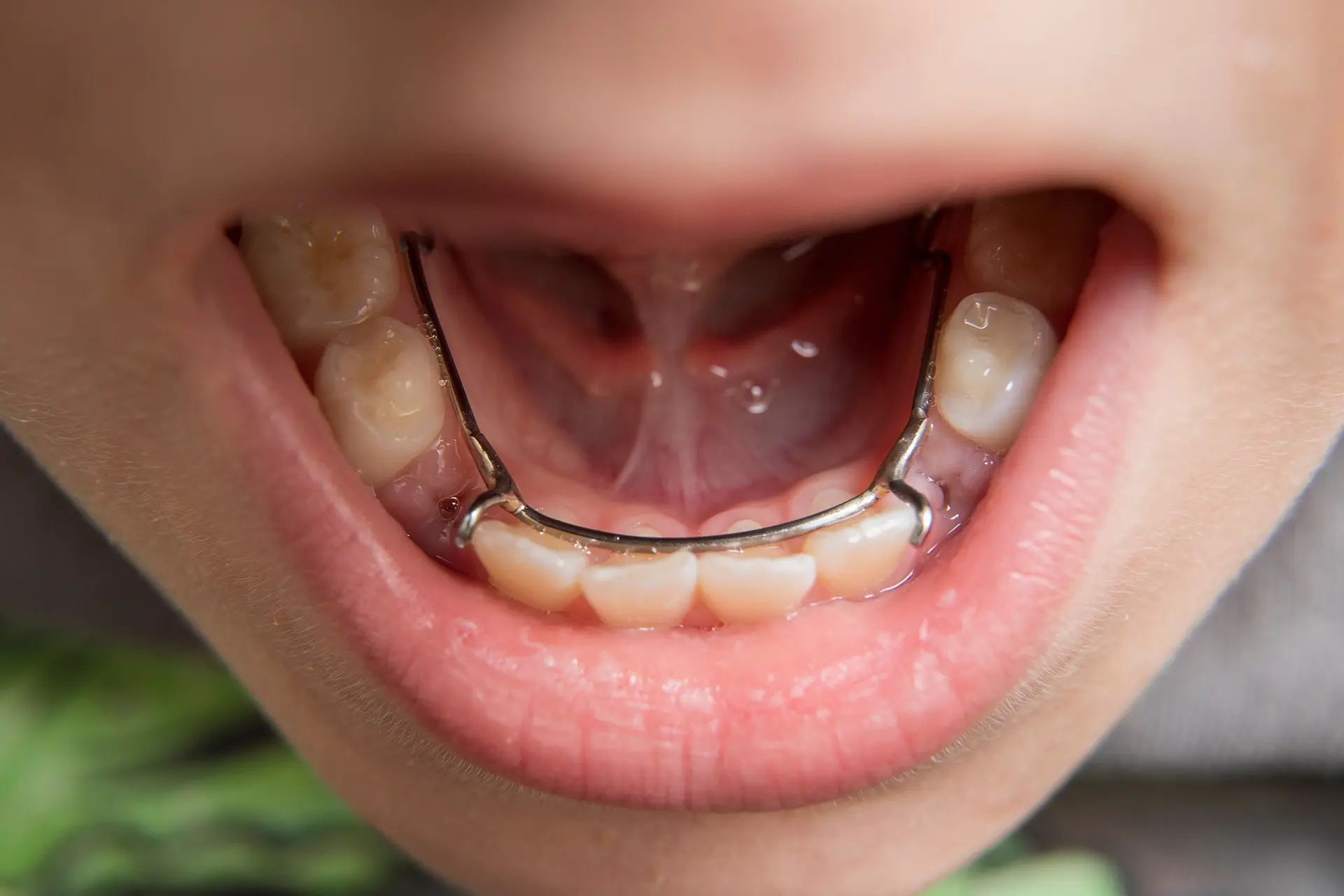
What are Fixed and Removable Space Maintainers?
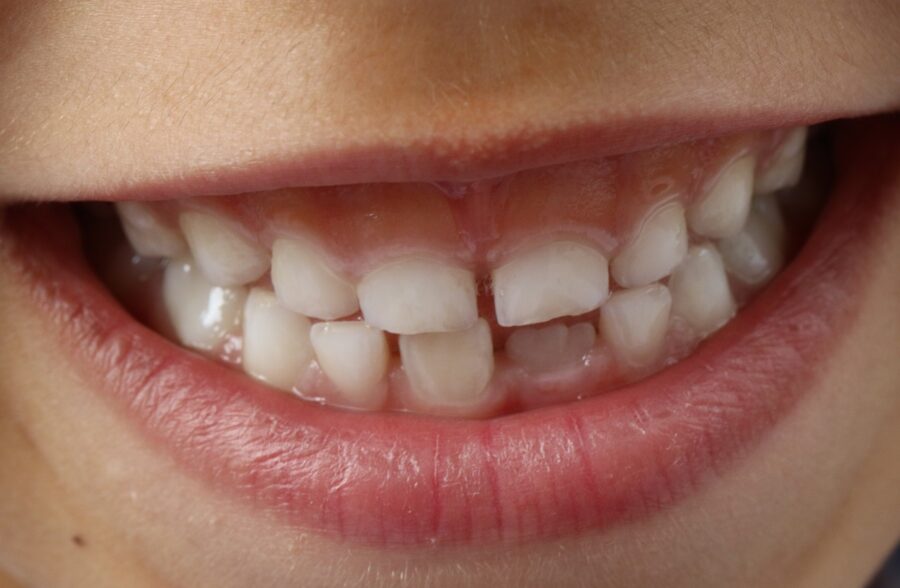
Fixed and removable space maintainers are medical devices designed to protect the empty spaces left in the mouth by prematurely lost primary teeth, referred to as “preventive orthodontic appliances” in pediatric dentistry (pedodontics) practices. Primary teeth not only serve masticatory and speech functions but also act as natural guides and space maintainers for the underlying permanent tooth buds. When this protective shield falls off the line prematurely for any reason, the eruption order of the permanent tooth within the jawbone is jeopardized. Space maintainers are custom-produced using stainless steel bars with high metallurgical resistance or tissue-friendly acrylic bases, and they protect this strategic space until the underlying permanent tooth pierces the mucosal boundary.
- Mechanical Space Safety: The power to permanently stabilize the millimetric widest width of the edentulous space in the dental arch.
- Bio-Compatibility Profile: Manufacturing with medical materials resistant to intraoral acids, salivary enzymes, and corrosion.
- Developmental Guidance: The ability to keep the direction of the permanent tooth bud in the vertical axis without hindering the growth rhythm of the jawbone.
In Which Situations are Space Maintainers Used?
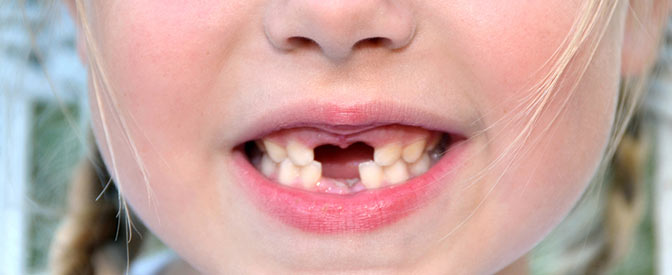
The inclusion of pedodontic space maintainer appliances in the clinical workflow is indicated as a medical necessity in cases where the primary tooth is removed or lost from the mouth at a stage much earlier than its physiological exfoliation schedule. Primary teeth may have to be sacrificed as a result of chronic deep caries, root-end abscesses (periapical lesions), or sudden dental trauma such as bicycle falls or impacts. The physician rationally decides on these appliances in order to prevent the teeth to the right and left of the space from closing the area by showing axis deviation and to prevent the underlying tooth from remaining impacted, leading to heavy surgical operations in the future.
The primary clinical situations where space maintainer treatments are strictly preferred are as follows:
- In cases where primary molars cannot be saved due to widespread bottle caries or insidious interproximal caries and are removed by surgery,
- In cases where the anterior incisor primary teeth are broken or completely knocked out (avulsion) as a result of dental trauma experienced by the child,
- When it is certified that some primary teeth never formed inside the jawbone due to genetic or developmental anomalies (congenital absence),
- In cases where the existing primary root resorbs early and falls out due to inflammation while there is still more than 6 months of biological time left for the permanent tooth to erupt.
What are the Differences Between Fixed and Removable Space Maintainers?
The most fundamental clinical distinction between fixed space maintainers and removable space maintainer appliances lies in the stabilization mechanisms of the devices in the mouth, the volume of tooth deficiency addressed, and the compliance discipline requirements of the patient in the home environment. Fixed appliances are bonded to adjacent teeth with medical cements in single tooth deficiencies and can never be removed by the child; this provides treatment safety by eliminating the necessity of patient compliance. Removable appliances, on the other hand, are appliances that take support from the palatal vault in multiple tooth losses, can be inserted and removed, and are strictly dependent on the child’s will. The clinical parameters of the two major space maintainer classes are listed in the comparison table below:
| Clinical, Technical, and Hygiene Evaluation Criteria | Fixed Space Maintainer Appliances (Band-Loop) | Removable Space Maintainer Appliances (Partial Denture) |
|---|---|---|
| Intraoral Stabilization and Retention Mechanism | Permanently bonded onto the adjacent tooth with a metal ring (band). | Retained by flexible acrylic bases and clasps resting on the palatal mucosal bed. |
| Number / Volume of Missing Teeth Addressed | Generally selected for the loss of a single tooth or two adjacent teeth. | When multiple and widespread tooth absences are certified in the same jaw arch. |
| Patient Compliance (Cooperation) Requirement in Treatment | It is minimum; since the appliance is bonded in the mouth, the child carries no risk of losing it. | It is high; it is a rule for the child to wear the appliance all day long and not to lose it. |
| Contribution to Masticatory Function and Nutrition | It is passive; it only mechanically prevents the posterior teeth from tipping forward. | It is high; mastication is reinforced by arranging artificial acrylic teeth in the edentulous areas. |
| Practicality of Home Cleaning and Hygiene Management | Brushed inside the mouth; marginal leakages are cleaned with interdental brushes. | The appliance is taken out of the mouth and washed under liquid soap and running cold water. |
Bone and Mucosa Relationship: Who is Suitable for Space Maintainers?
Hard tissue preservation and space maintainer treatments are medically suitable for any pediatric child patient who has lost primary teeth much earlier than the normal exfoliation schedule, has spaces opened in the jawbone matrix, and whose dental compliance level can tolerate operational steps. The system exhibits a high biocompatibility profile as it does not involve scalpels or surgical wounds in the intraoral tissues. However, if the child has a high degree of special mental needs and the risks of swallowing or breaking the removable appliance are certified, it is a clinical necessity to bond fixed systems instead of removable ones under the comfort of general anesthesia.
- Minis with Early Primary Tooth Loss: Children in the 4 to 10 age range whose primary molars are sacrificed early due to widespread caries.
- Those with Developmental Jaw Narrowness: Clients who need millimetric space preservation in the jaw arch for permanent teeth to erupt.
- Those Who Have Lost Masticatory Comfort: Pediatric cases who cannot crush food due to multiple tooth deficiencies and whose digestive system is at risk.
How is the Evaluation Performed Before Bone Grafting and Space Maintainers?
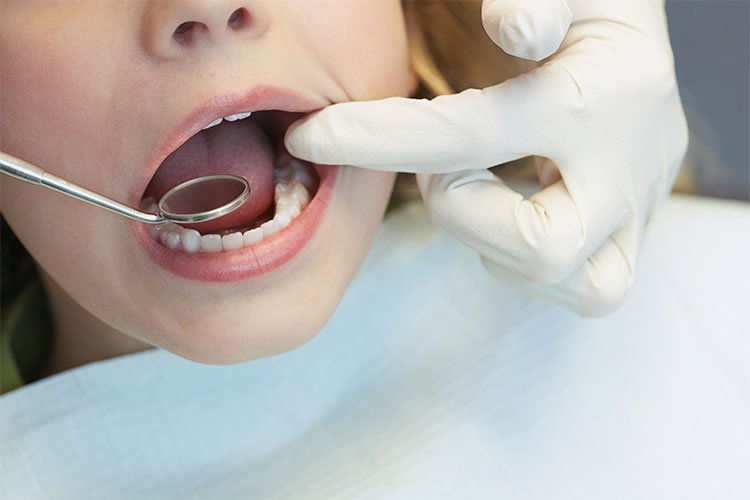
The clinical evaluation performed before proceeding to the appliance manufacturing sessions is the most vital pre-operative analysis stage that screens the maturation degrees of the permanent tooth buds hidden in the lower layers of the jawbone. During the examination, the physician inspects the health of the gingival margins; because the presence of a bleeding or edematous mucosal boundary will disrupt impression accuracy. At this stage, high-resolution digital panoramic radiology data is scanned layer by layer to map the process in order to determine the depth curves of permanent tooth germs that cannot be detected by eye, and root elongation coefficients.
- Nolla Eruption Stage Charting: Determining how much of the underlying permanent tooth root has formed and how many years are left for its eruption.
- Periodontal Health of Adjacent Teeth: Certification of the root soundness of the abutment tooth onto which the metal band of the fixed space maintainer will be placed.
- Dental Arch Deviation Measurement: The process of measuring symmetry ratios in the right and left halves of the jaw arch with orthodontic rulers.
How is the Space Maintainer Treatment Process Planned?
The planning of the pedodontic preventive appliance workflow is carried out through a gradual clinical algorithm based on the number of missing teeth, the thickness of the bone covering the underlying permanent tooth bud, and the child’s psychological compliance degrees. While planning the process, wires are definitely not bent by rule of thumb; all steps are designed by drawing mechanical boundaries completely parallel to the eruption axis of the permanent tooth. In planning, jaw narrowing risks are blocked at the very beginning of the road, thanks to running laboratory manufacturing cycles with schedule discipline.
- Stage 1 (Clinical and Radiological Diagnosis): Mathematical certification of early primary tooth loss and space narrowing risk through panoramic film analysis.
- Stage 2 (3D Digital Impression Taking): The phase of transferring the point cloud data of jaw arches to the cloud with intraoral scanner cameras.
- Stage 3 (Laboratory Design): Construction of metal or acrylic appliances with computer-aided software with flexibility that will not hinder jaw growth.
- Stage 4 (Assembly and Calibration): Testing the appliance in the mouth, cementing the fixed ones, and starting the 3-month periodic follow-up cycle.
What is the Role of Space Maintainers in Early Loss of Primary Teeth?
When primary molars are removed from the mouth environment before their physiological schedule, the homeostasis balance within the jawbone is disrupted in favor of space narrowing within seconds. Due to natural biological reflex, the first permanent molar located behind the space begins to tip horizontally toward the space in front of it and slide by rotating (mesial migration); the teeth in front of the space migrate backward. This insidious mobility completely closes the housing space where the underlying permanent premolar will erupt. The space maintainer appliance builds a rigid metal barricade between these two adjacent teeth, physically preventing the narrowing of the space; it zeroes out the nightmare of the permanent tooth remaining impacted by stopping tooth migrations.
“Space maintainers are biomechanical guardians that drop protective anchors into the spaces left by prematurely fallen primary teeth, protecting the nests of the permanent teeth to come against invasion.”
How are Fixed Space Maintainers Applied?
Fixed space maintainer appliance assembly is a precise prosthetic procedure performed with completely non-invasive steps in clinical rooms with full sterilization chains, without any need for anesthesia needles. The first session begins with the passive fit test of the metal ring (band) coming from the laboratory on the abutment tooth. After the tooth surfaces are cleaned with prophylaxis pastes and dried, bio-active resin-modified glass ionomer bonding cements (fluoride releasing cement) are applied to the inner surface of the metal band. The appliance is seated on the tooth with finger pressure, and the polymerization of the cement is completed with blue LED light sources, establishing a permanent lock.
- Band Selection: Determination of the ideal diameter stainless steel ring that perfectly fits the anatomical equator line of the abutment tooth.
- Wire Loop Calibration: The phase of bending the metal arm passing through the space at a depth that will not hinder the opposing jaw closure (occlusion).
- Cementation Protocol: Eliminating the risks of insidious enamel caries forming under the wire infrastructure by performing leak-proof bonding.
How are Removable Space Maintainers Applied?
The intraoral assembly and delivery phases of removable space maintainer appliances, preferred in multiple tooth deficiencies, include a training session aimed at developing the child’s motor hand coordination skills to insert and remove the appliance on their own. First, the pink acrylic body printed from tissue-friendly polymers in the laboratory is placed on the jaw mucosa; it is checked whether the marginal boundaries exert pressure on the buccal attachments (frenulums). Metal clasps (hooks) are calibrated with medical pliers according to the undercut regions of the abutment teeth to achieve the ideal retention coefficient, and the child is shown live how to remove the appliance linearly with fingernail tips.
- Mucosal Compliance Audit: Ensuring that the acrylic base sits on the palatal vault with knife-edge smoothness and preventing pressure sores.
- Clasp Activation: Tightening the flexible metal wires in a balance that will not over-tighten the abutment teeth but will prevent the appliance from falling out while talking.
How Do Space Maintainers Support Tooth Alignment?
The supporting power of preventive pedodontic appliances on the dental arch and facial symmetry is based on the rules of “preservation of crest integrity” and “registration of contact points”. As long as the space maintainer keeps the space in the jaw arch constant, it ensures that the permanent teeth erupt into the mouth in perfectly symmetrical coordinates relative to the facial midline. This mechanical support prevents teeth from erupting ectopically (sprouting from the palate or buccal wall) due to lack of space in the jaw; thus, it contributes to the weaving of the lower and upper jaw closure relationship (occlusion) in a smooth harmony according to medical standards.
- Balancing Elongation Forces: Preventing teeth in the opposing jaw from elongating towards the space and causing temporomandibular joint (TMJ) locking.
- Preservation of Dental Arch Width: Supporting the horizontal diameters of the alveolar bone arch to remain flexible in accordance with growth physiology.
Do Space Maintainers Affect the Orthodontic Treatment Process?
Deploying space maintainer appliances without losing time at the moment of early loss of primary teeth is the primary preventive medicine step that radically reduces the probability of the child’s requirement for heavy and high-cost orthodontic wire treatments (bracket surgeries) that will last for years in the future. Skeletal space narrownesses that develop in mouths where space maintainers are not used cause permanent teeth to remain impacted within the jawbone, and surgical impacted tooth operations become inevitable in order to pull these teeth up with the help of wires in the future; the appliance prevents these complex orthodontic anomalies at the very beginning of the road.
- Preventive Power: The luxury of preventing complex future anomalies by 80% with the help of a simple wire loop.
- Eruption Guidance Help: Smooth eruption of permanent teeth with their own natural biological orientation, without needing orthodontic forces.
How Long Should Space Maintainers Be Used?
The active intraoral service schedule of space maintainer appliances is a dynamic period that varies depending on the “biological eruption speed” of the permanent tooth bud it harbors, rather than a chronological calendar duration. The duration of the appliance remaining in the mouth continues uninterrupted until that exact turning point when the underlying permanent tooth resorbs the jawbone boundaries, pierces the mucosal level, and starts to be monitored as a crown tip with the naked eye in the oral cavity. When this biological registration moment comes, fixed appliances attached are removed by the physician and the task is successfully terminated.
- Average Usage Lifespan: A waiting period that usually varies between 1 to 4 years, depending on the age at which the primary tooth was lost.
- Radiological Confirmation: Completion of the appliance’s mission upon seeing that at least 2/3 of the underlying tooth root has formed in 6-month panoramic X-rays.
What Should Be Considered While Using Space Maintainers?
Calibrating the masticatory reflexes of parents and the child according to mechanical boundaries in the daily usage cycle of the appliance in the mouth is the most critical safety rule preventing the bending of fixed bars or the breaking of removable acrylic. Although space maintainer metals are rigid, they can produce leverage tensions in case of asymmetric gum or taffy adhesions; it is a clinical necessity for the patient to show nutritional loyalty suitable for the nature of the appliance.
Medical rules that must be meticulously considered during daily active usage periods are as follows:
- Sticky sugary foods such as caramel, jellybeans, chewing gum, or Turkish delight, which can dissolve the bonding cement of fixed space maintainers, should strictly not be consumed.
- The child should be trained not to loosen or tamper with the metal bars or acrylic wings of the appliance by playing with their tongue or finger.
- Removable space maintainers should be removed from the mouth while eating, and should be put back on after teeth are brushed and the appliance is cleaned following the meal.
- Removable appliances taken out of the mouth should never be wrapped in napkins against the risk of breakage and loss, and should be stored directly in the medical protection box.
How Should the Maintenance of Fixed Space Maintainers Be Done?
Daily maintenance of fixed appliances is a preventive hygiene protocol that must be implemented with discipline every day to prevent bacterial plaque accumulation at those micron-level step boundaries where metal rings merge with natural tooth surfaces. Since attached wire infrastructures may contain blind spots that the brush cannot reach, home hygiene should not be limited to standard brushing alone; if accumulated plaques are not cleaned, interproximal caries that trigger an insidious need for fillings in abutment teeth may be stimulated.
- Interdental Brush Doping: Clearing food debris from the space corridor passing under the metal arm with micro interdental brushes every evening.
- Vertical Sweeping Motion: Massaging with soft-bristled brushes from the gums towards the tooth, necessity of eliminating horizontal harsh scrubby brushings.
How Should the Cleaning of Removable Space Maintainers Be Done?
Cleaning of removable acrylic appliances should be executed with delicate methods completely free from normal toothpastes and household bleaches, which carry the risk of scratching the smooth polish layer of the material. Micro-abrasive crystals in the content of classic toothpastes sand the acrylic surface, creating microscopic scratch lines, and these areas invite pathogenic fungi (Candida) to settle in the future; therefore, cleaning should be managed with liquid soaps.
- Liquid Soap and Running Cold Water: Washing the appliance under running cold water after every meal, with non-abrasive liquid soap suds and soft brushes.
- Antiseptic Tablet Cures: Microbial clearing phase by keeping the appliance for 15 minutes in denture tablets (e.g., Corega) thrown into a container full of water twice a week.
- Boiling Water Ban: The appliance should strictly never be thrown into boiling water for sterilization purposes; high temperature permanently deforms the acrylic body by warping it.
Why Are Regular Check-ups Important in Space Maintainer Use?
Periodic control sessions after the operation and assembly harbor the most vital examination steps monitoring the growth and development speed of the jawbone and inspecting the eruption depth of the underlying permanent tooth. The jaw skeleton continues to grow and expand every month in children; therefore, it is an uncompromising medical rule that a fixed metal ring must be calibrated by the physician in a clinical setting every 3 months so as not to restrict jaw development or loosen and cause insidious enamel caries.
What Are the Advantages of Space Maintainers?
The advantages provided by the use of space maintainer appliances in the traditional pedodontics workflow to the child’s craniofacial development not only protect an instant space but also secure the entire future masticatory symmetry. Eliminating surgical and orthodontic risks at the very beginning of the road, this bio-technological flow places the child under a protective medical shield.
- Prevents Orthodontics: Eliminates the need for wire and bracket treatments requiring budgets of thousands of liras in the future by 80%.
- Zeroes Out the Risk of Remaining Impacted: Prevents complications of permanent tooth germs getting jammed inside the jawbone, remaining impacted, and forming cysts.
- Masticatory and Speech Support: Reinforces the child’s clear pronunciation of words and nutrition through removable appliances in multiple absences.
In Which Age Groups Can Space Maintainer Treatment Be Applied?
Preventive space maintainer protocols are safely applied in all childhood stages covering the “primary and permanent tooth transition phases” (mixed dentition period) in the mouth, rather than the chronological age of the child. This process biologically starts from the 4-year-old limit, where the first primary tooth is lost early, and can continue uninterrupted up to the 12-13 age limits where all permanent molars complete their intraoral mapping; meaning every child under the mixed dentition heading is a safe candidate for the process.
Digital CAD/CAM Design Technology in Space Maintainers
Space maintainer manufacturing in new generation digital pediatric dentistry practices involves robotic automation chains that completely throw away old pasty impressions that cause gag stress to the patient. Thanks to processing the point cloud impression data coming from 3D intraoral scanner cameras in laboratory software, the child’s gingival margin lines are inspected by magnifying 50 times. Since metal rings are produced with zero error tolerance in computerized laser welding units, they bond with passive fit to the tooth and completely zero out the tissue pressure ulcer risks that analog wires can cause.
What are the Frequently Asked Questions About Fixed and Removable Space Maintainers?
The most common anxieties arising in the minds of parents planning space maintainer appliance processes following early primary tooth losses and their uncensored medical counterparts are presented below:
Does the space maintainer wire appliance hurt my child when it is being placed or while it is in the mouth?
No, it definitely does not cause the slightest pain, ache, or soreness. Space maintainer applications are completely local and non-invasive steps that do not involve needles, scalpels, surgical wounds, or numbness. The fixed appliance is only bonded onto the tooth with bio-active cements, deep sensitive nerve lines are not entered; therefore, the child only perceives the water coolness of the devices throughout the session and the procedure is completed very comfortably and practically.
Does this space maintainer wire hinder the growth and expansion of the jawbone while my child carries it in their mouth?
No, this is medically and physically impossible in cases planned with the correct technique. The metal arms of fixed space maintainers do not lock the jaw arch like a holistic belt; they only establish a linear safety barricade along a single space line. Since it applies no mechanical resistance to the elasticity coefficients of the vertical and horizontal growth centers of the jawbone, the child’s facial growth physiology continues with a smooth line.
Does the attached ring of the fixed space maintainer leak from the bottom and secretly rot the sound tooth underneath?
If “fluoride-releasing glass ionomer cements”, which are certified in medical standards, were preferred while bonding the appliance, this cement protects the tooth enamel like a shield against insidious acid attacks and does not create a need for fillings. However, if parents do not have the metal ring edges cleaned with interdental brushes in the evenings and allow food fermentation there, a risk of staining and decay may arise; home hygiene must be maintained without compromise.
Do these space maintainer appliances placed in the mouth prevent the permanent tooth from erupting when it comes out, and how is the wire removed?
No, on the contrary, it illuminates the exit path of the permanent tooth. The mission of the appliance is certified as soon as the underlying permanent tooth resorbs the jawbone and pierces the mucosal level, appearing as a small white chalk tip in the mouth. In the 3-month routine control, our physician detaches the metal ring in seconds with the help of special removal pliers, snapping it off without causing the slightest stinging sensation to the tooth, and the bed is cleaned smoothly.
Can my child return to their normal school and social life immediately on the day the space maintainer appliance is delivered to the mouth?
Yes, space maintainer is a micro restorative craftsmanship conducted completely on an outpatient basis, containing no surgical sutures or numbing wraps; therefore, the exact minute the plaque is bonded or delivered, the child can leave the clinic and continue their normal daily play, school, homework, or social life rhythm from where they left off with a bright self-confidence; there is no medical obstacle to their immediate participation in normal activities after the session.
Who Are We? & Panorama Ankara Oral and Dental Health
Panorama Ankara is a licensed oral and dental health center that offers corporate health assurance to its patients by combining an academic expert staff and the latest global bio-technological digital infrastructure under a single roof in all specialty branches of dentistry, primarily oral, dental and maxillofacial surgery, advanced implantology, microscopic endodontics, periodontology, pediatric dentistry (pedodontics), and aesthetic dentistry. Instead of risking skeletal space narrownesses and impaction anomalies caused by early primary tooth losses with old distressing impression trays or loose wires that are not followed up, our center, which attaches vital importance to reaching permanent oral integrity by centering “digital preventive pedodontics” principles with evidence-based medicine disciplines, operates 3D Digital Scanning and CAD/CAM Robotic Space Maintainer Restoration ecosystems without compromise with schedule discipline from the very beginning to the end of the clinical operation workflow.
In all diagnosis, radiological screening, design, and laboratory production interventions performed under the roof of Panorama Ankara; absolute sterilization, high patient safety, transparency, and honesty principles are operated in full compliance with medical regulations by virtue of the charter. In our clinical practices, while analyzing the vertical boundaries of the jawbone with millimetric sections via 3D tomographies, proprietary intraoral scanner cameras that transfer the jaw twin to the computer in seconds without causing gag stress to the patient and bio-active fluoride-releasing bonding units are applied with millimetric precision under the supervision of our expert pedodontist staff. Our aim is not to impose old-fashioned, slow, harrassing analog appliance molds that poke the gums or loosen in the mouth and cause decay on our children; but to analyze the skeletal growth index and occlusion mechanics of each child on the virtual screen during the preliminary examination, and to obtain smooth oral functions that you will use with maximum session comfort, seamless comfort standards, and a lifelong permanent orthodontic order without damaging the surrounding soft tissues. If you are worried about your child’s early tooth losses and fading smile integrity and want to start your digital smart space maintainer process from start to finish with scientific assurance in an expert corporate center environment; you can safely protect your health and smile integrity by contacting the expert staff of Panorama Ankara for a detailed examination.