

Is an Implant the Best Option for a Single Missing Tooth? Why Does This Method Stand Out?
In the course of life, we may sometimes lose a single tooth due to an unfortunate accident, sometimes due to advanced decay or gum disease. Single tooth losses, which usually occur in the back of the mouth, are very susceptible to being postponed by saying “it’s just a single tooth anyway, let’s keep it for now” since it is not directly visible from the outside. However, the inside of the mouth is a dynamic ecosystem in which all parts are interlocked perfectly, and the loss of even a single stone from this ecosystem disrupts the balance of the entire system with a domino effect.
So, which of the solutions offered by modern dentistry should we choose when a single tooth is missing? Traditional bridge prostheses or artificial tooth root, i.e. implant treatment, which is the most popular application of recent years? The question “Is an implant the best option for a single missing tooth?” is one of the questions that patients who apply to our clinic most seek answers to.
1. What Changes in the Mouth When a Single Tooth is Missed? (Domino Effect)
Loss of a single tooth does not mean only a gap in that area. Teeth maintain their positions by remaining in constant contact with the teeth next to and opposite them. When a tooth is extracted or lost, the following insidious processes begin in the mouth:
- Topulation of Adjacent Teeth into the Gap: The healthy teeth on the right and left of the space begin to lean towards the space and topple over time. This condition distorts the angles between the teeth and creates new hidden areas of decay.
- Extension of the Opposite Tooth into the Space: The tooth located directly opposite the lost tooth (the upper one if it is under it, the lower one if it is above it) begins to extend vertically towards the space because it cannot find a surface to hit while chewing. This elongation causes the root surface of the tooth to be exposed and shaken.
- Jawbone Resorption (Alveolar Bone Resorption):The tooth root stimulates the jawbone and keeps it alive. When the root disappears, the jawbone ceases to function in that area and begins to melt, just like an unused muscle.
As can be seen, not treating a single missing tooth may cause 3-4 more teeth to become unhealthy in the following years.
2. What are the Treatment Methods Used for Single Tooth Loss?
In traditional and modern dentistry, three different methods can be applied to replace single tooth deficiencies:
A) Traditional Dental Bridge (Fixed Prosthesis)
It is the process of reducing the teeth on both sides of the gap and gluing a 3-member veneer block supported by these teeth to the mouth. It is a quick method that has been used for years, but it requires sacrificing healthy teeth.
B) Maryland Bridge (Winged Bridge)
By lightly roughening only the back surfaces of the adjacent teeth, the artificial tooth is bonded to the side teeth through these wings. Although it is a minimally invasive method, its resistance to chewing forces is low and it is generally preferred as a temporary solution.
C) Titanium Dental Implant
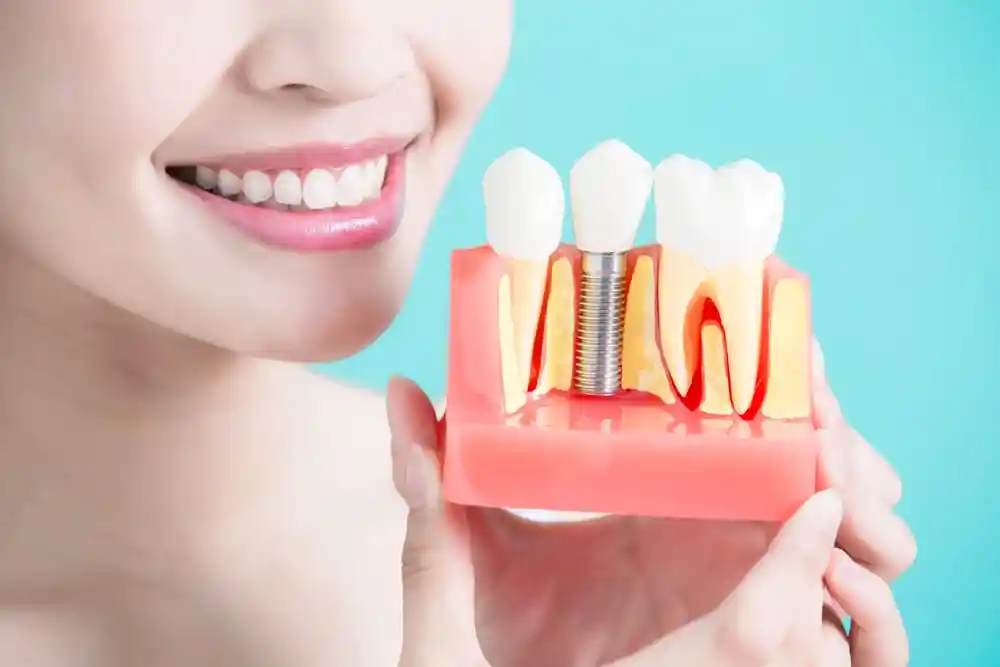
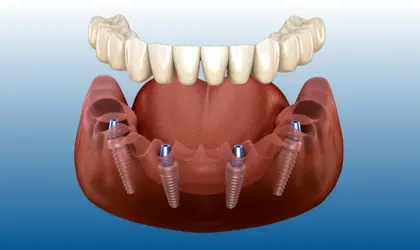
It is the process of placing an artificial titanium root (implant screw) into the jawbone in the gap and attaching a single crown (zirconium or porcelain crown) on it. It has its own infrastructure, independent of the side teeth.
3. Why is the Implant Considered the “Gold Standard” for Single Tooth Missing?
Dental authorities and clinicians around the world define implant treatment as the “gold standard”, that is, the most ideal treatment option for single tooth missing. There are very strong biological and mechanical justifications behind this definition:
“Immunity of Adjacent Teeth: Non-Invasive Approach”
In order to make a traditional bridge, two completely healthy teeth, located on the right and left of the gap, which may have never decayed in their lives, must be cut all around and reduced in size. In implant treatment, side teeth are never touched. By directly intervening in the bone in the gap, the natural structure and life of the other teeth are preserved.
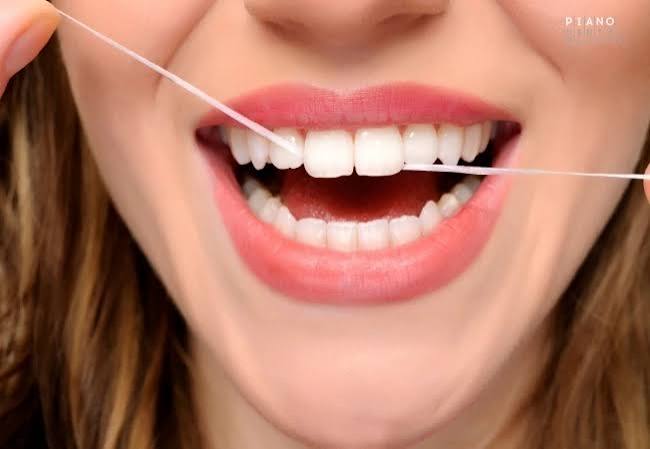
Additionally, the implant can be cleaned as a single unit. You do not have to pass special threads under the teeth as in bridge prostheses; You can brush them like your original teeth and clean them with normal dental floss. This makes oral hygiene management extremely easy.
4. Implant and Traditional Bridge Comparative Analysis Table
You can review the table we have prepared so that you can clearly compare all aspects of the two methods when deciding on a single tooth gap:
| Evaluation Criteria | Single Tooth Implant Treatment | Traditional Dental Bridge |
|---|---|---|
| Condition of Adjacent Teeth | Completely preserved, no cutting is done. | Both healthy teeth on either side are shaped. |
| Jawbone Volume | Stimulates bone, prevents resorption. | Bone under the body resorbs over time. |
| Gum Aesthetics | Like a natural tooth, from the gum remove. | Black voids may form under the bridge over time. |
| Lifespan | With proper care, it lasts a lifetime. | It should be renewed after an average of 7-10 years. |
| Treatment Duration | 2-3 Months (Bone integration time) | 5-7 Days (Fast completion) |
5. Aesthetic and Natural Gum Harmony in Front Tooth Missing
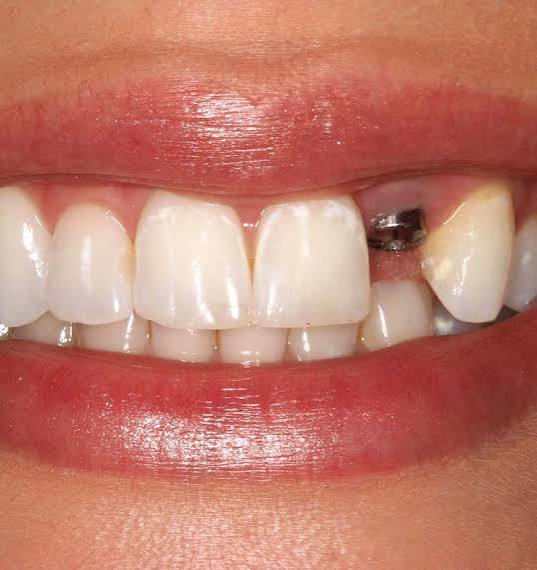
When a missing tooth is in the front area of the mouth (smile line), aesthetic expectations reach their peak. When a single tooth implant is placed in the front area, it is not enough to simply create a white tooth; it must appear to emerge from within a natural gum architecture, at the same level as the adjacent teeth.
In traditional bridges, because the bone and gum tissue under the extracted tooth collapse over time, an artificial boundary line may appear between the artificial bridge body and the gum. In implant treatment, however, the titanium screw remains inside the bone, supporting the gum tissue. Thanks to the custom-designed, personalized zirconium abutments (spacers) at Panorama Ankara laboratories, a flawless smile aesthetic is achieved with excellent light transmission, which is never perceived as artificial from the outside.
SECTION 6: BACK TOOTH FUNCTION
6. Chewing Force and Jaw Health in Missing Back Molars
The molars in the back of the mouth are the areas where chewing force is most intensely encountered. An incredible load is placed on these teeth while eating. When a bridge is made for a single missing back tooth, the chewing load that should be borne by three teeth is only placed on two supporting teeth. This excessive load can lead to fractures in the roots of the supporting teeth or periodontitis (gum destruction) in later years.
A single tooth implant, on the other hand, transmits the chewing force directly to the jawbone. The bone thus maintains its strength, and no extra load is placed on the adjacent teeth. Just as you chew nuts, peanuts, or hard meat with your own teeth, you can safely apply the same force with your implant-supported crown.
7. Financial Perspective: Is a Single Tooth Implant Really Expensive?
(Lifetime/Cost Analysis)
The biggest factor in patients moving away from implant treatment and towards bridges is usually the price difference during the initial treatment. The cost of a single implant can be close to, or sometimes slightly higher than, the price of a 3-unit bridge. However, this financial picture needs to be examined with a long-term (macro) projection:
The biological lifespan of a dental bridge, even with the best oral hygiene, is an average of 7 to 10 years. When this time is up, the adhesive under the bridge abutments may leak, the supporting teeth may decay, and the bridge may need to be removed and replaced with a larger bridge (e.g., 4 or 5 units). This means renewed expense and more tooth loss every 10 years.
In contrast, once a single implant screw successfully fuses to the jawbone, it stays with you for a lifetime with good care. Only the porcelain or zirconium crown on top can be easily replaced if it wears down after many years. Therefore, when a lifetime cost analysis is performed, implants are a much more economical and budget-friendly option than bridge treatment.
8. How is a Single Tooth Implant Performed at Panorama Ankara? Digital Process
Although the loss of a single tooth may seem like a simple procedure, the angle and micron-level position where the implant will be placed in the jawbone directly determine both the lifespan and aesthetics of the prosthesis above. At Panorama Ankara, we use completely digital dentistry workflows in single tooth implant applications.
Our treatment process proceeds with these intelligent steps:
- 3D Tomographic Analysis: A millimeter-scale map of your bone is created, and the densest bone area where the implant will be placed is selected in a computer environment.
- Surgical Guide (Guided Surgery): In necessary cases, we produce personalized surgical templates with our 3D printers. Thanks to this template, the implant is placed directly into the bone at a perfectly planned angle on the computer, without cutting your gums or using stitches (Flapless technique). This reduces postoperative swelling and pain to almost zero.
- >Digital Impression and CAD/CAM Production: Once the bone formation process is complete, your digital impression is taken in seconds using intraoral scanners, and your premium zirconium tooth, 100% compatible with your own tooth color and anatomical form, is produced in our own laboratory.
9. Frequently Asked Questions (FAQ)
Will I miss work/social life while having a single tooth implant placed?
Absolutely not. Placing a single implant is an extremely simple procedure that takes an average of 10-15 minutes and is performed under local anesthesia. You can resume your social and professional life without any restrictions the day after the operation.
Can an implant still be placed if there is insufficient bone in the area where the tooth is missing?
Yes. If bone resorption has occurred due to a long time passing since tooth extraction, bone volume in that area can be increased by adding “bone powder (graft)” before or during the same session as the implant placement, allowing for safe implant application.
Will that area remain empty until the implant is placed?
Especially in cases of missing front teeth, we absolutely do not leave our patients without teeth. We prepare aesthetic temporary teeth in our laboratory for you to use during the implant’s fusion period and apply them to your mouth on the same day.
In summary; for single tooth loss, implants are undoubtedly the best and most advantageous option due to their ability to protect neighboring teeth, prevent jawbone resorption, offer a natural tooth feel, and last a lifetime. If you don’t want to hide your smile or risk the health of your other teeth because of a single tooth loss, you can contact us to experience Panorama Ankara’s digital and expert world.