

What Should Be Considered After Restorative Dental Treatments?
After restorative dental treatments, no food should be consumed for the period specified by the dentist, excessively hot, cold, or hard foods should be avoided, and daily oral hygiene routines should be carefully maintained. While mild sensitivity during the healing period is considered normal, if it persists for a long time the dentist should be consulted, and periodic clinical check-ups should not be neglected.
Restorative dental treatments, in which decay, fractures, wear, or shape irregularities in teeth are corrected and the tooth’s anatomical integrity is restored, depend on patient compliance after the procedure just as much as on clinical success. Although the composite resins, inlay/onlay restorations, or glass ionomer materials used are produced with high technology, it should not be forgotten that the care routines a natural tooth needs also apply to restored teeth. Patients following the dentist’s guidance during the post-treatment period directly supports the functional lifespan and aesthetic quality of the procedure performed.
How Should Nutrition Be in the First Hours After Restorative Dental Treatments?
In the first hours following the treatment, nothing should be chewed and no solid food should be consumed until the effect of the anesthesia has completely worn off. Since the lip, tongue, or cheek can be bitten unnoticed while under anesthesia, soft tissue traumas may occur; during this period, only consuming liquids at room temperature is considered appropriate.
Following procedures performed in a clinical setting, the time it takes for local anesthesia to clear from the body generally varies between 2 and 4 hours, depending on the type of anesthetic solution used and the individual’s metabolic rate. During this period of numbness, patients cannot fully perceive heat or the pressure they apply. For this reason, drinking a hot beverage before the numbness wears off can lead to burns, while chewing solid food can cause serious injuries to the inner cheek or lip area. Once normal sensation returns to the area, a gradual transition to a normal diet can be made, provided the dentist has given no additional warning.
| Suitable to Consume | Should Be Avoided |
|---|---|
| Water at room temperature | Very hot tea, coffee, soup |
| Lukewarm soups (after anesthesia wears off) | Iced beverages and ice cream |
| Soft-textured foods (puree, yogurt) | Shelled nuts, hard candies |
| Milk and dairy products at normal temperature | Sticky foods (caramel, chewing gum, Turkish delight) |
How Should Oral Hygiene Be Maintained After Restorative Procedures?
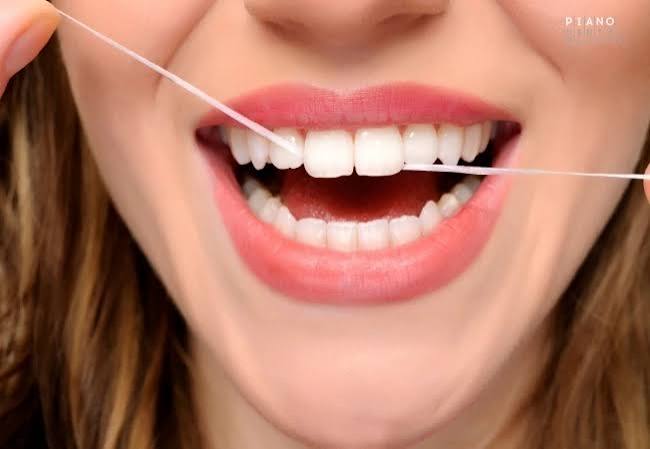
After the procedure, oral hygiene should be maintained by brushing the teeth at least twice a day with a soft or medium-bristle brush, supported by the use of dental floss. Preventing plaque buildup at the edges of the restoration and avoiding secondary decay beneath the filling are the most basic requirements.
Many people may fall under the mistaken impression that a tooth with a filling or restoration will never decay again. However, even though the restorative material itself does not decay, the borders where the filling meets the tooth are open to plaque buildup, and if not cleaned, new decay can form in the tooth’s remaining healthy tissue. In treatments applied especially to the interproximal areas, where two teeth touch each other, a toothbrush alone cannot provide sufficient cleaning. This is where dental floss or appropriately sized interdental brushes come into play. Avoiding the constant use of whitening toothpastes containing overly abrasive particles while brushing helps preserve the surface shine of the composite material.
How Long Does Post-Treatment Sensitivity Last and What Should Be Done?
Mild sensitivity to heat, cold, or chewing pressure developing in the treated tooth for periods ranging from the first few days to a few weeks is a physiological process. This is generally a natural response of the pulp to the treatment and gradually decreases over time on its own.
In cases where the nerve tissue (pulp) located at the center of the tooth is approached during the removal of decay, the tooth’s recovery and healing process may take some time. In this reversible process, called “pulpal hyperemia,” patients avoiding foods with extreme temperatures makes the healing period more comfortable. However, if the sensitivity increases over time instead of decreasing, wakes the patient at night as pain, or a feeling of pressure as if there is a high point on the tooth continues during chewing, the treating clinic should be consulted without delay. Sensitivities related to a feeling of height can be resolved within seconds through a small adjustment (polishing) procedure by the dentist.
- Hot-Cold Sensitivity: Generally indicates the pulp’s healing process and is expected to decrease within a few weeks.
- Pressure and Chewing Sensitivity: May result from the filling creating early contact points (height) and requires the dentist’s intervention.
- Spontaneous Night Pain: May indicate that the pulp is not repairing itself and requires further evaluation.
Which Foods Should Be Avoided After Composite Fillings?
After composite fillings or restorations, excessively hard foods that could compromise the integrity of the tooth, such as ice, hard candies, and shelled foods, should be avoided. At the same time, consumption of strongly staining agents such as tea, coffee, and tobacco products should be limited for the first 48 hours.
Although the nano-filled composite resins used today are produced to be quite resistant to high pressure, they are not completely resistant to traumatic forces the way natural tooth enamel is. Constantly biting a pen, biting nails, or cracking nuts such as hazelnuts or walnuts with the teeth can lead to micro-cracks or complete fractures at the edges of the restoration. In aesthetically intended anterior (front) restorations, discoloration related to food consumption should also be taken into account. Products such as wine, tomato paste, sour cherry juice, and cigarettes can cause the restoration to lose its natural color and yellow over time. It is possible to prevent such discoloration through regular oral care and clinical polishing procedures.
How Is the Process Managed After Restorative Treatment in the Panorama Ankara Region?
In the modern clinical dynamics of Panorama Ankara and its surroundings, the process after restorative treatment is managed with transparent information and digital appointment tracking systems, without disrupting the patient’s daily routine. Long-term oral health is targeted by conveying the healing stages and points to be considered to patients in detail.
Considering the pace of life in the region, patients generally want to quickly return to their social and work lives after the treatments applied. For this reason, in clinical protocols preferred around Panorama Ankara, patients are given verbal and written instructions at the end of the restorative procedure. In order to prevent commonly held misconceptions and minimize the risk of possible complications, all questions on the patient’s mind are answered clearly. Check-up processes planned according to the nature of the treatment applied (direct composite, inlay, onlay, etc.) are conducted comfortably by tracking patients through appointment systems.
What Should Be Considered in the Care of Inlay and Onlay Restorations?
The care of inlay and onlay restorations prepared in a laboratory setting is no different from that of natural teeth. Daily brushing, careful use of dental floss for the border areas of the restoration, and routine clinical check-ups are sufficient to preserve the intraoral integrity of these porcelain structures.
Inlay and onlay (laboratory-manufactured filling) applications, preferred for material losses too large to be treated with traditional fillings, are integrated into the tooth with special bonding agents. The material of these structures is mostly reinforced ceramic or composite and has quite high resistance to discoloration. However, the thin line where the adhesive attaches to the tooth (the cervical area) can be a suitable surface for bacterial plaque to adhere to. Therefore, these borders need to be kept clean with proper brushing techniques. In addition, patients with a habit of clenching or grinding their teeth (bruxism) are recommended, on the dentist’s advice, to use a night guard in order to protect their inlay/onlay restorations.
| Care Feature | Composite Filling (Direct) | Inlay/Onlay (Indirect) |
|---|---|---|
| Discoloration Resistance | May change color over time due to external factors | Has high resistance to discoloration due to its ceramic structure |
| Fracture Resistance | Shows moderate/high resistance to chewing forces | Maintains its structural integrity over large areas for a long time |
| Routine Cleaning | Brushing twice a day and regular interproximal cleaning | Brushing twice a day and regular interproximal cleaning |
| Need for Check-ups | Should be evaluated over time for marginal leakage | Should be evaluated for the fit of the cement line |
Why Are Check-up Appointments Important in Restorative Dental Treatments?
Periodic check-up appointments held every six months are of great importance for examining the marginal fit, surface shine, and relationship with neighboring tissues of restorative materials. Small problems detected early can be resolved without losing tooth tissue.
In dental practice, the concept of “sustainable oral health” is fundamental rather than a “done and finished” approach. Even if the patient feels no pain or sensitivity, microscopic changes can occur over time. At check-up appointments, the dentist evaluates the fit with the gum tissue, checks whether there is leakage at the edges of the filling, and if needed, restores the material to its original smoothness with a simple polishing procedure. In this way, the need for more complex treatments in the future (such as root canal treatment or tooth extraction) is prevented, and the intraoral lifespan of the tooth is supported.
Frequently Asked Questions After Restorative Dental Treatments
Can coffee be consumed right after restorative treatment?
If local anesthesia was not applied and the treatment was completed only with polymerization (light-curing), warm beverages can be consumed shortly after the procedure. However, to preserve the color stability of aesthetic composite restorations, it is recommended to avoid intense coffee and tea consumption for the first 48 hours.
As composite materials adapt to the oral environment, they are more prone to absorbing pigments from outside in the early period. Using a straw for liquid intake during the first two days is a practical method that helps reduce discoloration.
What should be done if a filling falls out or breaks?
If a part of the restoration breaks or falls out completely, the dentist should be consulted without wasting time to prevent sensitivity from developing in the area and the tooth from becoming vulnerable to infection. The broken area may remain sharp and could damage the tongue or cheek.
Keeping the area where the filling has fallen out clean is very important. Until consulting the dentist, chewing hard foods in that area should be avoided, and oral hygiene should be maintained with gentle brushing.
Does the treated tooth decay again?
The restorative material itself (composite or porcelain) does not decay; however, secondary decay can occur if plaque builds up at the borders where the filling meets the natural tooth tissue due to insufficient oral hygiene.
Eliminating this risk depends entirely on the individual’s daily care habits. Effective brushing and the use of dental floss largely prevent the formation of new decay on the treated surfaces.
Does the use of a night guard protect restorative treatments?
Yes, especially in patients with a habit of teeth clenching (bruxism), using a night guard greatly helps prevent inlay, onlay, or large composite restorations from breaking or wearing down by absorbing the abnormal forces exerted by the jaws.
For individuals who wake up feeling fatigue in their jaw muscles, using clear protective guards to prevent damage to their existing restorations is an important protocol that preserves both joint health and the aesthetic integrity of the teeth.