

In Which Cases Is Implant Treatment Performed?
Implant treatment is performed in cases of single tooth loss, regional (multiple) tooth loss, and complete edentulism where no teeth remain in the mouth at all, in order to restore lost chewing function, speech biomechanics, and aesthetic appearance. It is also applied to provide stability for patients using removable dentures who are not satisfied with the denture’s retention.
Thanks to advancing technology and materials science, implant treatment has become one of the most reliable and tissue-friendly treatment protocols in modern dentistry. Titanium screws placed into the jawbone, which mimic the natural tooth root, undergo a biological fusion process with bone cells (osseointegration), forming a long-term functional foundation. In which cases implants will be applied is determined by the dentist through detailed radiological and clinical examinations, based on the patient’s general health history, the volume of the jawbone, and the position of the missing teeth in the mouth. Establishing a healthy chewing cycle directly supports not only intraoral integrity but also the general health of the digestive system.
How Is Implant Treatment Applied for Single Tooth Loss?
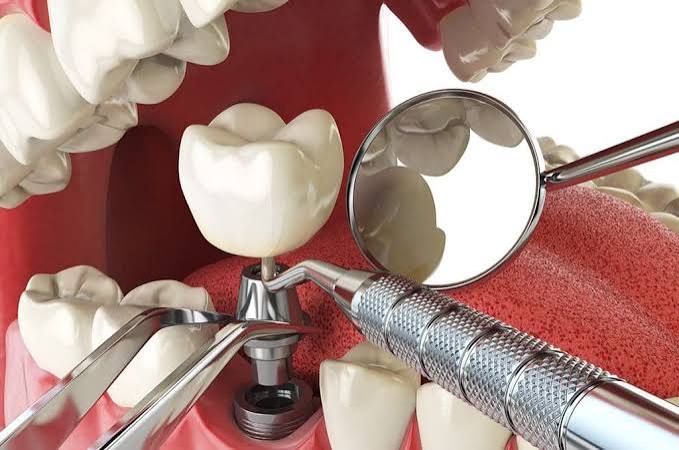
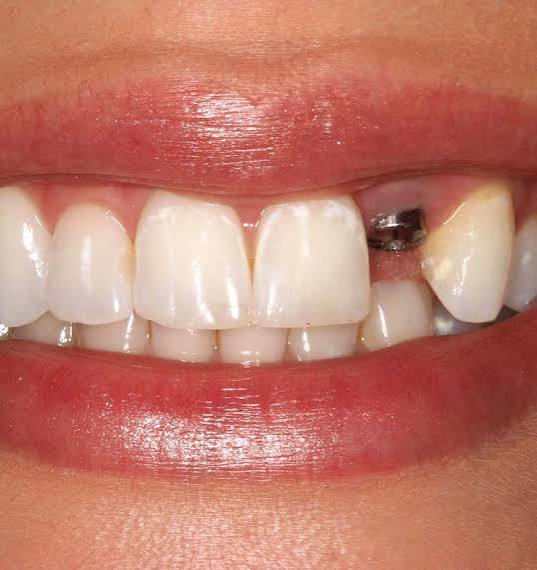
Implant treatment for single tooth loss is applied by placing a single titanium root into the jawbone in place of the missing tooth, without touching the adjacent healthy teeth. This method preserves the natural tooth tissue to the maximum extent by preventing the adjacent healthy teeth from being reduced (cut down), as would be required with traditional bridge prostheses.
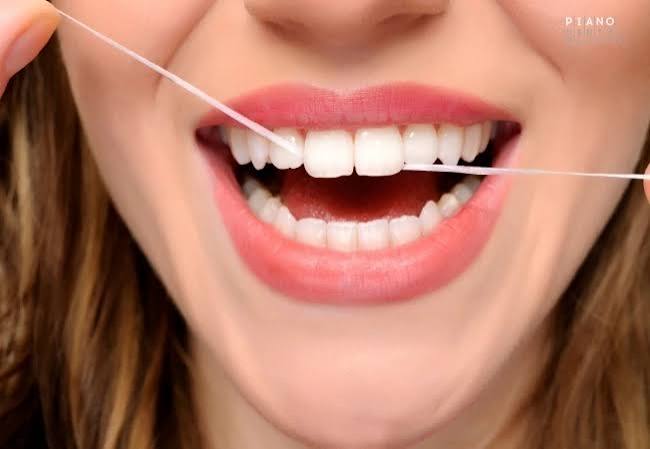
Implant application is considered the gold standard for compensating for a single tooth lost due to trauma, deep decay, or root fracture, in particular. While traditional approaches require shaving down the teeth in front and behind to close the gap and making a three-unit bridge, in implant treatment the gap is repaired completely independently of the adjacent teeth. Porcelain or zirconium crowns matching the tooth’s natural light transmission and form are placed on top of the titanium root. In this way, the patient can comfortably floss the interproximal areas just as with their natural teeth, and aesthetic integrity is achieved.
When Is Implant Treatment Used for Multiple Tooth Loss?
Implant treatment for multiple tooth loss is used in cases where the patient does not want to use a removable (put-in-and-taken-out) partial denture, or where there is no healthy tooth in the area of missing teeth that could serve as a bridge abutment. Implants placed at suitable positions form a strong supporting foundation for fixed porcelain bridges built on top of them.
In cases where the molars at the back of the dental arch are lost, making a traditional fixed bridge becomes biomechanically impossible, because there is no tooth left at the back of the bridge to provide support. In the past, these patients were left with removable dentures known as clasp-retained partials; today, thanks to implant treatment, it is possible for them to have fixed teeth again. For example, a gap of three consecutive missing teeth can be functionally repaired not by making a separate implant for each tooth, but with two implants placed at the start and end points and a three-unit implant-supported bridge designed on top. This strategy both preserves bone tissue and ensures balanced distribution of chewing pressure.
| Evaluation Criterion | Removable Partial Denture (Clasp-Retained) | Implant-Supported Fixed Bridge |
|---|---|---|
| Method of Use | Put in and taken out by the patient. | Fixed in the mouth, feels like a natural tooth. |
| Chewing Force | Force is placed on the gums, chewing efficiency is lower. | Force is transmitted directly to the bone, providing high chewing power. |
| Bone Loss (Resorption) | Bone resorption in the toothless area continues over time. | The implant root stimulates the bone, largely halting resorption. |
| Effect on Adjacent Teeth | The teeth to which the clasps attach may experience wear or mobility over time. | Does not draw support from adjacent teeth, works completely independently. |
What Advantages Does Implant Treatment Provide in Cases of Complete Edentulism?
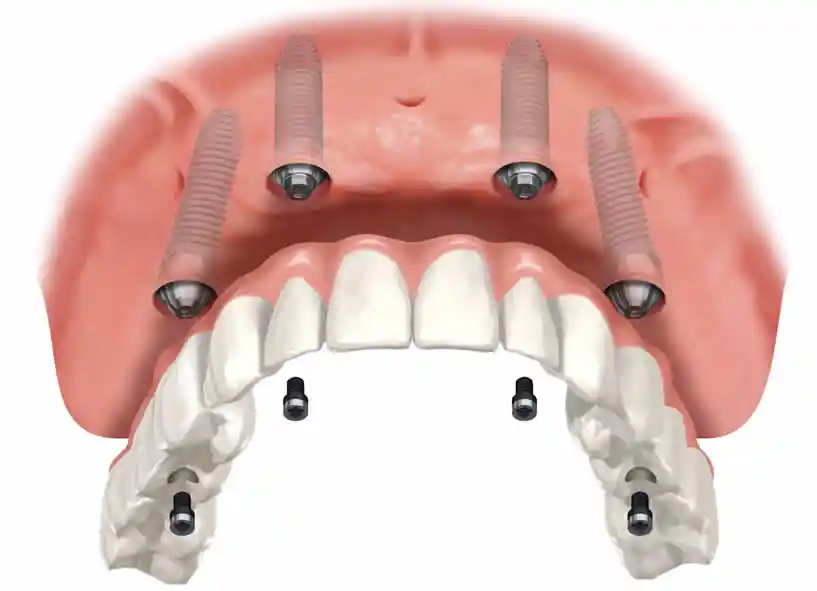
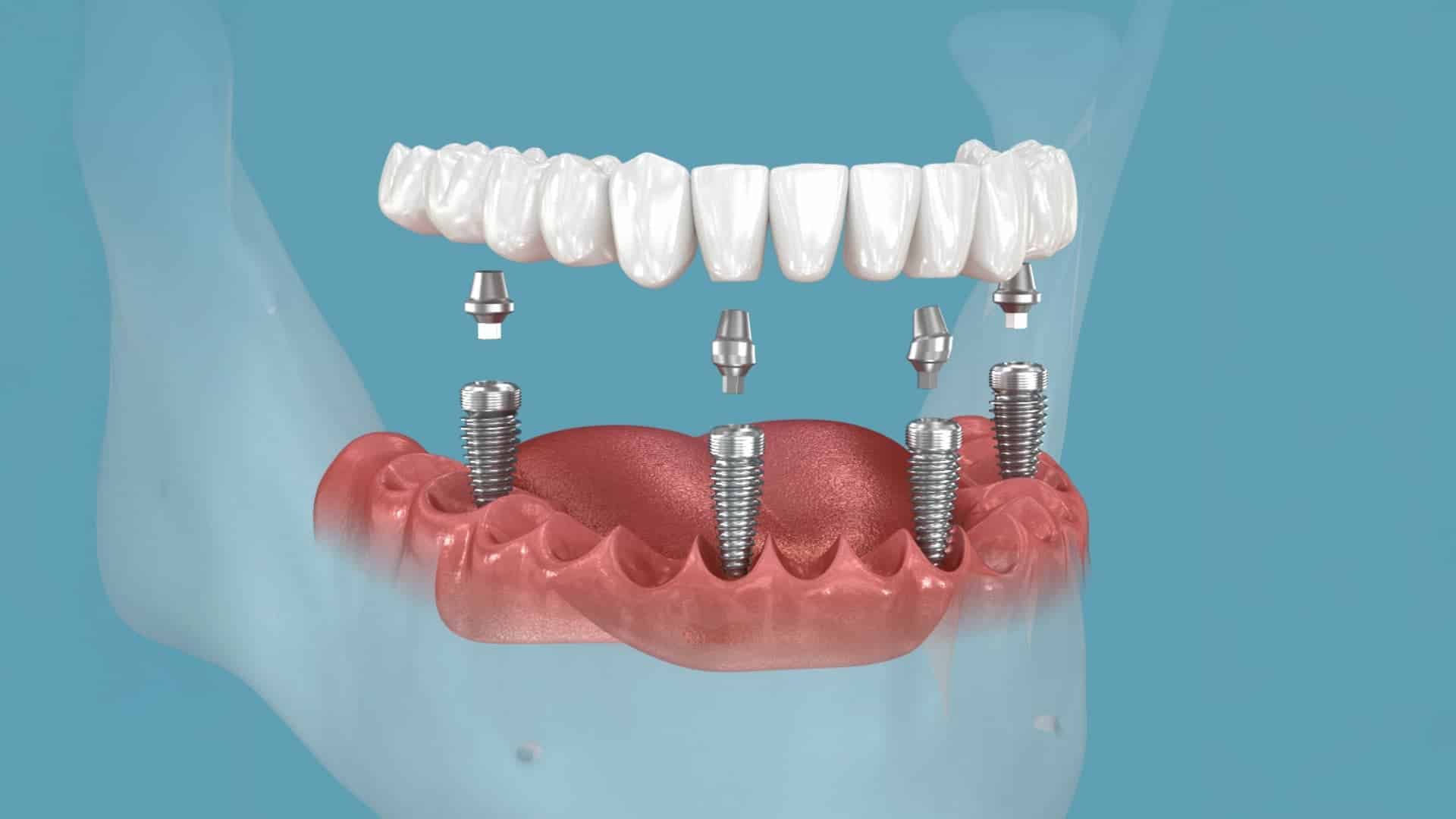
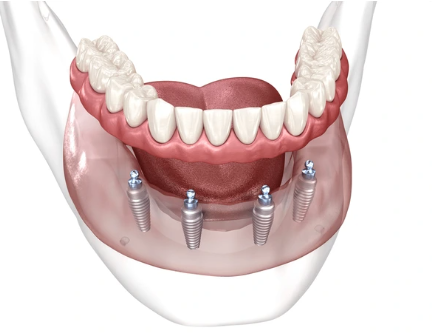
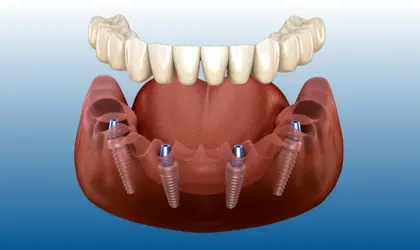
Implant treatment in cases of complete edentulism eliminates the movement of full (total) dentures during speech and eating, providing the advantage of high retention and stability. With techniques such as All-on-4 or All-on-6, it allows patients to have fixed and comfortable teeth instead of removable dentures.
Losing all teeth in the mouth can lead not only to difficulty eating but also to sagging in facial features, jaw joint problems, and psychological issues related to aesthetic concerns. Traditional full dentures, especially in the lower jaw, can frequently shift out of place or cause sore spots due to tongue movements and bone resorption. Implant treatment either fully fixes these dentures with 4 to 8 titanium screws placed at strategic angles in the jawbone, or ensures the denture attaches securely to the bone using implant-supported precision attachments (snap-on). Since implant-supported systems leave the palatal vault open, they help patients better perceive the temperature and taste of food and eliminate speech articulation problems.
Can Implant Treatment Be Performed in Cases of Jawbone Resorption?
Implant treatment in cases of jawbone resorption can be safely performed after the bone volume is increased again using advanced surgical techniques, such as adding artificial or natural bone grafts to the treatment area and sinus floor elevation (sinus lifting) operations.
In areas left empty for many years after tooth extraction, the jawbone shows horizontal and vertical resorption. In order for the implant to attach to the jaw in a healthy manner, healthy bone tissue of a certain thickness and height is needed to surround it. If bone is found to be insufficient in a three-dimensional tomography (CBCT) examination, an “augmentation” (bone increase) procedure is planned by the dentist. In the posterior upper jaw, the sagging sinus membrane is pushed upward and a bone graft is placed underneath it. In most cases, this bone graft addition can be performed in the same session as the implant placement; however, in cases of very severe bone loss, a biological healing period of 4-6 months may be awaited before implant application so that the graft can turn into bone.
Which Patients Can Receive Implant Treatment?
Implant treatment can be applied to adult individuals of any age who have completed bone development (generally 18 years and older), whose general health condition is sufficient to withstand a surgical operation, and who have adequate bone volume at the implant site or where bone augmentation can be performed.
There is no upper age limit for implant treatment; a healthy 80-year-old individual can also safely receive an implant. The criterion for treatability is the patient’s systemic health condition rather than their chronological age. For example, patients with controlled hypertension or diabetes can undergo routine implant surgery after the necessary physician consultations are performed. However, in patients with uncontrolled diabetes with a very high HbA1c level, individuals who have recently had a heart attack, patients receiving intensive bisphosphonate therapy due to bone metastasis, or those who have had radiotherapy to the head and neck region, implant application carries a high risk and is generally considered contraindicated (unsuitable).
How Are Implant Treatment Processes Planned Around Panorama Ankara?
In modern clinical practices around Panorama Ankara, implant treatment processes are managed on the principle of minimum trauma and maximum comfort, built on digital planning supported by 3D volumetric tomography, surgical guide templates suited to the patient’s anatomical structure, and transparent patient communication.
Considering regional needs and the dynamics required by modern city life, patients around Panorama Ankara demand clinical processes that are predictable and comfortable. Before starting treatment, the patient’s intraoral data is captured with digital scanners and transferred to a virtual environment. The nerve and blood vessel pathways of the jawbone are mapped down to the millimeter, and the implant’s angle, diameter, and length are simulated in a computer environment. Thanks to these advanced planning methods, also known as “flapless implant surgery” or “guided surgery,” the duration of the surgical operation is significantly shortened, and swelling and sensitivity that may occur after the procedure are minimized. This transparent data sharing between the dentist and the patient directly increases confidence in the success of the treatment.
What Preparations Should Be Made Before Implant Treatment?
Before implant treatment, a detailed systemic health history is taken, active infections or decay in the mouth are treated, professional tartar cleaning is performed to establish gum health, and the anatomical suitability of the surgical area is evaluated with three-dimensional tomography.
The oral cavity has a complex flora. Since the implant is a sterile titanium screw, the environment in which it will be placed must also be free of bacterial infections. If the patient has severe gum inflammation (periodontitis) or untreated root-tip lesions in their mouth, a periodontal preparation stage must be completed before implant surgery. In addition, if the patient uses blood-thinning medications, these must be adjusted under the dentist’s supervision, and cigarette consumption should be limited as much as possible. Good clinical preparation is the most critical stage in eliminating the risk of complications during the operation.
- Systemic Anamnesis: Reviewing the patient’s chronic diseases and the medications they use.
- Radiological Imaging: Measuring bone thickness and nerve proximity with 3D tomography.
- Periodontal Treatment: Cleaning tartar to prevent the risk of infection around the implant (peri-implantitis).
- Prophylactic Approach: Starting pre-operative antibiotic use when deemed necessary.
Frequently Asked Questions About Implant Treatment
How long does implant treatment take?
The surgical placement of the implant into the jawbone generally takes between 15-30 minutes for a single tooth. However, a biological healing period is awaited for the implant to fuse with the bone cells (osseointegration) — on average 2-3 months in the lower jaw and 3-4 months in the upper jaw — after which the prosthesis stage begins.
In cases where advanced bone graft applications have been performed, this waiting period can extend up to 6 months. However, in certain selected cases with suitable bone density, temporary fixed prostheses can be attached on the same day using a technique called “immediate loading.”
Is there a possibility of the implant being rejected by the body?
Since implant materials (titanium) are produced to be 100% biocompatible with human tissue, a situation such as “tissue rejection” or an allergic reaction, as seen in organ transplants, is not scientifically applicable to implants.
What is popularly known as “the implant not taking” or “the body rejecting it” is actually a situation where the implant fails to fuse with the bone (osseointegration failure) due to infection, insufficient bone quality, excessive smoking, uncontrolled diabetes, or the implant receiving incorrect chewing forces too early.
Can implant treatment be applied to patients who smoke?
Implants can be applied to patients who smoke; however, since smoking reduces the amount of oxygen reaching the tissues and impairs wound healing, it increases the risk of the implant failing to fuse with the bone (peri-implantitis) 2-3 times compared to non-smokers.
In clinical protocols, patients are generally asked to completely stop or significantly reduce smoking for 1 week before the operation and for 2 weeks after the operation (until the wound closes).
How should implant cleaning and care be done?
The cleaning of implant-supported prostheses is no different from that of natural teeth. They should be brushed at least twice a day with a soft/medium-bristle brush, dental floss and interdental brushes should be used regularly, oral irrigator systems should be used to clean under the bridges, and periodic 6-month dentist check-ups should not be neglected.
Implants themselves do not decay, but bacterial plaque that builds up in the gums around the implant can lead to bone loss (peri-implantitis) over time, causing a sound implant to be lost. For this reason, oral hygiene is the longest-term protector of implant success.