

What Is All-on-4 Implant Treatment and What Principle Is It Based On?
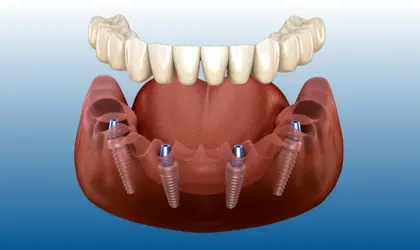
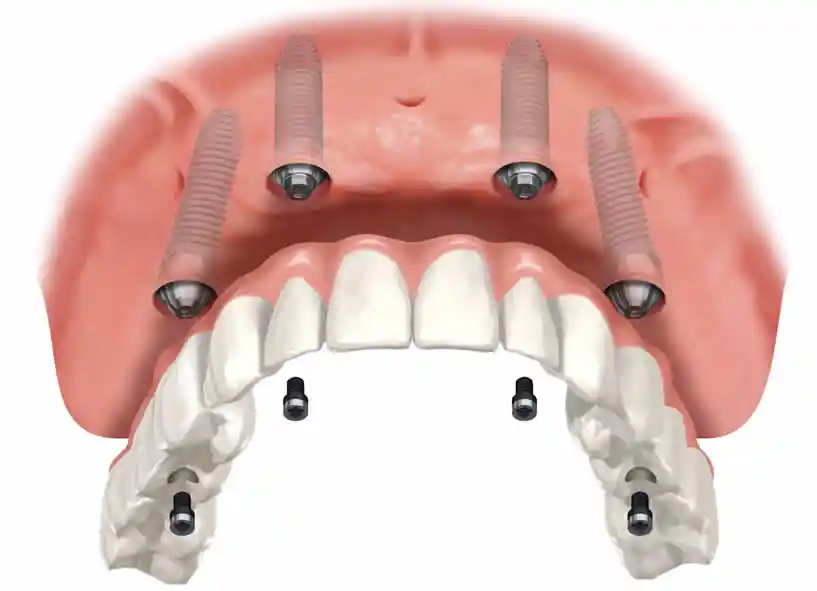
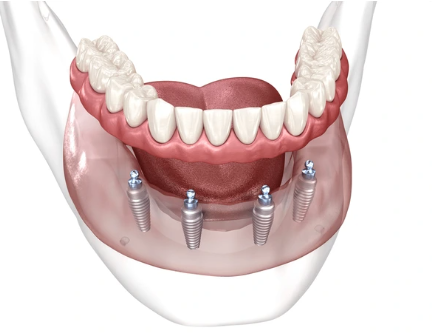
All-on-4 implant treatment is a medical procedure applied to individuals with complete tooth loss, in which fixed prostheses are placed on four titanium substructures inserted into the jawbone at specific angles. This method is based on the principle of evaluating specific areas where bone density is favorable, and it aims to minimize the need for bone grafting (bone powder).
Developed as an alternative to traditional methods used to address tooth loss, this technique makes biomechanical use of the dense bone tissue in the front part of the jaw structure. Implants placed in the posterior regions are positioned at an angle so that they do not contact anatomical cavities (the sinus cavities in the upper jaw, the nerve canals in the lower jaw). This angling optimizes load distribution and contributes to the stabilization of the prosthesis. In suitable cases, temporary prostheses are fitted on the same day following the surgical procedure, with the goal of allowing the patient to perform basic chewing function.
What Are the Differences Between Traditional Implant Methods and All-on-4?
While traditional methods generally use 6 to 8 implants per jaw, the All-on-4 technique uses only 4 titanium screws. In addition, traditional procedures frequently require advanced bone-augmentation surgical procedures, whereas this need is reduced with the newer-generation angled placement technique.
Examining the procedural and mechanical differences between the two approaches in more detail is of great importance for patient awareness of the process. In traditional treatment planning, the treatment period can extend over several months depending on bone integration and grafting stages. The table below lists the key differences alongside their medical parameters:
| Comparison Criterion | Traditional Implant Treatment | All-on-4 Implant Treatment |
|---|---|---|
| Number of Implants (Single Jaw) | 6 – 8 units | 4 units |
| Advanced Surgery (Bone Graft) | Frequently required | Rarely required |
| Placement Angle | Vertical (90 degrees) | Posterior sections angled 30-45 degrees |
| Temporary Prosthesis Loading | Usually after healing (3-6 months) | Same day, in suitable cases |
How Is the All-on-4 Implant Process Planned in Ankara?
At medical centers in Ankara, including within Panorama Ankara, the process begins with detailed radiological imaging (3D Volumetric Tomography) and a clinical examination. Based on the data obtained, the patient’s bone volume, the condition of the sinus cavities, and the location of nerve tissues are mapped digitally down to the millimeter.
During the planning stage, physicians take a multidisciplinary approach involving jaw surgery and prosthetics specialists. At the initial examination, the patient’s systemic conditions (such as diabetes or hypertension) are evaluated, and consultation is requested from relevant medical physicians if necessary. The main goal of the treatment is to restore chewing dynamics suited to the patient while respecting anatomical boundaries. At this stage, special surgical guides are prepared for patients who have decided on the All-on-Four Implant application, allowing the procedure to be simulated digitally.
How Is the Pre-Treatment Radiological and Clinical Assessment Carried Out?
The pre-treatment assessment is a detailed diagnostic process in which the patient’s intraoral soft tissues, any remaining tooth roots, and the anatomical form of the jawbone are examined. At this stage, the height, width, and trabecular structure (bone density) of the bone are measured using 3D tomography.
During the clinical examination, the patient’s bite relationship (occlusion), lip support, smile line, and phonetic characteristics during speech are recorded. Photographs and digital scanners (intraoral scanners) are used to create a virtual copy of the current condition. If there are teeth that need to be extracted, the operation schedule is arranged so that extraction and implant placement occur simultaneously. All of this data is used to prepare the temporary prostheses that will be fitted to the patient after treatment, in advance, in the laboratory setting.
Who Is a Suitable Candidate for All-on-4 Implant Treatment?
This treatment protocol is a medical option for individuals experiencing complete tooth loss, those who are about to lose their remaining teeth due to periodontal (gum) disease or widespread decay, and those who lack sufficient bone volume in the posterior regions.
Suitability for treatment depends on the physician’s assessment. Individuals with good systemic health and sufficient bone quality in the front region of the jaw are considered suitable candidates. At the same time, people who have difficulty using removable (palatal) dentures and cannot tolerate traditional dentures due to a gag reflex also tend to opt for this treatment. However, individuals who have not completed their growth and development period, as well as those with uncontrolled diabetes or those using advanced medication for bone loss conditions, may not receive the expected approval for this method.
What Technological Methods Are Used During the Treatment Process?
Computed Tomography (CBCT), intraoral digital scanners, CAD/CAM (Computer-Aided Design and Manufacturing) systems, and 3D printers are used together throughout the treatment process. Thanks to these technologies, the surgical area is planned down to the millimeter and the margin of error is minimized.
These technologies come into play not only during the surgical stage but also during the manufacturing of the prostheses. Thanks to the digital measurements taken, the patient’s intraoral model is transferred to a virtual environment. Prosthetic specialists select the shape, color, and arrangement of the teeth from digital libraries to create an aesthetic plan suited to the patient’s facial anatomy. Computer-aided manufacturing (CAM) devices shape the determined design by milling biocompatible materials. This workflow supports the completion of procedures in accordance with standard clinical protocols.
What Should Be Expected on the Day of Surgery?
On the day of the surgical procedure, procedures are generally performed under local anesthesia. During the procedure, any remaining teeth are extracted if applicable, after which the bone surface is prepared and four implants are placed in the jawbone at the previously planned angles and depths.
The operation duration can average two to three hours per jaw, depending on the condition of the jaw structure and the scope of the procedures to be performed. After shaping the gum tissue and placing the titanium components, the physician either closes the area with the necessary sutures or directly places the temporary abutments. Once the surgical phase is complete, digital or conventional measurements taken are sent to the prosthetic laboratory. After a waiting period of a few hours, the prepared temporary fixed prosthesis is screwed onto the implants, completing the procedure.
At What Stage and How Are Temporary Prostheses Placed?
Temporary prostheses are screwed onto the implants either on the day of the surgical operation or, depending on the case, within the following 24 hours. These prostheses are designed to meet the patient’s aesthetic and basic functional needs during the tissue-healing process.
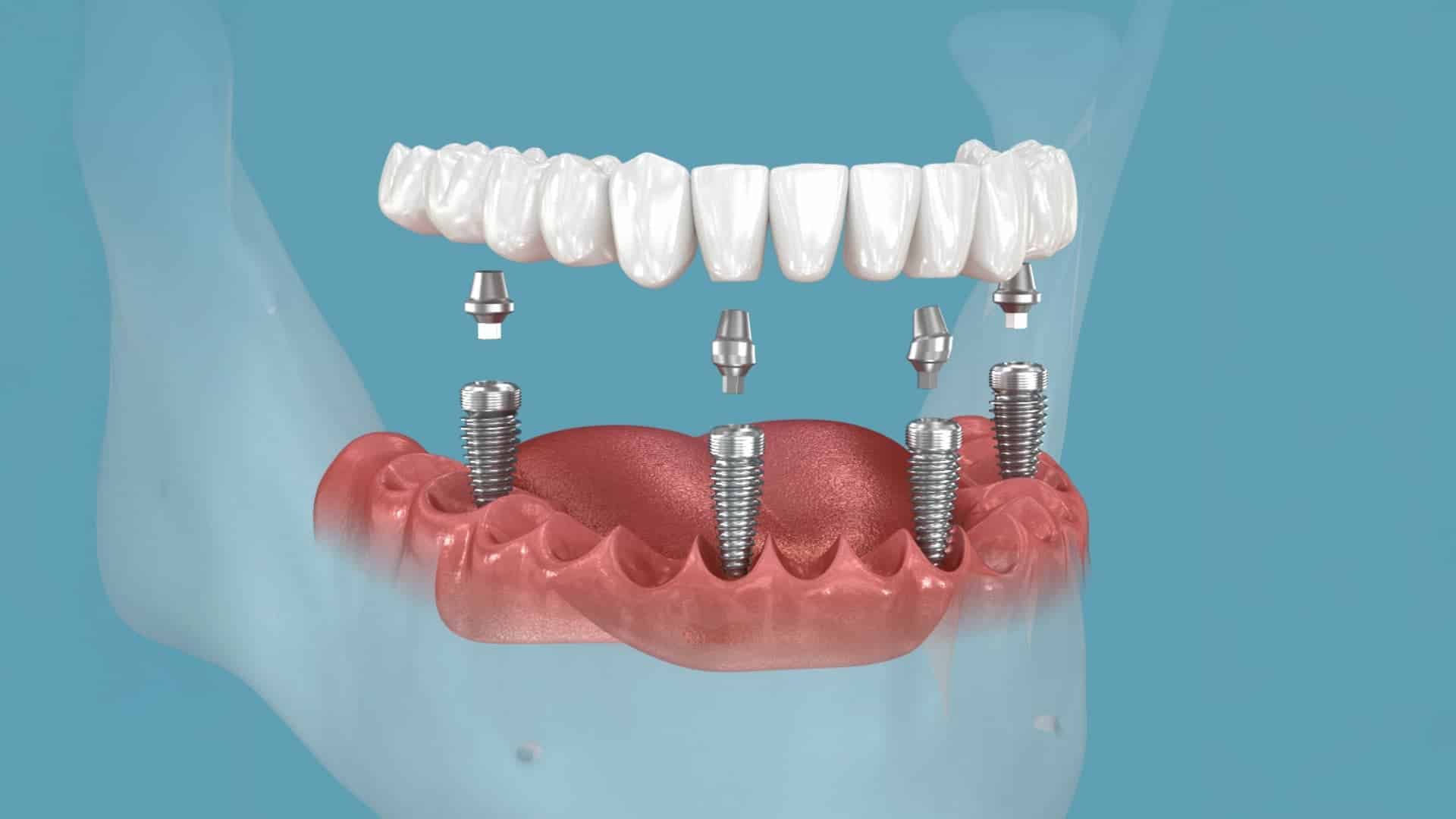
During the surgical procedure, connector pieces called “multi-unit abutments” are attached to the angled structures placed according to the All-on-Four Implant protocol. The temporary prosthesis is secured onto these connector pieces using small screws. The chewing surfaces of the fixed temporary prosthesis are specially balanced (occlusal adjustment) in order to prevent excessive load on the healing bone. The material of the temporary prostheses is generally acrylic-based, allowing it to easily adapt to tissue changes in the following months.
What Should Be Considered During the Healing and Bone Integration Process?
During the healing period of the first 3-6 months, the implants are expected to fuse with the jawbone (osseointegration). During this period, it is of great importance to follow the soft-diet rules set by the physician, to use prescribed medications regularly, and not to neglect oral hygiene.
The main factors patients should pay attention to during the tissue-healing and mechanical-bonding stages are as follows:
- Diet: Hard foods such as nuts, walnuts, hard-shelled foods, or raw carrots should not be consumed during the first months. Pureed, boiled, or soft-textured foods should be preferred.
- Medication Use: Antibiotics given by the physician to prevent infection risk, along with other medical products prescribed for a comfortable post-procedure period, should be used according to schedule.
- Local Hygiene: Care should be taken to keep sutured areas clean, and vigorous rinsing or spitting should be avoided in the early days. In the following days, recommended special brushes and mouthwashes should be used.
- Harmful Habits: The use of tobacco and tobacco products should be avoided during this period, as it impairs tissue blood flow and negatively affects the healing process.
How Is the Transition to Permanent Prostheses Managed?
At the end of an average waiting period of 3 to 6 months, once bone integration is confirmed with X-ray images, the transition to permanent prostheses takes place. The temporary prostheses are removed, measurements are taken, and the patient’s permanent zirconium or porcelain prostheses are prepared in the laboratory.
This process includes aesthetic and functional test stages known as try-ins. Details such as lip support, tooth length, shade, and chewing bite are determined with the mutual approval of the patient and the physician. Permanent materials are produced from materials that are much more durable, tissue-compatible, and aesthetically superior compared to temporary ones. Once all the try-ins are complete, the permanent fixed prosthesis is screwed into place on the implants, and the screw-access holes are aesthetically sealed with special filling materials.
What Are the Effects of All-on-4 Implant Treatment on Daily Life?
The treatment aims to eliminate individuals’ dependence on removable (palatal) dentures, giving them a fixed dental structure. This helps regulate eating and drinking functions and allows phonetic sounds during speech to be produced more clearly.
The structure of removable dentures, which covers the roof of the mouth, can limit the sense of taste in some patients. In this fixed application, since the palate area remains open, the temperature and taste of food are perceived in a more natural way. In addition, the fact that there is no possibility of the prosthesis coming loose allows individuals to feel more comfortable eating or speaking in social settings. As with the applications at Panorama Ankara, each patient’s daily life expectations are analyzed in order to strike a balance between form and function.
How Does the Process Proceed in Individuals with Low Jawbone Density?
In patients with advanced bone loss (resorption), thanks to angled implant placement in the posterior regions, maximum benefit is generally obtained from the existing bone tissue when performing the procedure. In much more extreme cases of bone loss, alternative maxillofacial methods (such as zygomatic implants) may come into play.
The core premise of the All-on-4 concept is to work around anatomical limitations such as sinus cavity sagging or proximity to the lower jaw’s nerve canal. For this reason, angles of 30 to 45 degrees are used to direct placement toward the harder, denser bone in the front region. During the procedure, the torque (compression force) value obtained is measured with special devices. If the torque value reaches the targeted figures, a temporary prosthesis can be fixed for the patient on the same day. If it is not reached, the prosthesis may be used in a removable or tissue-supported form until the healing process is complete.
How Is Follow-Up and Monitoring Carried Out in Panorama Ankara Processes?
After the treatment is completed, patients are scheduled for clinical check-ups at certain intervals. Under Panorama Ankara’s standards, radiographic examinations and gum examinations are performed every 6 months during the first year to evaluate the tissues surrounding the implants.
During check-ups, the stability of the prosthesis, the occlusal (bite) balance, and the connection points of the screws are examined. Over the years, minor differences in bite may occur due to natural wear; such situations are balanced by the physician through minor occlusal adjustments. In addition, professional dental-calculus cleaning is performed during check-up sessions to protect the health of the tissues beneath the prosthesis. The patient’s at-home care routine is also reviewed in detail, and the necessary guidance is provided by the physician.
What Should the Post-Treatment Diet Be Like?
The first months after surgery and the period after the permanent prosthesis is fitted are treated differently. During the healing phase, liquid- and puree-based foods that do not require chewing force are preferred, while after the permanent prostheses are fitted, a gradual transition is made to a standard diet.
In order not to jeopardize the process of the implants fusing with the bone, actions requiring force, such as cracking nuts, biting into an apple, or tearing food, should be avoided while wearing temporary prostheses (the first 3-6 months). Meat products should be cut into small pieces, and vegetables should be thoroughly boiled before consumption. Once the permanent, durable prostheses are fitted, the person becomes able to consume food with a standard chewing routine; however, biting into extremely hard objects that could damage the dental structures should still be avoided, just as with natural teeth.
How Is Long-Term Care and Oral Hygiene Ensured?
Cleaning fixed prostheses requires more care than natural teeth. Food debris that can accumulate between the gums and the prosthesis should be cleaned daily using special interdental brushes, oral irrigators (water flossers), and thick dental floss (superfloss).
Keeping the implant surfaces and prosthesis substructures hygienic in particular is the most important factor in reducing the risk of peri-implantitis (inflammation around the implant). While the outer surfaces are brushed twice a day with regular toothbrushes, the use of oral irrigators that provide water pressure to clean under the bridge is frequently recommended. Since neglecting care procedures can lead to redness, bleeding, and bone loss in the gums, patients strictly following the hygiene training shown by the physician plays a major role in the long-term stability of the treatment.
Frequently Asked Questions
1. How long does All-on-4 treatment take?
The surgical procedure is completed in an average of 2-3 hours per jaw. The first phase is complete once the temporary prostheses are placed on the same day. The transition to permanent prostheses takes place after the 3-to-6-month period during which bone healing is expected.
2. Is anesthesia used during the treatment?
Yes, the operation is generally performed under routine local anesthesia. Depending on the patient’s anxiety level or the physician’s medical assessment, sedation or general anesthesia options may also be considered in certain clinical situations.
3. When are temporary prostheses fitted?
Temporary fixed prostheses are screwed onto the All-on-Four Implant substructures either on the day the surgical procedure is performed or within the following 24 hours, depending on the condition of the tissue. This way, the patient does not leave the clinic without teeth.
4. How should the post-treatment diet be planned?
During the temporary-prosthesis period, a diet consisting entirely of soft, mashable, and liquid foods is followed in order not to put pressure on the bone. After the permanent teeth are fitted, the person gradually returns to their standard diet.
5. In which cases is bone powder (graft) added?
Thanks to the angled placement technique, the need for grafting is greatly reduced. However, if a serious volume loss is detected even in the front part of the jawbone, applying a bone graft to limited areas may be a medical necessity.
6. How does smoking affect the implant process?
Tobacco use impairs tissue nourishment by narrowing blood circulation in the mouth. This increases the risk of infection and negatively affects the process of the implant fusing with the bone (osseointegration). Patients are advised to quit tobacco products before and after the operation.
7. Is there an age limit for the All-on-4 procedure?
It is an applicable method for adults who have completed their growth and development process and are in generally good health. There is no upper age limit; the determining factors are whether the patient’s systemic conditions are under control and the quality of their bone.
8. When is the transition to permanent prostheses made?
The full biological integration of the titanium roots with the jawbone can take an average of 3 months in the lower jaw and 4-6 months in the upper jaw. Once this period is complete, measurements are taken and the manufacturing of the permanent aesthetic prostheses begins.
9. How is daily care of the implants carried out?
In addition to natural tooth care, cleaning the areas beneath the prosthesis is important. Physicians recommend the daily routine use of an oral irrigator, interdental brushes, and under-bridge dental floss (superfloss) in addition to a toothbrush.
10. Can this treatment be applied to diabetic patients?
If a diabetic patient’s blood sugar levels (HbA1c values) are kept within certain limits under medical supervision, implant treatment can be performed with the physician’s approval. In uncontrolled diabetes, the procedure may be postponed since wound healing would be affected.
11. Is facial swelling normal after the treatment?
Mild swelling (edema) or bruising around the cheeks and lips within the first 48-72 hours following the surgical procedure is a physiological response. This is kept under control with cold compress applications recommended by the physician.
12. When are the sutures removed after the procedure?
In cases where dissolvable sutures are not used, a check-up appointment is scheduled approximately 7 to 10 days after the surgical operation. At this appointment, tissue healing is checked and any sutures in the area are removed by the physician.
13. Is the use of a night guard necessary?
After the permanent prostheses are made, particularly in patients with a tendency toward teeth grinding (bruxism) during sleep, the physician may deem it appropriate to make night guards to protect the prostheses and the joints.
14. What materials are used?
The structures placed in the jawbone are manufactured from highly biocompatible titanium. The superstructure (prosthesis), on the other hand, is shaped from aesthetic and durable materials such as zirconium, metal-supported porcelain, or hybrid acrylic, depending on the needs of the case.
15. How often should regular dental check-ups be done?
Following the fitting of the fixed prosthesis, a routine clinical and radiological check-up is generally recommended every 6 months during the first year. In subsequent years, check-up scheduling is planned once a year based on the patient’s risk profile and oral hygiene.