

What Preparations Should Be Made Before Traveling to Ankara from Out of Town for Treatment?
Before traveling to Ankara from another city for treatment, patients are expected to compile their medical history, prepare a list of any medications they are using, and send their radiological images to the clinic digitally. This preparatory step is of great importance for creating the treatment schedule and determining how long the patient will need to stay in the city.
During the preparation stage, the first step is for patients to have a panoramic X-ray or three-dimensional dental tomography (CBCT) taken at an imaging center in their own region and to send these records to the clinic in Ankara digitally. This medical data sent in advance allows physicians to remotely analyze the current anatomical condition of the jawbone, as well as its volume and density. In addition, if the patient has systemic conditions (such as controlled diabetes, hypertension, or bone loss), it is necessary for a healthy planning process that a consultation report from the specialists monitoring these conditions be obtained and added to the preparation file.
How Does the Pre-Treatment Online Preliminary Consultation Process Work?
The online preliminary consultation is a stage in which the patient’s medical condition is assessed via video conference or phone by clinic staff or physicians before the patient leaves their city. During this process, the patient’s existing radiographic data is reviewed, and general information is provided about possible treatment options and the estimated length of stay required in Ankara.
Thanks to today’s digital communication possibilities, these consultations, which make medical travel more predictable for out-of-town patients, function as a kind of virtual consultation. The physician displays the tomography data sent by the patient on screen and shares the current state of the jaw structure with the patient. Questions the patient may have about the nature of the surgical procedure to be performed, the methods to be used, and the timeline are answered at this stage. For patients contacting Panorama Ankara from out of town, these digital assessment processes are specially organized to reduce pre-travel anxiety and clarify the schedule.
What Are the Transportation Options to Ankara, and How Is Transportation Planned?
Transportation to Ankara can be arranged by air, high-speed train (YHT), or road, depending on the patient’s location. When planning transportation, it is recommended that tickets be booked for flexible dates or suitable time slots, taking into account the time of the initial examination and the possible days of the surgical procedure.
Thanks to the logistical advantages of being the capital, Ankara is a central location that can easily be reached from all over Turkey. The transportation options patients can consider, along with their features, are as follows:
| Mode of Transport | Arrival Point | Planning Recommendation |
|---|---|---|
| Air Travel | Esenboğa Airport | Reduces fatigue, especially for those coming from distant provinces. HAVAŞ, BelkoAir, or transfer vehicles can be used to get from the airport to the city center. |
| High-Speed Train (YHT) | Ankara YHT Station (Sıhhiye/Ulus) | A comfortable option for patients coming from cities such as Istanbul, Eskişehir, Konya, Karaman, and Sivas. The station is centrally located. |
| Road (Bus/Private Vehicle) | AŞTİ (Intercity Bus Terminal) | Suitable for those traveling from surrounding provinces. Since AŞTİ is directly connected to the Ankaray metro network, it makes getting around the city easier. |
How Long Should Out-of-Town Patients Plan to Stay?
The length of stay patients need in Ankara generally ranges from 3 to 5 days, depending on the scope of the planned procedure. During this period, sequential medical procedures such as the initial examination, the surgical stage, and the fitting of the temporary prostheses are completed.
This 3-to-5-day period covers the time from the patient’s first day at the clinic to the day the first phase of treatment is finished and they are ready to return home. On the first day, a detailed intraoral examination, panoramic X-ray, and 3D tomography scans are performed to finalize the surgical measurements. On the second day, the All-on-Four Implant surgery is performed and the measurements are sent to the laboratory. On the third or fourth day, the temporary fixed prostheses that arrive from the laboratory are fitted into the patient’s mouth and bite try-ins are performed. Depending on the case, this schedule may shift by a day or two. It is helpful to make accommodation reservations at facilities with flexible cancellation/change policies.
How Are Transfers Between the Clinic and the Hotel Organized?
Transfers can be planned using public transportation, taxis, or private transport vehicles, depending on the distance between the patient’s accommodation and the medical center. In some cases, accommodation is chosen close to the clinic so that patients can reach their appointments on foot or with short vehicle trips.
Especially on the day of the surgical procedure, patients are advised to avoid physical exertion and stay away from stress. For this reason, it is recommended that the hotel be chosen close to the clinic’s location (for example, central areas such as Çankaya, Tunalı, or Çukurambar). Ankara has a strong underground transportation network with its metro (M1, M2, M3, M4) and Ankaray systems. Using taxis or VIP transfer services on days with intensive medical procedures increases the patient’s comfort. The Panorama Ankara team can provide informative support regarding accommodation planning and transportation routes for individuals coming from out of town.
What Medical Documents Should You Bring with You During the Treatment Process?
The basic documents patients need to bring with them include blood tests taken within the last 6 months, reports written by doctors monitoring chronic conditions, and up-to-date radiological images (on CD or in digital format). In addition, prescriptions for any medications used regularly must also be brought.
Presenting a complete medical history to the physician directly affects many parameters, from the type of anesthesia used to the medications that will be prescribed. In particular, patients using blood thinners (anticoagulants) may need to adjust the dosage of these medications before the procedure on the advice of their own doctor, so physician consent forms should be included in the file. In addition, data showing bone density and, if available, printouts of any previously performed allergy tests are important materials that should be brought by the patient to be filed during the initial examination.
What Should Out-of-Town Patients Expect on the Day of the Initial Examination?
On the day of the initial examination, the patient’s general oral condition is examined in detail clinically, and a map of the bone structure is created using three-dimensional tomography. In light of the up-to-date data obtained, the physician finalizes the treatment plan suited to the patient’s current anatomy and explains the steps in order.
When patients arrive at the clinic, the data from the remote preliminary consultations is verified in person. Digital intraoral scanners are used to take digital measurements of the gums and any remaining teeth. The physician physically assesses the patient’s lip structure, smile line, and the bite relationship (occlusion) between the upper and lower jaws. Then, based on the resulting millimeter-precise plan, the patient is informed of what time the operation will begin, how long it will take, and how the laboratory process will proceed. At this stage, the patient officially begins the process by reading and signing the treatment consent forms.
What Should the Diet and Rest Routine Be Like on the Day of the Surgical Procedure?
On the day of the surgical procedure, patients are generally asked to eat a light breakfast and take the medications prescribed by the physician on schedule. Afterward, resting at the accommodation, consuming soft foods, and avoiding strenuous physical activity are a normal part of the medical process.
Fasting before the operation is not required (unless general anesthesia is administered), because maintaining stable blood sugar levels through having eaten is important. After the procedure is performed under local anesthesia, there is numbness in the lip and cheek area lasting several hours. During this time, it is not recommended to eat until the numbness has passed, in order to avoid biting the tongue or cheek. Once sensation returns, foods that do not require chewing, such as yogurt, cold soup, or puree, can be consumed. Resting that day in the hotel room with the head slightly elevated, and applying cold compresses (ice) from the outside at the intervals recommended by the physician, helps keep tissue swelling under medical control.
When Should the Return Trip Be Planned After Treatment?
The return trip can generally be planned 1 or 2 days after the surgical procedure, once the temporary prostheses have been fitted and the physician has performed the final checks. Depending on the patient’s general health condition and the length of the journey, the return home takes place on a date approved by the physician.
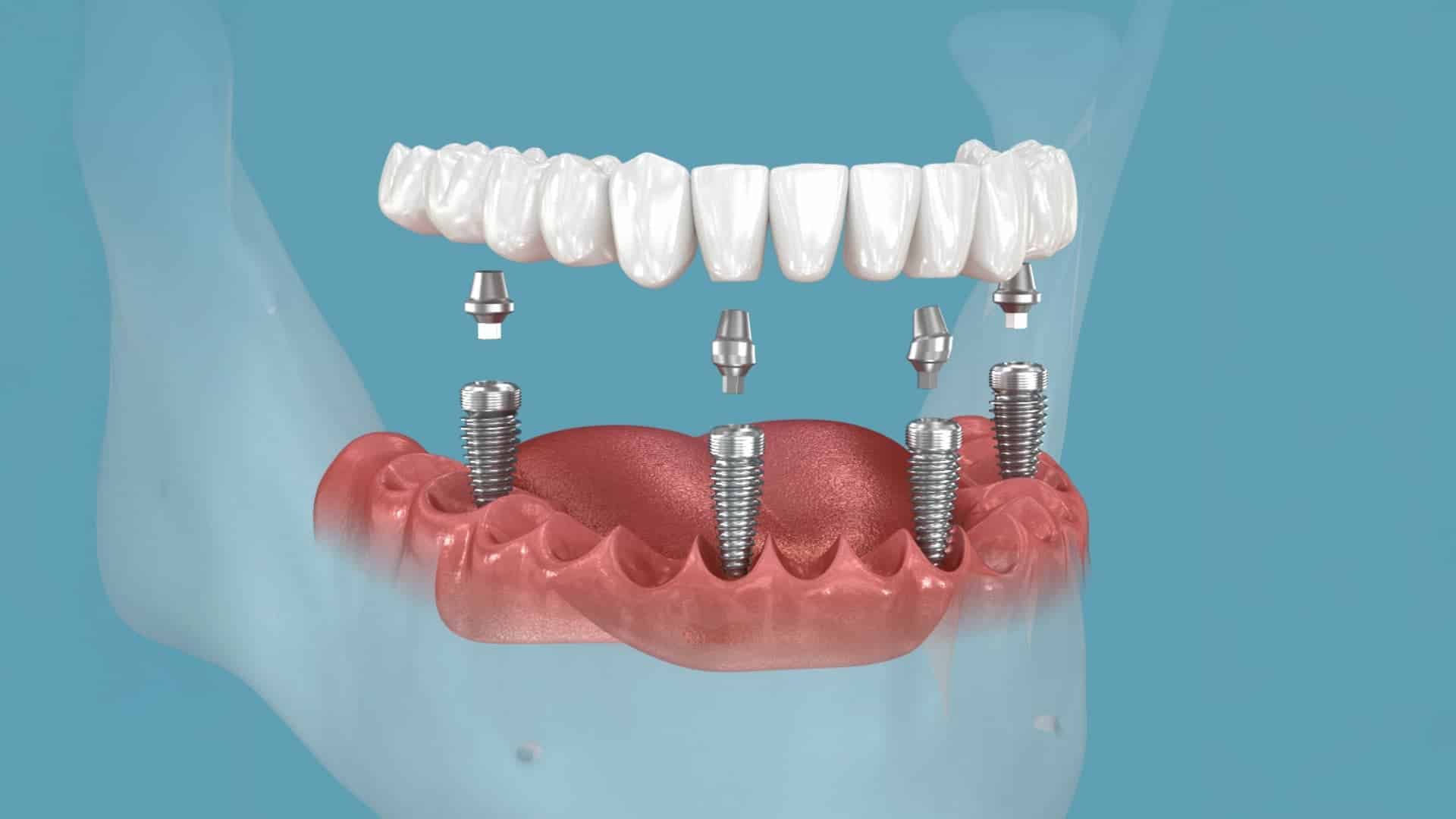
After the temporary prostheses are screwed into the patient’s mouth, a series of functional tests are performed. The patient tests the prosthesis’s compatibility with tongue and cheek movements by drinking some water or speaking. The physician checks with special paper (articulation paper) whether any high spot in the bite is putting pressure on the tissues. Once the desired mechanical balance is achieved, the patient is given their prescription and a care guide listing the points to pay attention to. After this final check, there is no medical concern about taking a flight, train, or bus journey.
How Does Aftercare Proceed Once Patients Return Home with Temporary Prostheses?
Patients who return to their own cities should follow the soft-diet program specified by the physician and use the prescribed medical products regularly. During the first months of the healing period, oral hygiene should be given careful attention, and the area should be cleaned gently with soft-bristled brushes.
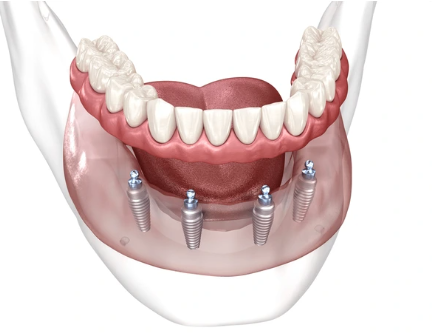
The 3-to-6-month period after returning home is the stage in which bone cells attach to the titanium surfaces. While in their own city, patients are asked not to neglect their daily oral care routine so that plaque does not build up around the All-on-Four Implant structure. Temporary prostheses are not made from materials that can withstand strong chewing pressures; their main purpose is to preserve aesthetic integrity and support the closing of the wound area. For this reason, foods such as nuts, roasted chickpeas, or hard apples should be avoided, and care should be taken to eat boiled vegetables, purees, and soft-textured protein sources instead.
How Should Out-of-Town Patients Have Their Follow-Up Check-Ups Done?
Regular check-ups can be monitored remotely, according to the schedule the physician deems appropriate, by having the patient take a panoramic X-ray while in their own city and send it to the clinic digitally. In necessary cases, the patient may be asked to come to Ankara in person for an examination.
Tissue healing status in the first weeks can sometimes be assessed even by having the patient take and send photographs of the inside of their mouth. If a procedure involving sutures was performed and non-dissolvable sutures were used, the patient can have these sutures removed at a local dental clinic in their own city (under the guidance of the physician in Ankara). A new radiological image requested at the end of the second month provides specialists with sufficient data on the progress of bone fusion. Since patients’ medical records are archived digitally within the Panorama Ankara system, up-to-date data sent from different cities can easily be compared with the patient’s previous condition.
When Does the Second Visit to Ankara for the Permanent Prosthesis Stage Take Place?
The second visit to Ankara for the fabrication of the permanent prostheses takes place at the end of the 3-to-6-month period in which the titanium screws complete their biological integration with the jawbone. This visit may require an average stay of 7 to 10 days for measurements and prosthesis try-ins.
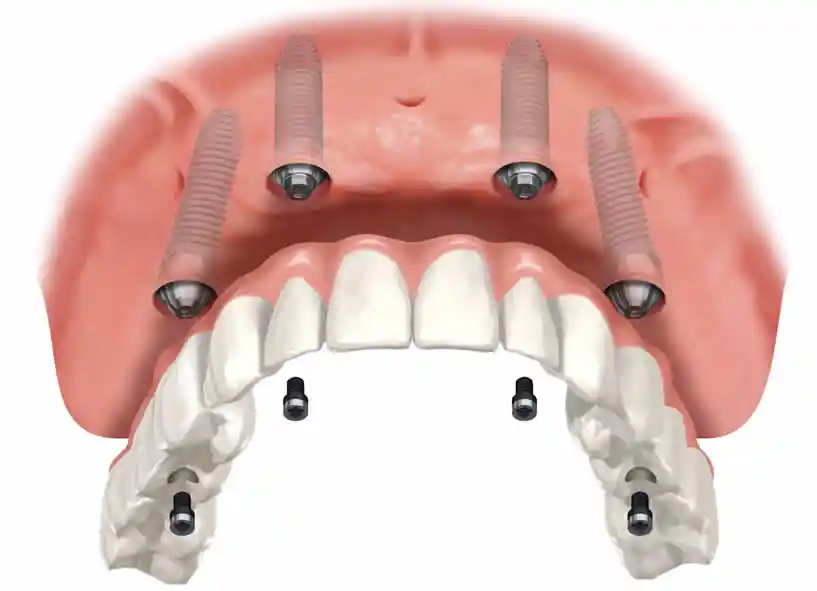
In the second stage, permanent teeth made of porcelain or zirconium materials are prepared on top of the All-on-Four Implant substructure. This stage does not involve a surgical procedure; it is entirely related to the prosthetic laboratory and clinical try-ins. On the first day, the temporary prostheses are removed, and new measurements are taken with millimeter precision from the gum tissue, which has now taken its final shape. In the following days, aesthetic try-ins (tooth length, smile line, shade selection) are performed, and manufacturing proceeds with the patient’s approval. Since there are laboratory production stages between the appointments, patients have free time during these days. At the end of the second visit, the permanent prostheses are screwed into place, completing the process.
Is It Necessary to Have a Companion During the Treatment Process?
Since surgical procedures are performed under local anesthesia, a companion is not required; however, having a companion along can provide comfort for out-of-town patients in terms of psychological support and personal needs at the hotel room after the operation.
Patients who will undergo the procedure under general anesthesia or sedation are specifically required to have a conscious adult with them, since it is not considered medically appropriate for the patient to drive or travel alone on the way back to the hotel. Although a companion is not physically necessary when the procedure is performed with local anesthesia alone, having a relative accompany the patient to reduce the stress of being away from home, help obtain medication from the pharmacy, or assist with food preparation on the first day makes the process considerably more comfortable for the patient.
How Can Out-of-Town Patients Spend Their Free Time in Ankara Outside of Treatment?
During the rest periods left over from medical procedures, patients can visit Ankara’s historical and cultural sites with short, non-strenuous walks, provided the physician approves. Anıtkabir, museums, and parks offer relaxing alternatives for those who want to get through the treatment process in a psychologically comfortable way.
Since the second visit for the permanent prosthesis try-ins does not involve a surgical procedure, patients spend a much more energetic and relaxed period of time. On free days between appointments, nature-adjacent areas such as Lake Eymir and Seğmenler Park, as well as historical sites such as the Museum of Anatolian Civilizations, the Rahmi M. Koç Museum, and Ankara Castle, can be visited. It will be sufficient for patients to avoid overly strenuous sports, physical activities involving contact, and crowded indoor pool/spa environments that could carry an infection risk during this period.
Frequently Asked Questions
Since the first surgical stage and the fitting of the temporary prostheses into the mouth also include laboratory stages, an average stay of 3 to 5 days is sufficient.
You can send the data from the three-dimensional tomography (CBCT) CD taken in your city to the physician digitally via cloud systems such as WeTransfer or Google Drive, or through the special upload systems provided by the clinic.
Ankara’s transportation infrastructure is quite well developed. If you choose a hotel in the central districts (Çankaya, Yenimahalle, etc.), getting to the clinics by taxi, metro, or bus generally takes 15-20 minutes.
Since the procedures are mostly performed under local anesthesia, traveling alone is not a medical obstacle; however, having a relative with you increases your comfort for pharmacy or food needs while resting on the first day.
The body needs rest during the first 24 hours after the surgical procedure. It is not recommended to fly on the day of the procedure, in order to avoid exposure to air pressure changes immediately afterward and to complete the temporary prosthesis fitting.
Your physician will inform you based on the condition of the bone and the integration speed of the placed structures. The permanent prosthesis process is usually started 3 to 6 months after the first procedure.
Since measurements will be taken, the prostheses manufactured, and intraoral aesthetic/bite try-ins performed during your second visit, you may need to set aside an average of 7 to 10 days.
If you encounter any issue during the temporary-prosthesis period, you are first asked to establish digital contact with your physician in Ankara. For matters that can be resolved locally, your physician may refer you to a qualified colleague in your city.
You can request liquid-soft foods that do not require chewing, such as purees, well-boiled vegetables, yogurt, and warm soup, from the hotel’s room service or restaurant. You should avoid dry and hard foods that would put excessive load on your temporary prostheses.
It is sufficient to bring your general blood test results from the last 6 months, if available, your tomography images, and any consultation reports you have received from specialties such as cardiology or internal medicine.
Yes, once your temporary prostheses have been fixed by the physician and the initial check-ups have been completed, there is no issue with taking a flight.
You should fully write down the names and daily dosages of your medications on the medical history (patient information) form you will fill out during the online preliminary consultation or when you arrive at the clinic. Taking photos of the medication boxes is also a practical solution.
It does not have to be in the same area, but choosing a facility within walking distance or a short taxi ride away will be to your benefit in reducing fatigue on the day of the surgical procedure.
Physicians generally request that your first appointment be in the morning hours, so that the surgical schedule can be met and the laboratory processes can proceed during the day.
Of course. If you have a dentist you trust in your own city, they can work in coordination with your physician in Ankara for interim check-ups such as routine suture removal or panoramic X-rays.