
Ankara Anti-Snoring Appliance: Uninterrupted Sleep and Easier Breathing with Panorama Ankara
Sleep is the most critical phase of the vital cycle in which the human body regenerates at the cellular level, cognitive functions are consolidated into memory, and systemic immunity is restored. However, for a very large segment of society, sleep quality is disrupted by snoring—often dismissed as a simple noisy annoyance, yet in reality signaling serious breathing restrictions in the background. Snoring is not only a source of social and psychological discomfort for individuals sharing the same room; it is also a medical condition that can prevent the snorer from receiving sufficient oxygen throughout the night, cause chronic fatigue upon waking, and lead to a significant accumulation of stress on the cardiovascular system in the long term. In advanced stages, this condition may progress into “Obstructive Sleep Apnea Syndrome” (OSAS), characterized by breathing pauses during sleep. As an alternative to traditional and bulky medical devices in the treatment of this condition, Ankara anti-snoring appliance applications offer a revolutionary solution at the intersection of dentistry and sleep medicine. Within the discipline of dental sleep medicine, Panorama Ankara aims to keep patients’ airways anatomically open with custom-designed intraoral appliances—silencing snoring while reliably ensuring the uninterrupted oxygen flow the body needs.
When examining the fundamental pathophysiology of snoring and sleep apnea, it becomes clear that the source of the problem is not the lungs, but a mechanical obstruction in the upper airway (the pharyngeal region). When people enter deep sleep phases (REM sleep), a marked relaxation occurs in the neck, tongue base, and soft palate muscles—just as in all skeletal muscles. With the effect of gravity, especially in the supine sleeping position, these relaxed soft tissues and the tongue base can sag backward, narrowing the entrance of the airway. As air attempts to pass through this narrowed space on its way to the lungs, it causes the soft palate and uvula tissues to flutter like a flag; this mechanical vibration is what is heard as “snoring.” If these tissues completely block the airway, the person cannot breathe for seconds, and the brain triggers an emergency alarm, bringing the individual to the threshold of wakefulness to resume breathing. To eliminate this anatomical obstruction without the need for surgical intervention, Panorama Ankara’s experienced specialists restore breathing dynamics naturally and comfortably by using special medical devices (mandibular advancement devices) that reposition the lower jaw.
Mandibular Advancement Devices (MAD) and Their Biomechanical Working Principle
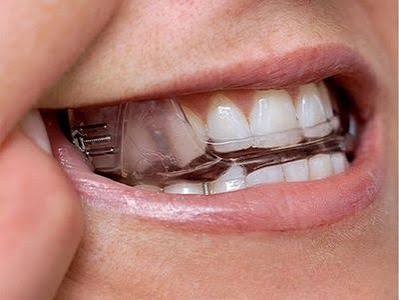
These special devices produced in dental clinics for the treatment of snoring and mild-to-moderate sleep apnea are referred to in medical literature as “Mandibular Advancement Devices” (MAD). Although they resemble transparent protective splints used by boxers or night guards worn by patients who clench their teeth, they involve a much more complex engineering design in terms of biomechanical function. The appliance consists of two separate components that fit snugly over the upper and lower dental arches, and these components are connected on the sides with specialized mechanisms (hinges or screws). The core working principle is to hold the lower jaw a few millimeters forward and slightly downward from its normal resting position during sleep. When the mandible is advanced, the tongue base and neck muscles—anatomically connected to the mandible—are also pulled forward. This mechanical tension stretches the soft tissues that would otherwise sag backward and obstruct the airway, physically widening the space behind the airway (the oropharyngeal lumen) and allowing air to reach the lungs without friction or vibration.
How far the appliance advances the mandible (the amount of titration) is adjusted millimetrically by the clinician according to the patient’s temporomandibular joint (TMJ) tolerance, the severity of snoring, and the degree of airway narrowing. This adjustability is the most critical factor in the appliance’s success. Advancing the mandible too little will not stop snoring, while suddenly advancing it too much can cause severe TMJ pain and tooth sensitivity in the morning. Panorama Ankara’s titration protocol adopts a gradual advancement strategy to allow the jaw muscles to adapt to this new position. During the first weeks of use, small screw adjustments performed under clinician supervision help safely identify the golden mean (the optimal therapeutic position), targeting both maximum airway patency and zero joint pain.
Analysis of Clinical Approaches: Anti-Snoring Appliance vs. CPAP Comparison
For a large proportion of patients diagnosed with sleep apnea, physicians prescribe CPAP (Continuous Positive Airway Pressure) devices as the standard treatment. However, CPAP masks worn on the face, the sound produced by the air pump, and the difficulty of transporting the device during travel cause many patients to refuse its use (CPAP intolerance). An unused CPAP device essentially means untreated sleep apnea. At this point, intraoral anti-snoring appliances constitute an excellent medical alternative due to both very high patient compliance and complete silence. To help our patients understand the treatment model most suitable for their lifestyle and the severity of their condition, we transparently compare the clinical features of CPAP systems and intraoral anti-snoring appliances in the table below.
| Clinical and Lifestyle Features | Conventional CPAP Device (Mask Systems) | Personalized Intraoral Anti-Snoring Appliance |
|---|---|---|
| Medical Working Principle | Delivers continuous pressurized air to keep the airway open (acts like a pneumatic splint). | Keeps the airway open physically and anatomically by holding the lower jaw forward. |
| Comfort and Noise | A facial mask may feel uncomfortable; the compressor system produces low-level noise throughout the night. | Worn only inside the mouth and is not visible externally. Completely silent because it uses no electricity or motor. |
| Portability and Energy Requirement | A bulky device. Dependent on an electrical outlet; inconvenient to carry when traveling. | Fits into a wallet-sized case. Requires no electricity; easy to use on planes, camping, and all types of travel. |
| Patient Profile and Indication | Gold standard for severe (advanced) obstructive sleep apnea (OSAS) cases. | Ideal for primary snoring, mild to moderate sleep apnea, and patients who cannot tolerate CPAP. |
Digital Impression and 3D Design Processes at Panorama Ankara
For an anti-snoring appliance to remain comfortably in the mouth throughout the night without harming oral tissues, precision during the manufacturing phase is essential. In the past, impressions taken with putty-like materials often triggered a strong gag reflex and, due to shrinkage tolerances, could cause the appliance to fit poorly (too tight or too loose). Leveraging all capabilities of digital dentistry in Ankara anti-snoring appliance production, Panorama Ankara uses advanced intraoral scanners (3D intraoral cameras) to capture measurements. These scanners take thousands of images within seconds and transfer an exact digital copy of the patient’s teeth, gums, and bite into a computer environment.
Using this three-dimensional virtual model, the appliance borders are designed with specialized software so they do not press on the gums or abrade the enamel surface of the teeth. During the design stage, special air channels (breathing vents) can also be added to the front portion of the appliance (between the incisors) to accommodate the possibility of mouth breathing during sleep. Once the design is completed, the appliances are produced via precision CNC devices or 3D printers using high-tech medical thermoplastic or acrylic materials that are certified biocompatible, BPA-free, and resistant to heat and impact. As a result, the appliance locks onto your teeth as perfectly as a missing puzzle piece; it does not dislodge even with involuntary movements during sleep and does not create a choking risk.
Treatment Indications and Details on Who Can Use an Appliance
Although anti-snoring appliances are highly effective and comfortable medical devices, they may not be suitable for every patient profile or every type of snoring. Treatment success depends on a joint evaluation by ENT specialists, sleep medicine physicians, and dental sleep medicine experts. For example, in a patient with a severe nasal septum deviation or significantly enlarged turbinates (concha hypertrophy), the primary issue may be nasal obstruction rather than mandibular retrusion, and an ENT consultation may be needed first. Following detailed clinical and radiographic evaluation at Panorama Ankara, the main indication groups in which anti-snoring appliances provide optimal benefit are as follows:
- Individuals diagnosed with “primary snoring” (no apneic episodes) based on polysomnography (sleep test) and experiencing social/psychological discomfort,
- Patients with mild to moderate obstructive sleep apnea (OSAS) whose general health is stable,
- Patients diagnosed with severe sleep apnea who cannot use CPAP, experience claustrophobia while wearing the mask, or cannot sleep due to device noise (CPAP intolerance),
- Complex cases who also suffer from nighttime teeth grinding and clenching (bruxism), allowing the appliance to function additionally as a protective night guard against tooth wear.
Appliance Care, Routine Follow-Ups, and Sustainable Sleep Hygiene
The medical lifespan and therapeutic effectiveness of an anti-snoring appliance depend on how carefully the patient adheres to daily maintenance routines. Since appliances are in direct contact with the oral flora, salivary proteins, and bacteria throughout the night, they should be cleaned regularly every morning. Panorama Ankara specialists strongly advise avoiding hot water during cleaning (as it may deform the material). Each morning, the appliance should be mechanically cleaned under lukewarm or cold water using non-abrasive, clear liquid soap and a separate soft-bristled toothbrush, then stored dry in its case. For extra hygiene, it can be soaked briefly once or twice a week in a glass of water containing denture-cleaning effervescent tablets.
Delivery of the appliance is not the end of treatment, but only the beginning. After patients start using the appliance, they are invited to follow-up sessions at specific intervals. During these sessions, clinicians assess whether the appliance creates any pressure on the teeth or TMJ and evaluate the degree of reduction in snoring and daytime fatigue. If a significant decrease in snoring has not been achieved, titration continues by advancing the mandible an additional millimeter using the appliance’s mechanism. In addition, to improve sleep hygiene, our patients are supported with holistic recommendations such as avoiding strenuous exercise, heavy meals, alcohol, and caffeine before bedtime, maintaining an ideal body weight, and optimizing bedroom temperature.
It’s Time to Wake Up to Refreshing Mornings with Panorama Ankara
Sleep apnea and chronic snoring are not merely a “sound” problem; they are a stealth health issue that can be life-threatening across a wide spectrum—from hypertension and insulin resistance to cardiac rhythm disturbances and traffic accidents caused by daytime sleepiness. Offering a current, comfortable, and minimally invasive approach in sleep medicine through Ankara anti-snoring appliance applications, Panorama Ankara demonstrates that deep, quiet, restorative sleep can be achieved without being dependent on heavy medical devices. With the help of a transparent appliance that fits your oral anatomy perfectly, regulating the biomechanics of your jaw can increase oxygenation at the cellular level and help you start the day with far more energy and mental clarity.
If you wake up tired in the mornings, if your partner reports that you snore throughout the night or that your breathing occasionally stops, you should take steps to rapidly improve your quality of life rather than ignoring the problem. To undergo a three-dimensional analysis of your jaw and facial anatomy, assess whether your TMJ is suitable for appliance use, and meet your quiet sleep companion designed entirely for you, you can schedule a detailed examination appointment with Panorama Ankara’s maxillofacial surgery and dental sleep medicine unit and protect both your health and your sleep.