
Ankara Complex Implant Treatment: Comprehensive Solutions for Systemic and Multifactorial Cases with Panorama Ankara
In modern dentistry, dental implants offer exceptionally high success rates in replacing missing teeth; however, not every patient’s biological foundation, medical history, and anatomical condition may be suitable for a standard surgical procedure. The factors that elevate an implant case from “routine” to “complex” are not limited solely to a narrow or insufficient jawbone. Concomitant systemic diseases (uncontrolled diabetes, advanced osteoporosis, cardiovascular conditions), previous implant operations that ended in failure (requiring revision), multiple tooth losses combined with severe occlusal disorders, and the use of specific medications that directly affect bone metabolism can turn the treatment process into an extremely delicate chess game. With a multidisciplinary medical vision in the field of Ankara complex implant treatment, Panorama Ankara approaches such multifactorial cases not from the perspective of a single dentist, but through a medical council model that works in an integrated manner with oral and maxillofacial surgeons, periodontists, orthodontists, and—when necessary—the patient’s own physicians (endocrinologists, cardiologists). Our goal is to secure cellular healing (osseointegration) even under the most challenging anatomical and systemic conditions and to build a functional, long-lasting chewing foundation.
The core philosophy of complex implantology is based on a comprehensive medical preparation phase that starts long before surgery, in which risk factors are meticulously isolated. While in a standard case, tooth extraction and implant placement can often be performed easily in the same session, in a complex case the body’s healing capacity, bone remodeling cycle, and immune response are evaluated at the cellular level through detailed blood tests and three-dimensional radiographic analyses. Simply screwing an implant mechanically into the jawbone does not guarantee success; true success lies in ensuring that the body does not reject the titanium material, but instead envelops and integrates it like a biological organ. By calculating all biomechanical and biochemical variables with millimetric precision, Panorama Ankara’s experienced specialist team opens evidence-based, reliable, and sustainable next-generation surgical pathways for patients who have lost hope with standard treatments, who have been told “you cannot have implants” in other clinics, or who have experienced treatments that ended in disappointment in the past.
Systemic Diseases and Implantology: Diabetes and Bone Metabolism
One of the greatest factors that directly threatens the success of implant treatment is the patient’s overall (systemic) health status. Especially in patients with Type 1 and Type 2 diabetes, continuous fluctuations in blood glucose levels dramatically reduce the body’s wound-healing capacity and weaken its resistance to infections. Uncontrolled diabetes can disrupt the osseointegration process by suppressing the function of osteoblast cells responsible for bone formation around the implant. For this reason, Panorama Ankara requests HbA1c tests (the 3-month average blood sugar level) before deciding on implant surgery in diabetic patients. If the HbA1c level is outside safe limits, the procedure is postponed in a controlled manner until blood sugar is regulated in coordination with the patient’s endocrinologist. Once glucose levels are stabilized within an ideal range, minimally invasive (sutureless/low-trauma) surgical techniques and special antibiotic prophylaxis are applied, enabling diabetic patients—just like healthy individuals—to receive their implants smoothly and safely.
Another critical systemic factor is bone metabolism. In patients with advanced osteoporosis or individuals undergoing cancer treatment who use bisphosphonate-group medications, the jawbone’s ability to renew itself changes profoundly. Bisphosphonate-derived drugs, while slowing bone resorption, can also impair bone vascularity, potentially leading to extremely severe complications after implant surgery, such as jaw osteonecrosis (loss of bone vitality and necrosis). In these complex scenarios, Panorama Ankara’s oral and maxillofacial surgery specialists conduct a joint consultation (medical board/council) with the patient’s oncologist or rheumatologist. Based on the medication’s half-life, a drug holiday plan may be considered; bone turnover is evaluated through specific blood tests (CTX values), and surgery is performed only when medical data demonstrate 100% safety—using ultrasonic piezoelectric devices (tools that cut via vibration without overheating the bone) to ensure exceptionally gentle surgical handling.
Revision Implant Surgery and Peri-Implantitis Management
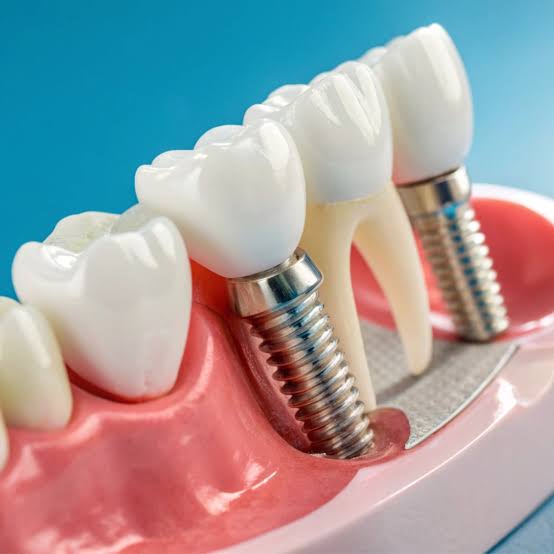
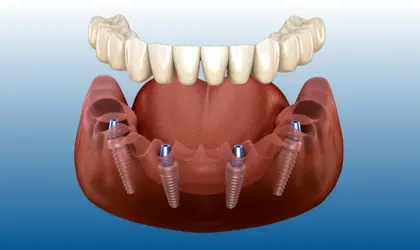
One of the most challenging clinical scenarios in dentistry is the revision of implants previously placed in other centers that later became infected and failed. Known in the literature as peri-implantitis, this condition involves the chronic bacterial destruction of the gum tissue and jawbone around the implant, exposure of implant threads, and ultimately loosening and functional failure. Removing a failed implant from bone and placing a new one is far more difficult than placing an implant into untouched, healthy bone, because the removed implant often leaves behind a massive, bacteria-laden, infected bony crater (a cavitary defect). Panorama Ankara applies internationally accepted advanced reconstruction protocols for such revision surgeries.
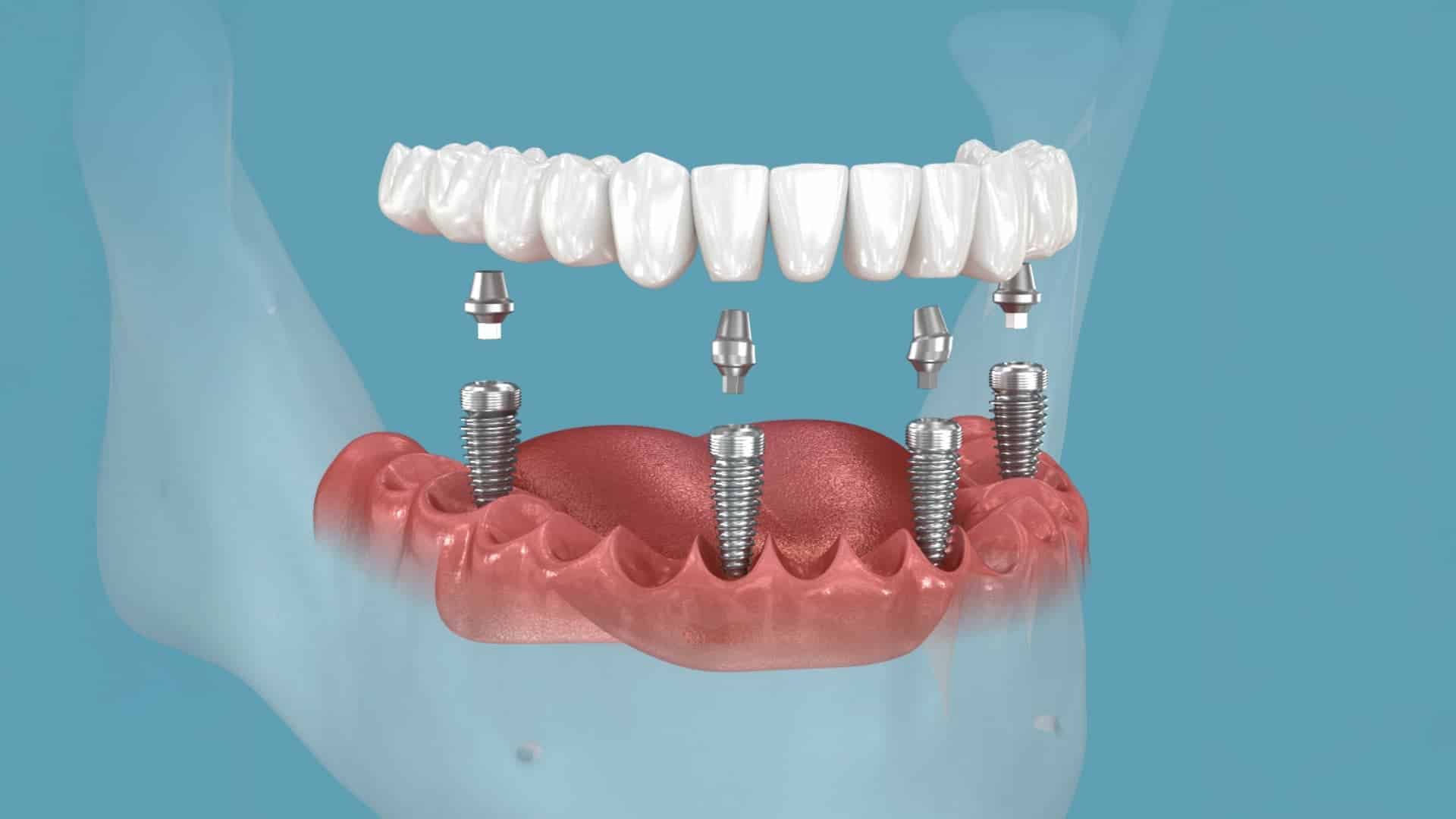
The first stage of revision is to remove the infected implant using specialized torque instruments (explantation kits) without damaging the surrounding healthy tissues. Next, all infected granulation tissues within the defect are microscopically cleaned (detoxification) using laser systems and specialized titanium brushes. In the second stage, advanced bone grafting materials (allografts or PRF membranes obtained from the patient’s own blood) are placed to fill the crater and rebuild jaw anatomy. A cellular maturation period—typically 4 to 6 months—is generally required for the bone to recover and harden sufficiently to accept a new implant. Once new, clean bone has formed, a new implant is safely integrated into the site at a much more accurate three-dimensional angulation, often supported by guided (navigation-assisted) surgery.
Clinical Comparison: Standard Implantology vs. Complex Revision Surgery
For the management of complex cases, having realistic expectations about the process is crucial for the psychological success of treatment as well. In jaw surgery, no two cases are identical; bone quality and the patient’s medical history can change the entire course of an operation. In keeping with its transparency principle, Panorama Ankara details the key operational differences between a standard implant procedure and a systemic/multifactorial complex implant revision in the table below.
| Clinical and Operational Dynamics | Standard (Routine) Implant Surgery | Complex Implant / Revision Surgery |
|---|---|---|
| Medical Preparation and Diagnostic Phase | Dental tomography and a routine medical history form are usually sufficient. | Detailed blood tests, physician approval (medical consultation), and infection mapping are mandatory. |
| Surgical Phase and Multidisciplinary Need | Performed by a single oral surgeon or implantologist under routine local anesthesia. | Complex procedures decided jointly by an orthodontist, periodontist, and surgeon, often requiring sedation. |
| Bone Graft and Tissue Engineering | If bone is adequate, grafting is not used, or only minimal supportive graft material is added. | After decontamination, the use of substantial graft volumes and membranes (or bone blocks) is essential. |
| Treatment Time and Waiting Period | Fixed prosthetic stages typically begin 2–3 months after implant placement. | Removal of the old implant, bone healing, and new implant integration may extend the process to 8–12 months. |
The Orthodontics–Implantology Intersection: Creating a Prosthetic Space
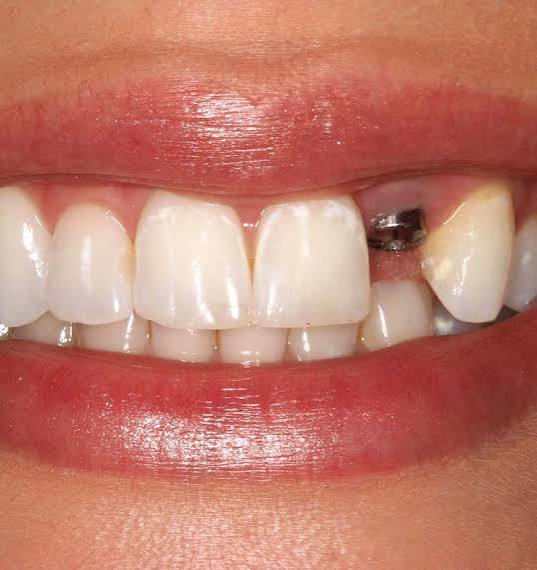
One of the most common scenarios that makes a case “complex” is when a patient loses a tooth and receives no treatment for many years. Over time, teeth behind the extraction site tip forward into the space, while teeth in the opposing jaw may over-erupt downward into the gap. In this severe crowding pattern, it can become physically impossible to place an implant screw into the narrowed area. In such multifactorial cases, surgical intervention alone is not enough; an orthodontic specialist must be involved. In Panorama Ankara’s multidisciplinary protocol, the patient first receives clear aligners or short-term regional braces (mini-screw supported orthodontics).
Through orthodontic therapy, posterior teeth that have tipped over the years are slowly uprighted, and over-erupted teeth are intruded back into their original level within the bone. This biomechanical preparation creates an ideal “prosthetic space” equal to the original width of the missing tooth. Once teeth are correctly positioned, the oral surgeon steps in and integrates the implant into the newly created ideal space at a perfect angle. This synchronized collaboration among dental specialties not only resolves occlusion (bite) problems at their root, but also extends the aesthetic longevity of the porcelain crown that will be placed on the implant for years to come.
Advanced Radiological Navigation in Complex Cases: Nerve Repositioning
In certain extreme lower-jaw cases, bone loss can become so severe that the main nerve bundle providing sensation to the lower jaw and lip (the inferior alveolar nerve) approaches the upper boundary of the jawbone. In such situations, even placing the shortest implant (for example, 6 mm) can directly injure this vital nerve and cause permanent lip numbness (paresthesia). In these extreme anatomical limitations—often avoided by standard clinics—Panorama Ankara’s advanced surgical team performs micro-surgical “nerve repositioning” procedures.
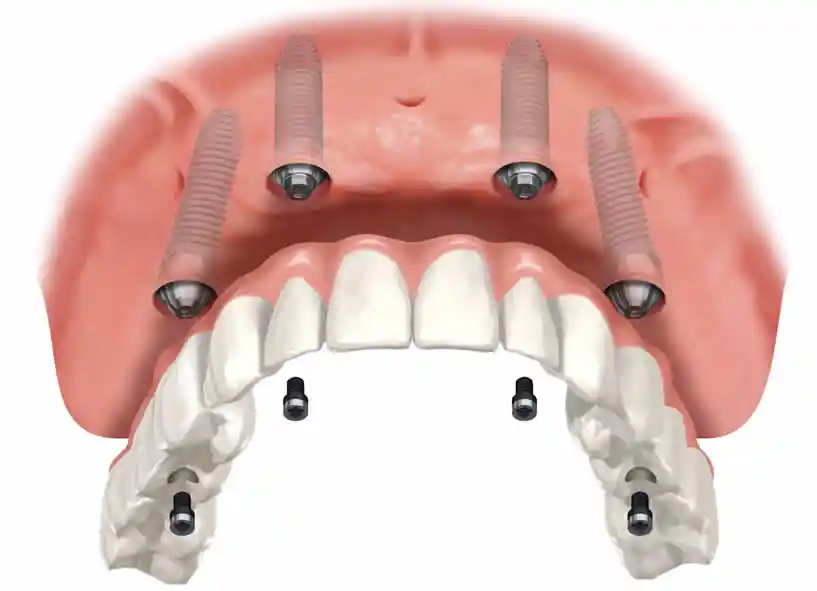
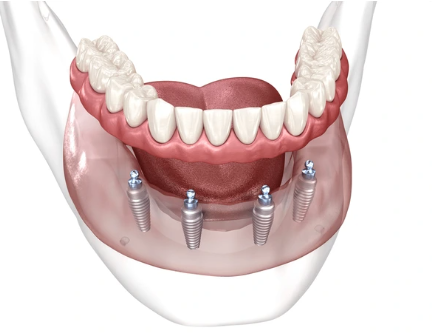
In this highly specialized operation, the main nerve bundle is gently mobilized and retracted through a small microscopic window opened on the outer surface of the jawbone. After the nerve is protected in a safe position, implants are placed to the planned depth, and the nerve is then repositioned along a new route where it will not be subjected to pressure. Supported by piezoelectric (ultrasonic) surgical devices, these techniques can be performed without physically damaging the nerve sheath—offering medical “miracles” that rescue patients with extreme bone loss from a fate of complete edentulism and reliance on removable dentures. The main profiles evaluated as complex treatment candidates at Panorama Ankara include:
- Systemic patients who require special medical protocols due to significant structural jawbone weakness related to diabetes, osteoporosis, or rheumatologic conditions,
- Revision cases where previously placed implants have failed due to peri-implantitis (implant-related bone loss) and must be removed, followed by jawbone reconstruction,
- Multidimensional rehabilitation candidates who require orthodontic preparation (braces/aligners) before implant placement due to severe malocclusion (bite disorder).
With Panorama Ankara, Challenging Cases Are No Longer Hopeless
Human anatomy and biology are far too unique and complex to fit into standard templates. You may have been told in other clinics that implants are not possible due to your medical history or bone structure; or a previous failed implant experience may have made you afraid to pursue treatment again. By combining the most advanced equipment with a multidisciplinary medical board approach in Ankara complex implant treatment, Panorama Ankara rewrites scenarios that are labeled “unsolvable” in dentistry—through the light of science and microsurgery.
You should know that systemic diseases are not obstacles, but parameters that simply require specialized management. To overcome the limits of your jaw anatomy with digital navigation and to discover a safe, personalized revision and bone reconstruction roadmap, you can schedule a detailed 3D tomography and council consultation appointment at Panorama Ankara—so you can rebuild your health and smile on solid foundations.