
Ankara Aesthetic Crowns
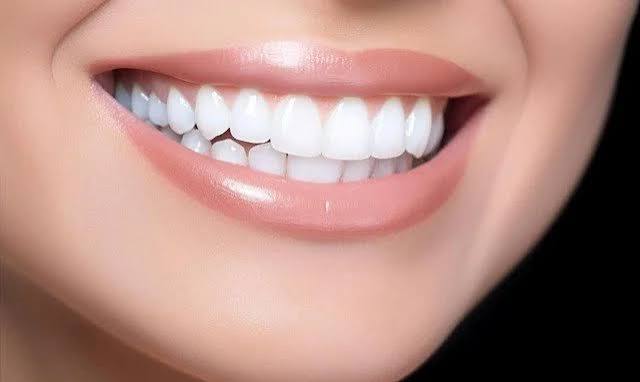
Throughout the history of dentistry, aesthetic restorations were built for decades on an unavoidable trade-off between durability and optical translucency. To protect a weakened tooth that has suffered extensive loss of structure due to decay, trauma, or root canal treatment against chewing forces, placing a “Full Crown” that encircles the tooth like a cap—after reducing it 360 degrees—is a medical necessity. In the past, however, to achieve this strength, gray metals (chromium-cobalt alloys) were used as an internal framework, and the exterior was covered with porcelain. Over time, these metals oxidized in oral fluids, creating the dreaded black/purple reflections along the gumline (a metallic corrosion line). Because metal does not transmit light, it also completely blocked the vivid, translucent nature of natural enamel, producing a matte, dull “false tooth” silhouette in the mouth. Integrating the highest level reached by materials science and cellular tissue engineering into its protocols for Ankara aesthetic crowns (zirconia and all-ceramic crowns), Panorama Ankara fully frees patients from metallic captivity and gingival toxicity. Our clinic not only protects your teeth physically; it also restores that inimitable natural vitality to your tooth—and a unique aesthetic radiance to your face—through fully ceramic systems that contain no metal substructure, have a refractive index identical to natural enamel, and merge with your gums at a cellular level (biocompatible).
The success of an aesthetic crown is not measured only by how “white” the porcelain looks, but by perfection at the microscopic boundary where porcelain meets the gumline. This border—known in the literature as “Marginal Adaptation”—determines the lifespan of the crown and the fate of the tooth underneath. If an invisible micron-level gap (microleakage) remains between the prepared tooth and the seated crown, saliva and caries-causing bacteria can penetrate, rapidly decaying your valuable natural tooth beneath the crown and triggering chronic gingival inflammation (gingivitis). While preparing the tooth for a crown (the preparation stage), Panorama Ankara’s advanced restorative specialists use magnification systems (loupes) and apply an engineering-level technique called “Chamfer” or “Shoulder Preparation.” This creates a clear, smooth, millimetric finish line at the gum margin. The aesthetic crown is then seated on this finish line with puzzle-like precision and microscopic sealing. The gingiva embraces the polished porcelain surface—free of metal allergy—almost as if it were natural enamel, and the vital tissue zone known as the “Biologic Width” is never violated.
Clinical Classification: Metal-Free Alternatives in Full Crown Indications
When considering an aesthetic crown, the question “Zirconia or E-max?” is the crossroads where patients experience the most confusion. This selection is never a trend or purely a cost decision; it is a fully medical (biomechanical) engineering decision based on the patient’s chewing pressure, the tooth’s location in the mouth, and the darkness of the underlying tooth color. To help patients understand this advanced tissue engineering clearly, Panorama Ankara presents metal-free crown systems below through a clinical filter.
| Clinical and Biomechanical Parameters | Monolithic / Layered Zirconia Crowns | All-Ceramic (Lithium Disilicate / E-max) Crowns |
|---|---|---|
| Optical Illusion and Light Transmission | Because it contains a white opaque zirconia core, translucency is somewhat more limited, yet it remains highly aesthetic. | Has no core (pure glass ceramic). Transmits light almost completely, offering vitality closest to natural enamel. |
| Mechanical Strength and Indicated Region | Extremely high fracture strength (1000–1200 MPa). Gold standard for posterior molars, bridges, and heavy clenchers (bruxism). | Lower fracture strength (400–500 MPa). Preferred for anterior incisors where bite force is lower and aesthetics are maximal. |
| Masking Underlying Discoloration (Opacity) | If the underlying tooth is very dark due to root canal treatment, its more opaque nature can block that darkness without reflecting it outward. | Because it is very translucent (chameleon effect), it may reflect underlying grayness if the tooth is very dark; masking power is weaker. |
| Tissue Bonding (Cementation Physics) | Typically retained with conventional or semi-adhesive cements; mechanical retention (frictional fit) is more prominent. | “Adhesively” bonded with tooth-specific acids and resin agents; it literally becomes one piece with the tooth. |
Tissue Isolation and Digital Impressions: The Mechanics of Gingival Retraction Cord
For an aesthetic crown to be produced flawlessly in the laboratory, a replica (impression) of the prepared tooth must be transferred to the lab with micron-level accuracy. The most critical and challenging area in dental impressions is the margin line—the boundary where the prepared tooth meets the gingiva. Saliva, bleeding, or gingival tissue covering the margin can prevent digital scanners (or silicone impression materials) from reading this zone. At Panorama Ankara, to eliminate this “digital blindness” and capture impressions with zero error, an advanced soft-tissue manipulation called “Gingival Retraction” is performed using a “Retraction Cord.”
Just before scanning, the specialist places ultra-thin retraction cords (fine silk threads) into the sulcus between the tooth and the gum, often soaked in special hemostatic solutions. These cords temporarily displace the gingiva outward for only a few minutes, fully exposing the finish line like a clear outline. Once perfect isolation is achieved, our 3D intraoral digital scanners (Intraoral Scanners) are activated. The tooth margins, gingival sulcus, and opposing bite relationship are captured as thousands of images per second and transferred into the computer environment (CAD/CAM system). Thanks to this digital, clean transfer, dimensional errors caused by expansion/shrinkage of traditional “putty” impressions become history. Robotic milling units in the laboratory then fabricate your zirconia or E-max crown from a single block with micron-level precision based on this flawless 3D model.
Adhesive Cementation: From Mechanical Fixation to Chemical Fusion
Seating the fabricated aesthetic crown—especially glass ceramics like E-max—is not a simple “gluing” (cementation) step; it is the art of “Adhesive Bonding,” one of the most sensitive chemical procedures in dentistry. While traditional cements can dissolve in water over time, adhesive systems are insoluble resin cements that lock the tooth and porcelain together at the molecular level. To ensure your crown never loosens and bacteria never infiltrate beneath it, Panorama Ankara’s restorative dentistry board applies the following two uncompromising clinical isolation rules (and patient instructions) during bonding:
- Because adhesive (chemical) cements require a perfectly dry field with not a single drop of saliva, blood, or even moisture from breath,
the dentist enforces absolute isolation—using cotton rolls or a Rubber Dam—while conditioning the crown and tooth with specific acids and primers
(e.g., hydrofluoric etching and silane protocols). - After crowns are polymerized and “fused” to the tooth with specialized curing lights (Dual-Cure systems), microscopic residual cement at the margins
(especially under the gumline) can trigger gingival inflammation. Therefore, the patient must elevate home care beyond standard brushing and make it a
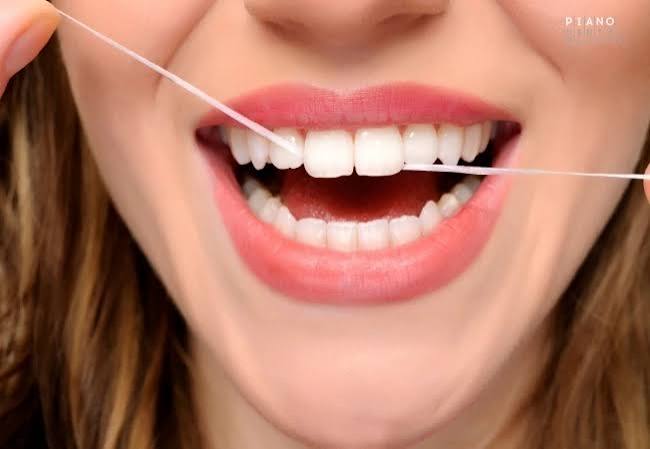
strict daily discipline to clean these border areas every evening using Superfloss (special bridge floss) or a pressurized Water Flosser.
Biology-Respecting, Seamless Aesthetics with Panorama Ankara
Getting a crown is not “wearing a porcelain accessory” in your mouth—it is integrating a brand-new “bionic organ” at the gateway of your digestive system,
capable of bearing tons of chewing forces and in continuous contact with your gums for years. Combining tissue-friendly materials (Zirconia and E-max) with
advanced marginal finish lines (chamfer preparations) in Ankara aesthetic crown treatments, Panorama Ankara completely frees you from the dark gumline
discolorations, bad breath, and food impaction problems caused by old-fashioned crowns. These aesthetic shields, fused to your tooth at a microscopic level,
create a flawless optical radiance whose start and end points cannot be distinguished from the outside.
To analyze the gum tissue damage beneath your opaque, artificial, lifeless old crowns with our 3D panoramic imaging; to map your tooth margins in seconds
with digital scanners; and to redesign the natural glow of your face with biocompatible full crowns, you can schedule a detailed restorative-aesthetic
consultation at Panorama Ankara and carry the unwavering aesthetic assurance of art and engineering into your smile.