

Ankara Digital Anesthesia
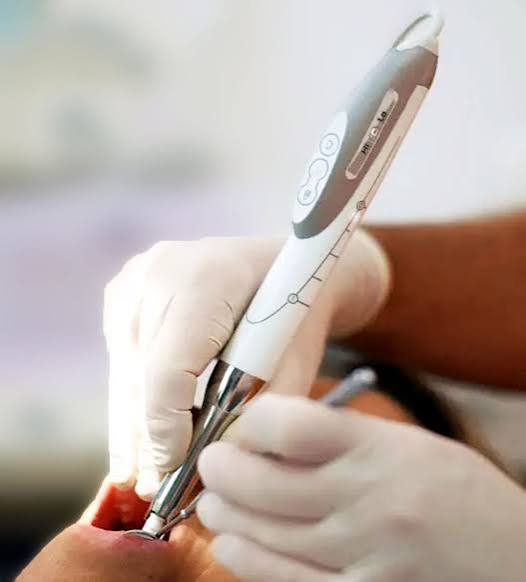
In dental literature, the greatest psychological and physical barrier preventing patients from accessing treatment is the traumatic perception created by traditional metal syringes—commonly known among the public as “fear of needles.” The scientific reality is that the sharp pain felt during local anesthesia is not primarily caused by the needle piercing the tissue, but by the uncontrolled pressure applied manually by the dentist’s thumb, which suddenly injects the anesthetic fluid into narrow tissue spaces and tears the cells (tissue distension). Redefining Ankara digital anesthesia standards with the vision of “Microprocessor Pressure Control” and “Computer-Assisted Infusion,” Panorama Ankara offers patients a professional comfort rehabilitation with futuristic pen-shaped devices that do not resemble syringes, allowing the anesthetic fluid to integrate drop by drop into the tissue below the patient’s pain threshold. The systems used in our clinic represent a reliable clinical engineering approach where the anesthetic flow is adjusted through second-by-second algorithms according to tissue resistance, targeting only the tooth to be treated without numbing the lips or tongue.
The true scientific success behind digital anesthesia technology lies in the principle known in medical literature as “Dynamic Tissue Resistance Analysis,” which is based on the biofeedback established between the device and the tissue. In the advanced pain management unit of Panorama Ankara, when the pen-shaped “Wand” handpiece approaches the tissue surrounding the tooth, intelligent sensors at the device’s tip measure the resistance of the tissue to the anesthetic fluid within milliseconds. The computer autonomously adjusts the fluid flow rate (infusion rate) precisely according to this resistance, ensuring that the tissue is not torn and that local ischemia (sudden blood withdrawal) does not occur. Thanks to this remarkable fluid dynamic known medically as “Sub-Pain Threshold Delivery,” the patient does not feel the anesthetic fluid entering the tissue even at a cellular level. This vision transforms anesthesia practices in Ankara from a frightening metal syringe experience into an “Atraumatic Navigation” discipline that physically and psychologically eliminates dental phobia.
Clinical Classification: Local Injection Systems and Biomechanical Differences
The comfort of an anesthesia application for the patient depends not only on the quality of the molecule (solution) used but also on “At What Speed and With What Vector” that molecule is delivered into the tissue. While pressure applied by the human hand fluctuates every second, digital systems provide stable and autonomous pressure. To help patients clearly understand this advanced and comfortable tissue numbing process, Panorama Ankara presents the technological evolution used in our clinic within the scientific framework below.
| Anesthesia Delivery System | Biomechanical Pressure and Fluid Dynamics | Panorama Ankara Clinical Patient Experience |
|---|---|---|
| Traditional Syringe (Manual Pressure) | Depends on the dentist’s finger strength; sudden pressure fluctuations create micro-tears (distension) in the tissue. | Abandoned in our clinic especially for patients with phobia; may cause tissue swelling and a burning sensation during the procedure. |
| Computer-Controlled (Digital) Anesthesia | The device’s micro-motor delivers the fluid drop by drop according to the absorption capacity (resistance) of the tissue. | Even the moment the needle enters the tissue is not felt; since it does not resemble a syringe (pen-shaped), visual triggers of phobia are prevented. |
| Intraligamentary (STA) Injection | Using the ultra-thin tip of the digital system, the fluid is delivered directly between the fibers (ligaments) connecting the tooth to the bone. | Only the specific tooth to be treated becomes numb; the uncomfortable numbness of the cheek, lips, and tongue lasting for hours does not occur. |
| Topical (Surface) Gel Biomechanics | Before the digital needle contacts the tissue, nerve endings in the mucosa are blocked with special flavored gels. | When integrated with the computerized system, it creates a 100% painless “regional blockade” corridor extending from the surface to deeper tissues. |
Single Tooth Anesthesia (STA) and Neurological Comfort Architecture
Another major discomfort caused by traditional anesthesia methods occurs when nerve block anesthesia (mandibular block) leaves the patient’s tongue, cheek, and lips numb for hours, impairing speaking, eating, and drinking functions. In the digital “Single Tooth Anesthesia” (STA) protocols used at Panorama Ankara, a specialized pen tip is positioned directly into the periodontal space surrounding the tooth root and numbs only that specific tooth with computer-controlled pressure. The moment the procedure is finished, the patient leaves the clinic without noticing any asymmetry in the face, without the risk of biting the lips or cheeks, and can comfortably drink coffee or eat while returning immediately to daily work activities (meetings, presentations) without any functional loss. This represents the highest level of biological medical practice that blends neurological comfort with daily workflow.
Tissue Stabilization and Functional Maintenance After Digital Anesthesia
The remarkable painless numbness achieved through computer-assisted systems leaves no physiological trauma (tearing) in the tissue compared to traditional syringes, allowing recovery (the return of sensation) to occur along a much more natural and smooth curve. For this comfortable adaptation period following your treatment, the Panorama Ankara pain management board presents the following two fundamental rules as a “recovery constitution”:
- If the technique used is STA (Single Tooth Anesthesia) and your lips or tongue are not numb, you may immediately return to eating and drinking functions; however, excessive traumatic “occlusal pressure” from very hard foods should be avoided on the treated (numb) tooth until full sensation returns.
- In digital intraligamentary anesthesia applications, because the fluid enters the tissue through microchannels, hard brushing strokes should not be applied to the gum margin in that area on the day of treatment; instead, gentle cleaning should be performed with water or mouthwash for soft prophylaxis.
Erase Your Fears with Digital Comfort at Panorama Ankara
The frightening image of a metal syringe that has caused you to postpone sitting in the dentist’s chair for years, and the burning pressure sensation created by anesthetic fluid in your tissues, are not treatment rules you must endure. On the contrary, in expert hands, they are professional processes that can be completely eliminated with microprocessors and tissue-resistance sensors. In your search for Ankara digital anesthesia, Panorama Ankara combines “Dynamic Pressure Control” and “Intraligamentary Infusion” protocols to free you with scientific elegance from painful traditional injections, hours of lip numbness, and dental phobia. We respect the unique cellular boundaries and pain threshold of your body 100%, opening the path to your health without any discomfort—only with a digital whisper.
To leave behind the tissue memory that triggers your pain threshold and dental anxiety, plan your treatment with the most suitable “Painless Single Tooth Anesthesia” (STA), and rise from the dental chair with a relaxed smile without any loss of function, you can schedule a detailed treatment consultation at Panorama Ankara and entrust your health to the safe hands of experience and modern technology.