

Ankara Fiber Post Application
In modern dentistry, the greatest biomechanical challenge encountered after completing root canal treatment in teeth that are severely decayed, traumatized, or have suffered major fractures is the lack of sufficient natural tooth structure (extensive coronal destruction) to support the porcelain crown or aesthetic filling to be placed on top. In the past, these teeth were reinforced with thick metal screws inserted into the root (metal posts). However, because metal is rigid and does not flex, it transferred chewing forces directly to the root, leading to vertical root fractures and, ultimately, extraction. Redefining Ankara fiber post application standards with the vision of the “Dentin Elasticity Modulus” and “Adhesive Root Integration,” Panorama Ankara offers patients a professional root-reinforcement rehabilitation that works in perfect harmony with the tooth’s natural flexural coefficient and elevates aesthetics thanks to its light-transmitting properties. These glass fiber–reinforced systems used in our clinic are micro-engineering marvels that are placed into the center of the tooth—much like the steel frameworks that support reinforced concrete—dampening occlusal stress from the superstructure and restoring the tooth to an unwavering integrity within the bone.
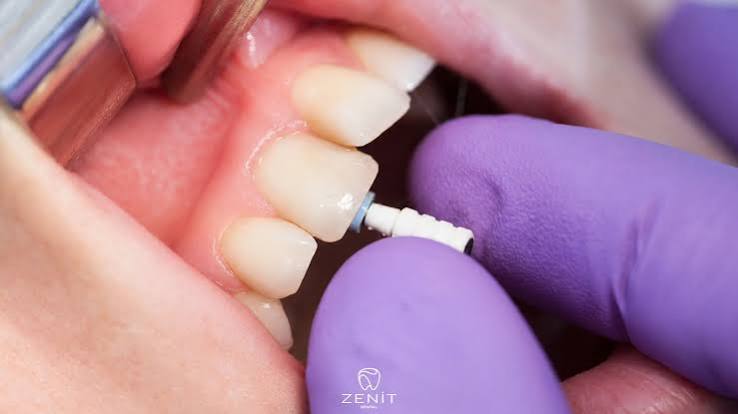
The core scientific success behind fiber post technology lies in the principle known in the medical literature as the “Biomimetic Monoblock Effect”: the idea that the tooth root, fiber rod, resin cement, and the overlying composite build-up (core structure) behave chemically as if they were a single unit. In Panorama Ankara’s advanced restorative unit, the root filling material (gutta-percha) inside the canal-treated tooth is removed to a specific depth using millimetric burs. Into this prepared space, fiber posts made from special glass fibers—matched to the anatomical diameter of the patient’s root canal—are placed. These posts are not mechanically wedged into the tooth (they do not create a wedge effect); instead, they are locked at a cellular level into the dentin tubules using special dual-cure (two-phase polymerizing) adhesive resin cements. The immense chewing forces applied to the tooth are absorbed without creating cracks in the root (stress distribution) because the fiber post flexes at the same rate as dentin. This vision transforms post-core (dowel) procedures in Ankara from a risky process that can split the tooth from the inside into a “Tissue Armoring” discipline that extends the biological lifespan of the tooth.
Clinical Classification: Intra-Root Anchorage Systems and Biomechanical Performance Analysis
The success of a post-core restoration depends on selecting a material with the appropriate “Elasticity and Light Transmittance” according to the tooth’s position in the mouth (anterior or posterior) and the anatomical structure of the root canal. Each material reacts differently to chewing dynamics. To help patients clearly understand this advanced tooth-preservation process, Panorama Ankara presents the anchorage methodology applied in our clinic in the scientific framework below.
| Anchorage (Post) Material | Biomechanical Behavior and Optical Effect | Panorama Ankara Clinical Restoration Goal |
|---|---|---|
| Glass Fiber Posts (Glass Fiber) | Bio-materials with the same flexural coefficient (modulus) as dentin, in white/translucent tones. | Do not create root cracks (wedge effect); maximize aesthetics by avoiding gray shine-through under zirconia or E-Max. |
| Prefabricated Metal Screws (Conventional) | Rigid screws made of titanium or stainless steel that lock in mechanically via grooves/threads. | Abandoned in our clinic due to biomechanical risks (root fracture); can cause metallic discoloration in the gum and porcelain. |
| Cast Metal Posts (Cast Post) | Rigid, heavy metal blocks custom-cast in the lab to completely fill the root space. | Used only when mandatory in extremely widened and elliptical canals where fiber posts cannot retain—preferably with special alloys. |
| Carbon Fiber Posts | First-generation fiber systems with very high resistance to flexure but black/dark gray in color. | Although durable, they are not used in aesthetic zones due to zero optical translucency and have been replaced by glass fiber. |
Ferrule Effect: The Biological Foundation of the Crown
The most vital anatomical rule determining the long-term success of fiber post applications is the concept known in the medical literature as the “Ferrule Effect.” After a fiber post is placed and a composite core is built, the zirconia/porcelain crown must engage not only the core material but also at least 1.5–2 millimeters of sound natural tooth wall (a dentin collar) remaining just above the gum line. Like the metal hoop that holds a barrel together, the porcelain crown encircles this solid tooth collar and locks the tooth as a whole. In Panorama Ankara’s restorative protocols, if this sound ferrule wall is absent, the gum line is reshaped millimetrically with a laser (Crown Lengthening) to expose this collar as a necessity. While any post procedure performed without this microscopic engineering calculation is destined to fracture over time, Panorama Ankara’s “Holistic Biomechanics” approach elevates the tooth’s stability within the bone to an unwavering level.
Maintenance and Functional Discipline After Fiber Post Restoration
A tooth revived by placing a fiber “column” inside and then covered with high-strength ceramics becomes structurally a powerful monoblock; nevertheless, it must be remembered that it is a tissue that has lost its natural vitality (without pulpal support). The Panorama Ankara restorative board presents the following two fundamental rules as a “usage constitution” to keep this precious tooth—saved from extraction—in the mouth for a lifetime:
- To prevent sudden and traumatic “lever forces” acting on a fiber-post–reinforced tooth—especially in anterior restorations—avoid harmful habits such as biting pens, opening bottle caps, or cracking very hard-shelled foods (hazelnuts, walnuts) directly with this tooth.
- To prevent plaque accumulation at the crown margin (gumline) from compromising the seal created by the post-and-crown “armor,” use an oral irrigator in addition to standard brushing; and patients who clench their teeth involuntarily at night should strictly adhere to a protective “night guard” regimen that dampens occlusal pressure.
Reveal the Invisible Strength Inside Your Tooth with Panorama Ankara
Teeth with excessive structure loss or roots fractured at the gum line—often told after root canal therapy, “a crown won’t hold on this tooth; it must be extracted”—are not an endpoint that forces you into immediate implant surgery. On the contrary, in expert hands, they are a professional process that can be rehabilitated with adhesive cementation and glass fiber technologies. In your search for Ankara fiber post application, Panorama Ankara combines “Monoblock Anchorage” and “Ferrule Optimization” protocols to free you with scientific elegance from the old black metal screws that crack roots, gum darkening, and early tooth loss. We respect the unique anatomical flexibility of your tooth root 100%, reconstructing nature’s vertical architecture with light-transmitting nanotechnological rods.
To map your root canal diameter and your remaining sound dentin walls (ferrule amount) with our digital radiographs, plan the most suitable “Glass Fiber Anchorage” route for you, and regain an unwavering chewing sensation with the tooth saved from extraction, you can schedule a detailed restorative consultation appointment at Panorama Ankara and entrust your health to the safe hands of experience and modern science.