

What is Fluorine Application?
Fluorine application (local fluoride varnish/gel cure cycles) is a non-invasive biochemical dental prophylaxis discipline certified in modern preventive medicine standards, aiming to armor tooth enamel at the molecular level. Karyogenic (caries-causing) microorganisms found in the human mouth ferment refined sugary food residues and drop the pH level to acidic limits (below 5.5); these acid waves dissolve the calcium mineral structure of the enamel and form cavities. Local fluorine cure is a technique for restructuring enamel morphology by injecting fluoride ions solely into the outermost prism layer of the tooth, without involving drilling or acid etching processes.
- Topical Infusion: Infiltrating fluoride ions directly into the microscopic pores of tooth enamel.
- Glass Polish Effect: Reducing the bacterial plaque adhesion coefficient by smoothing the enamel surface at the micron level.
- Bio-Compatibility Profile: Application of high safety standard materials that do not perform systemic absorption, approved by medical authorities (WHO/ADA).
For What Purpose is Fluorine Application Performed?
Dental fluoride supplements are executed to stop mineral losses progressing insidiously in the tooth structure and to chemically elevate the acid resistance of the enamel layer. Especially since the calcification (maturation) process of newly erupted young permanent teeth is not yet fully completed in the mouth during the first years, they are extremely vulnerable to caries threats. The primary purpose of the application is to reverse chalky matte white lesions at the initial stage (via the remineralization phase), thus protecting the patient from high-cost filling, root canal treatment, or extraction scenarios in the following years.
- Triggering Remineralization: Accelerating the rate at which calcium and phosphate ions rebind to enamel crystals.
- Bacterial Enzyme Blockage: Biochemically paralyzing the acid production capabilities and cellular metabolisms of microbes.
Who is Fluorine Application Suitable For?
Professional local fluorine cures are medically suitable for adult patients who suffer from dry mouth or sensitivity aches, as well as children whose teeth frequently have initial caries documented, who consume high rates of sugary foods, or whose hand motor skills are insufficient. Since the system does not include surgical scalpel incisions or anesthetic injections, it creates complete comfort for all anxious clients with the highest level of needle phobia. However, simply applying fluorine alone is not a sufficient rescue solution in individuals where very widespread, open cavity holes and deep caries craters have formed on the outer borders of the jawbone; therefore, restorative filling stages must be completed first in these cases.
- Those Carrying Bottle Caries Risk: Infants whose anterior incisors become matte due to milk or formula consumption during night sleep.
- Teens Wearing Orthodontic Braces: Individuals with the highest risk of white spot formation in blind spots around bracket edges where the brush cannot reach.
- Adults with Root Sensitivity: Patients experiencing hot-cold shocks whose root cementum layer has been left exposed due to gingival recession.
In Which Age Groups Can Fluorine Application Be Applied?
Local fluoride protection protocols can be safely put into the field in all age cycles of human life, from infancy, when the first primary teeth begin to appear in the mouth, to the geriatric (elderly) stage. The only parameter that changes according to age groups is the pharmaceutical form of the material used (gel, foam, or varnish) and the milligram concentration dosage calibration. Since the swallowing reflex cannot be fully controlled in young children, matte varnishes that do not flow with saliva are selected, whereas tray gels surrounding the entire jaw may be preferred in adults.
| Age Group Milestone | Preferred Fluorine Material Form | Biological Purpose and Cellular Mechanism |
|---|---|---|
| Early Childhood (Ages 2 – 5) | High-Adhesion Fluoride Varnish | It freezes and adheres to the tooth surface within seconds; it locks the delicate primary enamel against acids by eliminating the risk of swallowing. |
| School Age / Youth (Ages 6 – 15) | Fluoride Gel / Foam Cures | It carries the enamel calcification rigidity of newly erupting 6-year molars and permanent incisors to the highest saturation limit. |
| Adult / Geriatric (Ages 16 and Over) | Topical Desensitizing Fluorine Gels | It seals worn dentin tubules; prevents root caries and eliminates dazzling shocks. |
Why is Fluorine Application Important in Children?
Operating the fluoride shield without losing time in the pedodontics (pediatric dentistry) charter is substantiated by the fact that primary teeth contain a structurally much thinner and hypo-mineralized organic matrix compared to permanent teeth. The rate of caries progression in children is 3 times faster than in adults; an acid drop exceeding the enamel border infects the tooth pulp within weeks, condemning the child to severe abscess aches. Fluorine turns children’s delicate enamel into resistant castles that do not melt in an acid pool by penetrating them; it deactivates future heavy brace treatment needs at an early age by preventing early primary tooth losses.
- Post-Eruption Maturation: The uncompromising necessity of providing mineral supplements during the first two-year unprotected period of permanent teeth newly entering the mouth.
- Chewing Order Protection: Supporting the proper framing of the entire jaw occlusion and skeletal development by keeping the teeth healthy in the mouth.
How is the Dental Examination Performed Before Fluorine Application?
The pre-operative evaluation executed before moving to the intervention session is the most vital check-up stage that documents the presence of solid residues that will prevent fluorine absorption on tooth surfaces and the depth of insidious initial caries. During the examination, the physician inspects the walls of the teeth with the help of intraoral cameras. If thick tartar castles or microbial plaque layers (biofilm) are documented on the teeth, a complete clinical cleaning planning is carried out first, because fluoride ions cannot hydraulically infiltrate into the enamel prisms.
- Demineralization Mapping: Determining the remineralization limits of opaque chalk-white spots on the enamel surface.
- Prophylaxis Qualification: The process of polishing protein pellicle membranes on the tooth surface with micro-brushes to bring them to a clean phase.
How is Fluorine Application Performed?
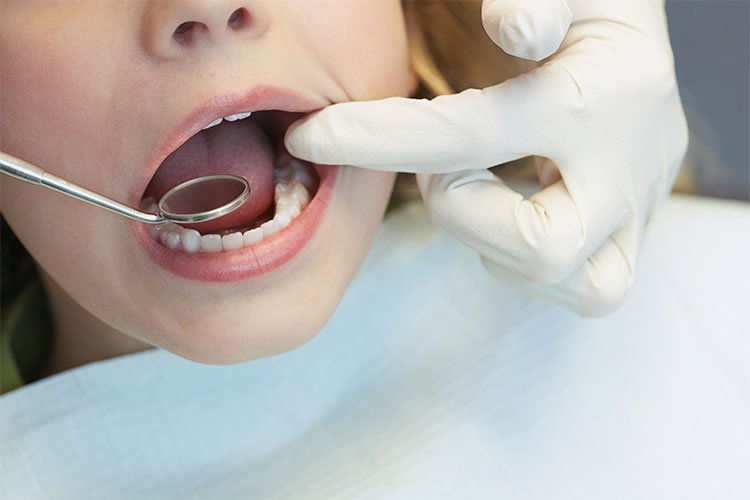
The topical fluoridation procedure executed in the clinic room is a practical and dynamic preventive medicine step completed by children on the chair while having fun, without the slightest need for anesthesia needles or drill scrapings. In the first stage, tooth surfaces are completely cleaned with the help of special prophylaxis pastes and rotating brushes, and dried with air sprays; bringing the pores to an open phase is essential for mineral absorption. Then, the chosen fruit-flavored fluoride varnish is spread to all walls of the teeth in a blade-edge thickness with the help of micro-tipped brushes. The material adheres and stabilizes as a protective glass polish film on the tooth at the exact second it meets saliva moisture.
- Micro-Brush Technique: Infiltrating the varnish millimetrically, especially into the molar grooves most prone to decay and narrow contacts between teeth.
- Activation with Saliva: The phase where the liquid varnish freezes within seconds with intraoral fluid, completely eliminating the risks of the child swallowing the gel.
Which Methods are Used in Fluorine Application?
In clinic protection practices, different certified medical methodologies and device combinations are activated according to the patient’s age, dental compliance level, and caries risk Miller class degree. The surgeon does not impose a single form on the patient; they field the safest technique based on the stability of the swallowing reflex. This wealth of methods carries session comfort to a perfection beyond human error.
- Varnish Method (Premium Protection): The safest children’s technique that hardens instantly with saliva and stays on the tooth for hours, performing slow-release fluoride infusion.
- Tray Gel Application: The method of filling acidulated phosphate fluoride (APF) gels into anatomical plastic molds (trays) suitable for the lower and upper jaw arches and keeping them in the mouth for 4 minutes.
- Fluoride Foam Cures: Fielding air-bubbled micro-foam units that are lighter than gel consistency and do not trigger the gag reflex.
How Does Fluorine Support Tooth Enamel?
The biochemical support power of fluoride ions on exposed enamel prisms is based on the rules of “crystallization transformation” and “ionic replacement.” The original mineral structure of human tooth enamel is woven from “Hydroxyapatite” [$Ca_{10}(PO_4)_6(OH)_2$] crystals, and this structure displays a delicate resistance to acids. From the moment topical fluorine contacts the tooth, it detaches the hydroxyl ($OH^-$) radicals in the crystal bonds from the line, takes their place, and permanently evolves the enamel morphology into a “Fluoroapatite” [$Ca_{10}(PO_4)_6F_2$] crystallization structure; by nature, fluoroapatite displays a 5 times more rigid, insoluble, and smooth stance hydraulically against acid attacks.
“Fluorine locks with the calcium mineral skeleton of your tooth at the molecular level, transforming your enamel layer into a smooth steel armor that does not melt even in acid pools.”
How Does Fluorine Application Contribute to the Prevention of Caries Formation?
The caries-stopping mechanism of local fluoride ions on the enamel wall is based on the principles of two-dimensional “building a demineralization dam” and “microbial enzyme inhibition.” The fluorine spread on the tooth surface hydraulically pulls calcium and phosphate ions in the saliva back like a magnet to the weakened enamel areas that are on the verge of dissolving due to acid attacks. This mineral accumulation seals initial caries castles at the very beginning of the road; at the same time, it completely stops the reproduction of caries-producing bacteria by paralyzing their acid secretion metabolisms at the cellular level.
How Long Does Fluorine Application Take?
Professional fluorine cures are at the top of the fastest, most dynamic, and practical processes that show perfect integration into the intense time constraints of modern metropolitan life, taking almost none of the patient’s or child’s time during the session. Thanks to involving needle-free, non-shaving steps, the stages of polishing the teeth with brushes and then applying and freezing the fluoride varnish on the entire jaw arch with micro-tips are completed with complete comfort in only 3 to 5 minutes; social life is not interrupted.
What Should Be Considered After Fluorine Application?
To make the medical and chemical success of the prophylaxis session permanent without recurrence, and to allow enamel prisms to absorb fluorine ions down to the deepest dentin layers, there are some practical home rules to be followed after the procedure. Since it is a rule for biological absorption depth that the applied medical varnish layer remains on the tooth surface as a thin film layer for hours, mechanically showing loyalty to this barrier is a clinical necessity.
The medical rules that must be meticulously followed at home during the sensitive period after the procedure are as follows:
- To ensure full diffusion of the applied varnish into the enamel pores, teeth must definitely not be brushed and interdental flosses should not be used until the evening of the procedure day.
- The slightly yellowish or matte film layer appearance that shows up on the child’s teeth after the procedure is completely normal; it is a rule for this membrane to stay in place, and it dissolves and cleanses smoothly by itself with normal brushing the next morning.
- High-alcohol mouthwashes or acidic chemical rinses that could sabotage the fluoride absorption bond strength must not be applied to the mouth on the application evening.
What Should Be Considered Regarding Eating and Drinking After Fluorine Application?
The food consumption cycle after the session requires a restricted nutritional schedule that will prevent the newly woven mineral bonds from being mechanically detached from their places. Although the applied varnish hardens instantly with saliva, ultimate chemical locking times continue during the first hours. Therefore, the temperature and firmness degrees of the bites must be kept under control.
- First 1 Hour (Absolute Fasting Phase): Absolutely nothing should be eaten or drunk, including water, for the first 60 minutes following the procedure.
- Hot and Solid Prohibition on the First Day: To avoid melting the varnish layer and causing it to dissolve early from the enamel, boiling soups, hot teas, and hard-shelled nuts should be eliminated from the diet on the first day; one should feed softly at room temperature.
How Often Should Fluorine Application Be Performed?
The periodic repetition schedule of topical fluoridation cures is not chosen with rote fixed day numbers; it is dynamically calibrated by the physician according to the “active caries reproduction coefficient” and oral hygiene quality in the patient’s jaw structure. Repeating it every 6 months during the examination is entirely sufficient for biological homeostasis balance in standard children and adults who have a low risk of caries and are loyal to home care disciplines. However, in aggressive cases of the high-risk group who have a history of widespread bottle caries, carry wires in their mouth, or have a very low saliva flow rate, this period is written into the surgical schedule to be every 3 months.
Can Fluorine Application and Fissure Sealant Be Applied Together?
Yes, professional fluorine cures and fissure sealant (tooth vaccine) treatments are the two strongest preventive allies successfully combined sequentially in the same chair appointment in aesthetic dentistry to completely isolate the child’s oral health ecosystem from caries risk lines. In the clinical workflow, first, fissure sealant resins are spread and seamlessly locked onto the indented chewing surfaces of molar teeth; immediately after, the entire jaw arch is coated with fluorine varnish to protect the flat lateral walls of the teeth; this combination brings full leakproofing certification to the smile.
How Should Oral Care Be Done After Fluorine Application?
Oral hygiene practices to be implemented at home as of the day after the intervention should include a sensitive balanced discipline that will reinforce the acquired fluoroapatite crystal quality but will not batter the gums either. Brushing is prohibited on the evening of the procedure; however, starting cleaning routines from where they left off without interruption and compromise as of the next morning is a rule to break the plaque accumulation chain.
- Switching to Micro-Filament Brush: The use of soft or ultra-soft filamented soft brushes only, in order to clean without sanding the enamel surface.
- Age-Appropriate Fluoride Toothpaste: A schedule of brushing teeth twice a day for at least 2 minutes at home with certified children’s or adults’ toothpastes at the ppm dosage recommended by the doctor.
What are the Advantages of Fluorine Application?
The advantages that nanotechnological mineral supplement steps bring to children’s and adults’ oral and facial health are not limited to the prevention of aches, carrying operation safety to a perfection beyond human error. Halting invasive filling sessions that would last for weeks before they even start makes this method one of the smartest medical investments.
- Stops Caries at its Core: It closes initial phase micro enamel erosions by itself without the need for fillings.
- Zero Tissue Loss Comfort: It keeps the tooth in the mouth with its 100% natural structure without carving, drilling, or giving anesthetic syringes to the tooth enamel.
- High Economic Flexibility: It prevents canal and crown costs that will request budgets of thousands of liras in the future with micro-expenditures.
- Practicality Lasting for Seconds: Thanks to its 3-minute application time, it prevents the dental chair phobia from forming in children.
What is the Importance of Fluorine Application in Preventive Dentistry?
In the preventive dental discipline, topical fluoridation is the clearest and most cost-effective “primary protection shield” that rescues the oral health ecosystem from destruction on a linear line. Modern medical philosophy adopts the corporate mission not to make fillings after tissue gets diseased and punctured, but to reinforce the disease barriers of the tissue to prevent pathology from leaking into the mouth. Fluorine stands in the status of the most uncompromising, evidence-based, and molecular-level result-producing leading instrument of this vision.
Why are Regular Checks Important in Fluorine Application?
Periodic control appointments after the intervention contain the most vital periodontal monitoring steps that track the mineral saturation stability on the enamel wall and inspect newly opened pore lines. Fluoride ions may tend to dissolve with saliva at the micron level over time due to chewing forces and acid frictions; being loyal to 6-month routine follow-ups is a rule according to medical standards to refresh the lifespan of the shield and to catch insidious caries towers while they are still in the core phase.
What are the Frequently Asked Questions About Fluorine Application?
The most common practical anxieties arising in the minds of patients planning fluoride cures to protect their children’s or their own teeth from cavity nightmares and their polyclinic medical correspondences are presented below:
Does this dental fluoride substance applied in the clinic negatively affect my child’s intelligence development, is there a risk of poisoning?
No, this concern has been registered as an utterly groundless disinformation in medical laboratories. Phobia rhetoric on the internet stems from fluorosis histories based on continuous “systemic/swallowed” consumption of high-dose fluoridated waters. “Local/topical” varnishes applied to the tooth surface under the supervision of a specialist doctor in a clinical environment adhere to the enamel within seconds, freeze, and it is medically impossible for them to be swallowed by the child; it does not impose even a micro-level toxic load on the general body system or intelligence development stages, it is completely bio-compatible.
Does any pain, ache, or stinging occur in my tooth or my child’s mouth during or after the fluorine application?
No, absolutely not even the slightest feeling of pain or ache arises. The fluoridation process is entirely a superficial matte polish application workmanship that does not include surgical scalpels, sutures, anesthetic syringes, or drill scrapings; therefore, throughout the session, you only perceive the sweet touch of the brush and the coolness of the fruit aroma, the procedure is completed extremely comfortably and practically.
Is that matte, yellowish layer that appears on the tooth after fluorine is applied permanent, when does it pass?
No, that appearance is completely temporary. Local varnishes contain natural resin components in their ingredients so that they can hold onto the enamel like a blade-edge and maintain ion release for hours; this resin imposes a slight matte and yellowish shield silhouette on the tooth in the first hours. This situation is a rule for biological absorption; the moment teeth are brushed normally the next morning, that protective film membrane dissolves and cleanses smoothly from the enamel within seconds, and your bright, pure white teeth come out from under it.
Is it no longer necessary to brush our teeth at home after having a fluorine application?
This is a very dangerous medical misconception frequently fallen into among parents and adult patients. Fluorine application chemically strengthens tooth enamel against acids; however, it cannot throw solid food residues and microbial biofilm layers accumulating between teeth out of the mouth on its own. Therefore, if the uncompromising twice-a-day brushing and dental flossing routines in the home environment are neglected, plaques will continue to calcify and the success of the fluorine shield will be sabotaged; home care is a rule.
Can I return to my normal work or can my child return to school immediately on the day the fluoride protection treatment is completed?
Yes, professional fluorine cures are entirely local and non-invasive steps that do not shake consciousness, do not affect motor skills, and do not contain drowsiness wrap; therefore, you can get up from the chair at the exact minute the shield is applied and return instantly to your normal daily, professional, social, or academic life rhythm with a continuous and bright self-confidence; it is sufficient just to comply with the first 1-hour eating-drinking prohibition.
Who Are We? & Panorama Ankara Oral and Dental Health
Panorama Ankara is a licensed oral and dental health center that offers institutional health assurance to its patients by combining an academic expert staff and the latest global bio-technological digital infrastructure under a single roof in all specialty branches of dentistry, primarily oral, dental, and maxillofacial surgery, advanced implantology, microscopic endodontics, periodontology, pediatric dentistry (pedodontics), and aesthetic dentistry. Instead of sacrificing the tooth enamel of children and adults to insidious cavity nightmares or battering them with fillings, our center, which attaches vital importance to bringing them to permanent oral integrity by centering “preventive protective dentistry” principles with evidence-based medical disciplines, operates the Digital Diagnosis Mapping and Professional Topical Fluoridation ecosystems without compromise in a schedule discipline from the very beginning to the end of the clinical prophylaxis workflow.
In all diagnosis, radiological scanning, design, and microscopic restoration interventions performed under the roof of Panorama Ankara; principles of absolute sterilization, high patient safety, transparency, and honesty are operated with full compliance to medical regulations due to corporate charters. In our clinical practices, fluorescence caries analyzers that map enamel calcification density with micron-level resolution, high-frequency piezoelectric units, and absolute moisture isolation systems that keep resin bond strength at maximum are applied with millimetric precision under the supervision of our specialist physician and pediatric dentistry staff. Our aim is not to impose old-type analog battering patterns that cause pain to our patients, strike needles, or cut the tooth for the sake of crowns because they cannot relieve the ache; it is to analyze each consultant’s enamel quality and demineralization Miller class degree on the virtual screen during the preliminary examination, and to obtain healthy bright dental infrastructures that you will use with maximum session comfort without harming surrounding soft tissues, application practicality lasting for seconds, and a high self-confidence relief without lifetime cavity nightmares. If you look in the mirror and worry about your teeth becoming matte or your child’s future caries risks but postpone your checks due to fear of dazzling or time constraints, and want to start your smart digital treatment process from start to finish with scientific assurance in an expert corporate center environment; you can safely protect your health and smile integrity by contacting the expert staff of Panorama Ankara for a detailed examination.