
Ankara Fluoride Application
The oral cavity is a dynamic and remarkably complex microbiological ecosystem—an arena where hundreds of different bacterial species, the chemical composition of consumed foods, and the buffering capacity of saliva are in constant conflict. The enamel layer, which forms the outermost surface of the teeth and is known as the hardest tissue in the human body, is exposed to acid attacks multiple times throughout the day. When carbohydrates and sugars are fermented by cariogenic (cavity-causing) bacteria in the oral flora, the resulting organic acids cause calcium and phosphate minerals within enamel to dissolve and leave the tooth structure. This microscopic mineral loss—referred to in medical literature as “demineralization”—is the first and most dangerous invisible stage of tooth decay. If this mineral loss is not reversed in time, the enamel collapses and turns into an irreversible cavitation (a carious cavity). By meticulously implementing modern prophylaxis (preventive care) protocols in the field of Ankara fluoride applications, Panorama Ankara breaks this destructive acid cycle at exactly the right moment, offering advanced topical fluoride therapies that repair enamel at a cellular level and biochemically “armor” it against future decay attacks.
Fluoride is an essential element found naturally in water sources and many foods, and it plays a vital role in tooth and bone development. Its use in dentistry as a preventive agent is regarded as one of the greatest public health victories in twentieth-century medical history. The core philosophy of professional topical fluoride treatments at Panorama Ankara is to integrate high-concentration fluoride ions directly and safely into weakened enamel that has lost minerals. This is not merely a surface coating; rather, it is a molecular transformation. Fluoride ions penetrate between the weaker hydroxyapatite crystals in enamel and replace them by forming much stronger, highly acid-resistant, and less soluble fluorapatite crystals. This chemical substitution process (remineralization) can completely halt early-stage “white spot” caries lesions, harden enamel, and maximize the tooth’s defense capacity against acid erosion at a cellular level.
Biochemical Comparison: Clinical Topical Fluoride vs. Daily Systemic Fluoride
Misinformation and confusion about fluoride use are quite common in society. Parents rightfully question whether fluoride toothpastes purchased from stores or the fluoride level in drinking water alone is sufficient to protect teeth, and whether it could harm children. In dentistry, fluoride is categorized based on how it enters the body: “Systemic” (swallowed and absorbed into the bloodstream) and “Topical” (applied only to the tooth surface). The prophylactic fluoride agents used at Panorama Ankara are entirely topical; they are not swallowed, do not enter the bloodstream, act locally on the targeted enamel tissue, and carry no toxic risk for the body. To help our patients analyze preventive processes more clearly, we have detailed the key medical differences between professional fluoride varnishes applied in the clinic and daily at-home fluoride sources in the table below.
| Clinical and Pharmacological Parameters | Topical Fluoride in the Clinic (Varnish/Gel) | Daily At-Home Fluoride (Toothpaste/Mouthrinse) |
|---|---|---|
| Fluoride Concentration (Strength) | Very high medical dose (typically contains 22,600 ppm fluoride). | Very low, safe daily dose (typically 1,000–1,450 ppm). |
| Frequency and Schedule of Use | Applied by a clinician only 2–4 times per year, depending on caries risk. | Used routinely by the individual at least twice daily (morning and evening). |
| Retention on the Tooth Surface and Duration of Effect | The varnish adheres to the tooth and slowly releases fluoride ions into enamel for 24–48 hours. | Because the mouth is rinsed after brushing, it remains on the tooth surface only for minutes. |
| Systemic Absorption and Toxicity Risk | Thanks to smart varnishes that adhere to enamel, the risk of swallowing and bloodstream absorption is close to zero. | Especially in small children, there is a risk of swallowing toothpaste during brushing. |
Topical Varnish Application: Pediatric Comfort and Zero Anxiety
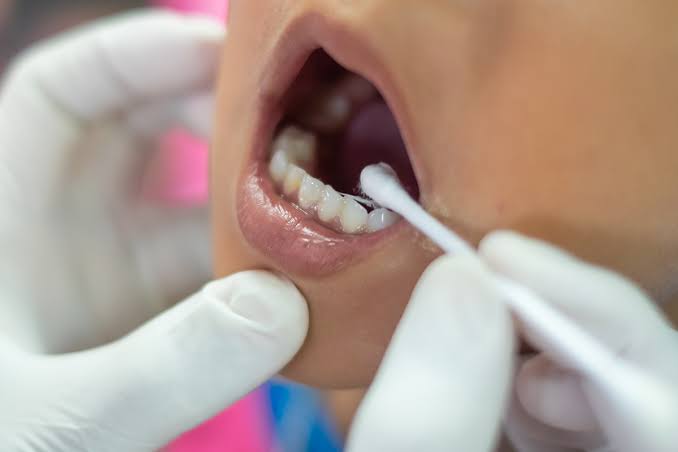
Many dental procedures can be intimidating for children, particularly due to the sounds of rotary instruments (burs), water spray, or the use of local anesthesia (injections), which may trigger dental anxiety. Topical fluoride varnish application, however, eliminates all of these stress factors and is one of the most educational and gentle procedures—helping children develop trust in the clinical environment. In Panorama Ankara’s treatment workflow designed according to pediatric dentistry (pedodontics) standards, there is no drilling, scraping, or removal of tooth structure. The clinician lightly dries saliva from the tooth surfaces with a soft cotton roll or air spray, then gently applies the fluoride varnish to all tooth surfaces within seconds using a thin, soft brush—much like painting nail polish onto a nail.
These new-generation varnishes adhere tightly to enamel within the first seconds of contact with saliva, forming a transparent and protective film layer. The procedure is completely painless and silent; and because varnishes can be flavored with child-friendly fruit aromas such as strawberry, melon, or caramel, they do not cause nausea or disturb taste. After this quick intervention—taking only one or two minutes—children get out of the dental chair happily and mentally encode the clinic as a fun, safe space. This positive experience is invaluable for preventing future avoidance of dental visits and for sustaining oral health awareness throughout life.
Risk Groups: Who Needs Fluoride Application?
Although fluoride applications are often known as a treatment only for children, in modern preventive care they are a critical medical support for patients of any age who carry a risk of enamel demineralization. Especially during the early eruption phases (primary teeth and newly erupted permanent molars), enamel maturation and full mineralization can take years; therefore newly erupted teeth are the most vulnerable to acid attacks and the most prone to decay. In adulthood, many anatomical, systemic, and external factors can accelerate caries formation as well. According to Panorama Ankara’s clinical assessments, the main target groups with high caries risk—who may require routine fluoride varnish applications 3–4 times per year—include:
- Children and adults with multiple active caries lesions currently present, or those with a history of extensive fillings/root canal treatments and a high-caries oral flora,
- Patients undergoing orthodontic treatment (metal braces or clear orthodontic systems) who struggle to fully remove plaque around brackets and face the risk of white spot lesions,
- Individuals experiencing xerostomia (dry mouth) due to advanced age, radiotherapy, or side effects of certain systemic medications (e.g., antidepressants, blood pressure medications), and therefore lacking saliva’s natural cleansing and protective effect,
- Adult patients with exposed root surfaces (cementum layer) due to significant gum recession, experiencing hot–cold sensitivity (dentin hypersensitivity) and becoming vulnerable to root caries.
Critical Post-Application Period and Optimal Hygiene Integration
While applying fluoride varnish is very quick, the pharmacological success of the procedure—and the ability of fluoride ions to penetrate deeper into enamel—depends directly on the care the patient takes in the first few hours after leaving the clinic. After the varnish adheres to the tooth, ion release continues for hours. To avoid disrupting this chemical bonding process and to ensure maximum effectiveness, Panorama Ankara specialists provide clear post-operative instructions to patients (or to parents of pediatric patients). For the first 30–45 minutes after varnish application, absolutely nothing should be eaten or drunk. Even water intake should be postponed during this time.
For the remainder of the day following the application (approximately 4–6 hours), hard, crusty, sticky, or excessively hot foods and beverages (hot tea, soup, nuts, chips) should be avoided to prevent mechanically scraping the varnish off the teeth; instead, a soft and lukewarm diet is recommended. The most important rule is that, in order for fluoride ions to remain on the teeth overnight and complete the remineralization process, teeth should not be brushed and dental floss should not be used on the evening of the application day. Normal brushing and oral care routines can be safely resumed the next morning.
Protect Your Biological Limits with Panorama Ankara
Tooth decay is not a sudden accident—it is the visible final result of a biochemical destruction process that unfolds over months. With Ankara fluoride application services that create a molecular barrier against this stealthy process at its earliest stage, Panorama Ankara adopts the principle of activating enamel’s own self-repair capacity before there is a need to treat decay with fillings. Whether you want to protect your child’s precious newly erupting teeth or proactively eliminate the risks associated with adult dry mouth, orthodontic treatment, or gum recession, taking preventive action is the most rational and comfortable path to long-term oral health.
Don’t delay turning the dental chair from a place where pain ends into a comfortable space where health is secured. With this needle-free, painless, minute-long protective shield, you can strengthen the enamel of your loved ones—and yourself—against acid attacks with a powerful biochemical armor. You can schedule a detailed prophylaxis examination appointment at Panorama Ankara and confidently eliminate future major treatment needs starting today.