
Ankara Inlay Filling
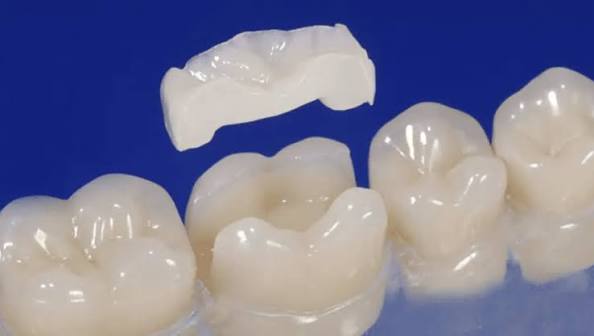
In modern restorative dentistry, inlay filling treatment is a “Minimally Invasive” (tissue-preserving) micro-engineering process applied in cases where the loss of tooth substance is too large to be restored with standard composite fillings but not extensive enough to require the entire tooth to be reduced and covered with a crown. Traditional fillings are performed directly in the mouth, applied layer by layer by the dentist and hardened with light; however, over time they may carry risks such as shrinkage (polymerization shrinkage) or marginal leakage due to chewing forces. Redefining Ankara inlay filling standards with the vision of “Indirect Ceramic Restoration” and “CAD/CAM Digital Design,” Panorama Ankara offers patients an advanced biomimetic repair that restores only the decayed or fractured area with a millimetric porcelain block, without touching the remaining healthy tooth structure. This process is an unwavering health project in which the missing part of the tooth is produced in a laboratory environment and perfectly completed like a puzzle piece.
The real scientific success behind inlay and onlay technology lies in what medical literature defines as “Occlusal Stress Distribution and Adhesion,” a principle that allows chewing forces to be transmitted to the tooth root in the most natural way. In Panorama Ankara’s advanced digital unit, the cleaned cavity of the tooth is digitized with micron precision using 3D intraoral scanners. On this virtual model, a porcelain restoration is designed to perfectly match the cusps and grooves of the opposing tooth. These inlay fillings, robotically milled from zirconia, lithium disilicate (E-Max), or reinforced composite blocks, exhibit physical properties identical to the tooth’s natural elasticity. As a result, even after many years, no cracks form between the filling and the tooth, no discoloration occurs, and the optical brilliance of the tooth’s original enamel structure is replicated with 100% accuracy. This vision transforms dental filling services in Ankara from a simple “cavity closure” procedure into a “Tissue Engineering” discipline that reconstructs the biomechanical anatomy of the tooth.
Clinical Classification: Indirect Restoration Solutions and Biomechanical Differences
The key to success in indirect restorations is determining the correct restoration boundary according to the extent of substance loss in the tooth and how many of the chewing cusps (tubercles) are damaged. The anatomy of the area to be restored determines the type of porcelain block to be designed. To help our patients clearly understand these advanced tissue-preserving options, Panorama Ankara presents the methodology used in our clinic within the scientific framework below.
| Restoration Type and Design | Biomechanical Scope and Damage Extent | Panorama Ankara Clinical Objective |
|---|---|---|
| Inlay Porcelain Filling | A patch restoration placed between the cusps on the chewing surface of the tooth. | Supports the tooth internally while preserving the side walls in cases of extensive decay. |
| Onlay Porcelain Filling | A restoration that covers one or more chewing cusps of the tooth. | Eliminates the need for a full crown in root canal–treated teeth or teeth with fractured walls. |
| Overlay Restorations | Structures that cover the entire chewing surface of the tooth but do not extend to the gum line. | Provides maximum chewing strength in cases of severe substance loss without fully reducing the tooth. |
| Traditional Direct Composite Filling | A classic resin filling material applied chairside by the dentist and hardened with light. | Preferred for the quick repair of small to moderate cavities that do not bear heavy loads. |
Adhesive Cementation: Perfect Molecular Bond with Tooth Tissue
The greatest advantage of inlay fillings over traditional fillings is the chemical bonding (cementation) technology known in medical literature as “Adhesive Dentistry.” The prepared porcelain block is not mechanically compressed onto the tooth; instead, it is locked at a cellular level into enamel and dentin tubules using special agents called “Resin Cement.” Thanks to the isolation protocols applied at Panorama Ankara (Rubber Dam usage), the bonding area is completely free from saliva and moisture. Under this absolute dryness, adhesive systems transform the porcelain inlay and natural tooth tissue into a single monolithic structure. In fact, once the procedure is completed, even the dentist cannot visually distinguish where the filling begins and where the tooth ends. This flawless marginal adaptation (micro-sealing) biologically reduces secondary decay beneath the filling and post-operative sensitivity to zero.
Post-Inlay Chewing Dynamics and Biological Protection Discipline
Porcelain inlay and onlay restorations are fired in laboratory furnaces at temperatures exceeding 800 degrees, making them more resistant to wear and discoloration than natural tooth enamel. However, the lifelong success of this high-tech ceramic restoration depends on the health of surrounding gums and the patient’s occlusal (bite) habits. To ensure the long-term stability of this investment that preserves the original strength of your tooth, the Panorama Ankara restorative board presents the following two fundamental rules as a life constitution:
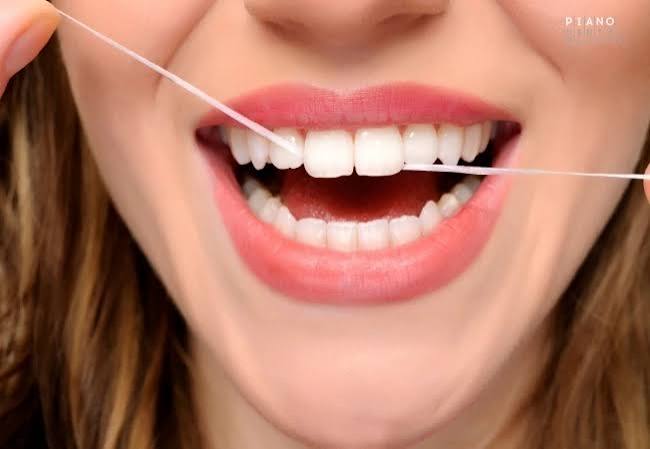
- To prevent bacterial plaque accumulation at the microscopic margins where the porcelain inlay meets the natural tooth, regular use of dental floss or interdental brushes should become routine, and daily oral hygiene with fluoride toothpaste should not be neglected.
- To avoid traumatic stress (micro-cracks) on ceramic restorations, parafunctional habits such as biting pens or cracking nut shells should be avoided; patients with nighttime teeth grinding (bruxism) must strictly adhere to the use of protective night guards.
Rediscover the Original Anatomy of Your Teeth with Science at Panorama Ankara
A large fracture or deep decay in your tooth does not necessarily mean that the tooth must be completely reduced and covered with a crown. In your search for an Ankara inlay filling, Panorama Ankara combines “Biomimetic Tissue Engineering” and “CAD/CAM Digital Milling” protocols to free you with scientific elegance from traditional fillings that fall out, gum discoloration, and unnecessary tooth reduction. We respect the remaining healthy structure of your tooth like a precious jewel and rebuild the missing part with the perfect optical and mechanical properties of nature.
To map the boundaries of substance loss in your tooth using our 3D scanners, determine the most suitable “Inlay,” “Onlay,” or “Overlay” restoration route for you, and achieve today that flawless aesthetic where even you cannot distinguish where the filling begins when you look in the mirror, you can schedule a detailed restorative dentistry consultation at Panorama Ankara and entrust your health to the safe hands of experience and modern science.