
Ankara PRF Application
In modern oral and maxillofacial surgery, the speed and quality of tissue healing after operations are no longer left solely to the body’s natural timeline. Known in medical literature as Platelet-Rich Fibrin (PRF), this technology represents an advanced discipline of autologous tissue regeneration. It is obtained by drawing a small amount of the patient’s own blood at the time of the procedure and separating it in specialized medical centrifuge devices—without the use of any synthetic chemicals or anticoagulants. Redefining Ankara PRF application standards through the vision of the “Fibrin Matrix Network” and “Cellular Biostimulation,” Panorama Ankara provides patients with a professional biological rehabilitation that concentrates the body’s own healing codes from their DNA directly into the surgical area—without introducing any foreign or synthetic substances. The systems applied in our clinic rapidly repair tissue trauma, from implant surgery to wisdom tooth extraction, by forming a natural protective shield at the wound site within seconds through resilient clinical engineering.
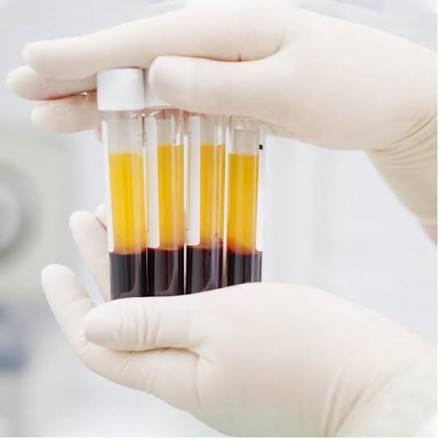
The true scientific success behind PRF technology lies in the extraordinary biochemical communication between cells, described in medical literature as “biomimetic slow-release growth factors.” In Panorama Ankara’s advanced surgical unit, when the patient’s blood is centrifuged at specific speeds and angles (the Low G-Force Concept), the red blood cells settle at the bottom, while a miraculous yellowish, gel-like fibrin clot forms above. This clot is not a simple plug; it is a living three-dimensional matrix containing millions of platelets, leukocytes (white blood cells), and stem cells trapped within it. When placed into the surgical site (for example, an extraction socket or around an implant), the growth factors inside this fibrin network—such as VEGF, TGF-beta, and PDGF—are slowly released over days and weeks. This process stimulates the formation of new capillary blood vessels (angiogenesis) and attracts bone-forming cells (osteoblasts) to the region. This vision transforms surgical procedures in Ankara from a simple “wound closure” approach into an advanced hematological medicine center that optimizes the body’s own defense and repair mechanisms.
Clinical Classification: Regenerative Blood Derivatives and Biological Evolution
The choice of which blood derivative to use in bone or soft tissue surgery depends on the required clot structure (liquid or solid form) and the desired healing duration. Medical science has undergone a significant evolution from PRP (first generation) to PRF (second generation). To help patients clearly understand this advanced tissue regeneration process, Panorama Ankara presents the hematological methodology used in our clinic within the scientific framework below.
| Autologous Blood Derivative (Generation) | Biomechanical Matrix Structure and Cellular Content | Panorama Ankara Clinical Application Advantage |
|---|---|---|
| PRP (Platelet-Rich Plasma) | First generation. Contains anticoagulant chemicals (citrate), exists in liquid form, and releases growth factors very rapidly. | In our clinic, it has largely been replaced by PRF in dental surgeries; its liquid nature makes it difficult to maintain stability in the surgical field. |
| L-PRF (Standard Fibrin Matrix) | Second generation. Contains no synthetic additives. Exists in a dense and solid gel (membrane) form, releasing growth factors slowly over 7–14 days. | The gold-standard biological shield in implant surgeries and bone graft mixing procedures, protecting tissues from external influences. |
| A-PRF (Advanced Fibrin Matrix) | Obtained at a lower centrifugation speed (Low-Speed Concept); its structure is more porous and contains a maximized number of leukocytes (immune cells). | Enhances cellular defense in challenging extraction sites prone to infection or bone loss, such as cases at risk of alveolitis. |
| i-PRF (Injectable Fibrin) | A completely additive-free liquid drawn from the tube before clotting; once injected into tissue, it gels and coagulates naturally within seconds. | Used to bind bone graft particles together like a biological adhesive, forming “sticky bone” blocks for regenerative surgeries. |
Fibrin Membranes in Oral Surgery: A Shield Against Alveolitis and Bone Loss
One of the most feared complications in oral surgery is dry socket (alveolitis), which can occur after wisdom tooth or routine tooth extractions and cause severe pain. This condition arises when a blood clot fails to form or disintegrates within the extraction socket, exposing the jawbone. In PRF protocols applied at Panorama Ankara, the dense yellowish membrane (gel layer) obtained from the patient’s own blood is gently placed into the extraction socket like a cushion and secured with sutures. This fibrin network forms a powerful biological barrier that protects the exposed bone from bacteria present in saliva. Additionally, during procedures such as sinus lifting or bone grafting, PRF reduces the need for synthetic or animal-derived membranes, thereby eliminating the risk of foreign body reactions such as allergies or rejection. This represents the highest level of immunological architecture, utilizing the body’s own biochemical power to reduce healing time by nearly half.
Tissue Stabilization and Maintenance Discipline After PRF Application
This living autologous fibrin clot, placed and stabilized in the surgical site with sutures, must maintain its mechanical stability in order to release its powerful growth factors effectively and complete the angiogenesis process. The Panorama Ankara oral and maxillofacial surgery board presents the following two essential rules as a recovery protocol to ensure this cellular biostimulation process is completed successfully:
- To prevent displacement of the PRF membrane placed in the surgical area and to avoid its removal due to negative pressure in the region, patients must not spit, use straws, or apply pressure with the tongue or hard foods to the surgical site for the first 48 hours after the procedure.
- To prevent the angiogenesis process—the formation of capillaries and oxygen transport—from being blocked by carbon monoxide, patients must strictly avoid tobacco and tobacco products during the critical 7 to 10-day healing window, when cellular integration is at its peak.
Awaken Your Own Biological Healing Potential with Panorama Ankara
The long-lasting swelling, persistent pain, or fear of poor wound healing that often comes to mind when facing oral surgery is not a fate you must accept. On the contrary, in expert hands, it can become a professional healing process accelerated naturally by cells derived entirely from your own DNA. In your search for Ankara PRF application, Panorama Ankara combines fibrin matrix networks with autologous tissue engineering protocols—freeing you from the risks of heavy synthetic substances, slow-healing wounds, and infection complications with scientific elegance. We respect the body’s unique self-repair capability 100% and deliver the remarkable regenerative cells circulating in your bloodstream directly to your surgical site using advanced centrifuge technology.
To digitally plan your cellular healing map for implant, wisdom tooth, or bone graft surgeries, to prepare the most suitable A-PRF or L-PRF membrane during your procedure, and to achieve that painless, swelling-free, accelerated tissue healing experience, you can schedule a detailed oral surgery consultation at Panorama Ankara and entrust your health to the safe hands of experience and biomimetic science.