

Facial proportions in smile design are the basic references used to make the teeth look in harmony not only with each other but with the face as a whole. The lip line, the facial midline and the width-to-length ratios of the front teeth are among the most important of these references. These criteria are not rigid rules but guiding principles interpreted according to each person’s facial structure.
The same tooth shape may look balanced on one face and out of proportion on another. For this reason, aesthetic planning starts by looking at the whole face before focusing on the teeth. In this article, we look at the main facial and dental proportions assessed during smile design.
From Face to Teeth: Reference Lines
In an aesthetic assessment, the lines that define the overall structure of the face are identified first. The position and inclination of the teeth are then interpreted in relation to these lines.
Horizontal references
The line joining the pupils (the interpupillary line) is generally accepted as the main reference for the horizontal plane. When the biting edges of the front teeth and the gum levels run parallel to this line, the smile may be perceived as more balanced. If there is noticeable asymmetry at eye level, the dentist may also use other references such as the horizon line.
Vertical reference: the facial midline
An imaginary line passing through the middle of the forehead, the tip of the nose and the tip of the chin forms the facial midline. It is considered aesthetically important for the line between the two upper front teeth (the dental midline) to be in harmony with it. Research shows that small midline deviations go unnoticed by most people. By contrast, a canted midline, where the line between the teeth appears tilted to one side, can be noticed more easily than a small shift.
Lip Line and Smile Line
The lips frame the smile. How much of the teeth shows at rest and when smiling is one of the key factors in the design.
- Tooth display at rest: When the lips are slightly apart, it is usually normal for a few millimetres of the upper front teeth to show. This amount tends to decrease with age.
- Smile line height: Depending on the position of the upper lip when smiling, a smile line is described as low, medium or high. With a high smile line, more gum is visible.
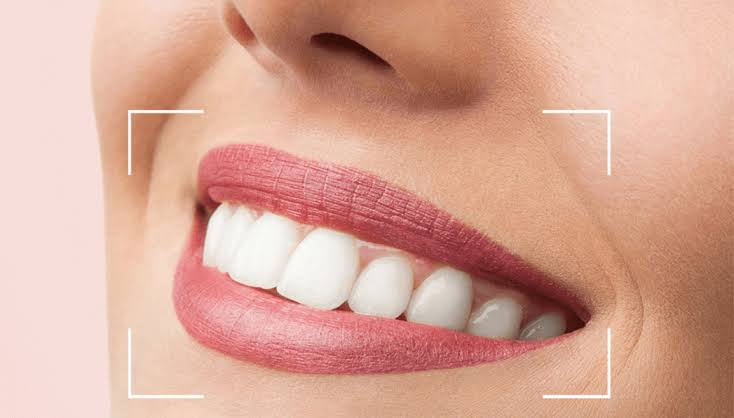
- Incisal curve: On most faces, it is considered harmonious for the curve formed by the biting edges of the upper front teeth to follow the curve of the lower lip when smiling.
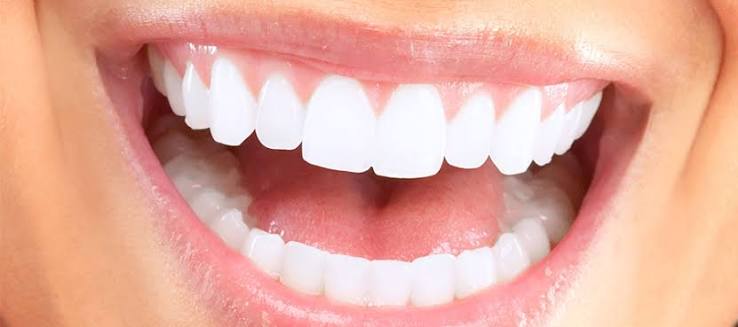
- Buccal corridor: The dark space between the corners of the mouth and the back teeth when smiling. A balanced buccal corridor affects how wide the smile appears.
A noticeably visible gum when smiling can have different causes. In such cases, gummy smile treatment options may also be included in the plan.
Speech and lip movement
A smile is not just a still image. When certain sounds are made during speech, the edges of the upper front teeth lightly touch the lower lip. This contact is a functional reference taken into account when planning the length and inclination of the front teeth. For this reason, videos taken while speaking and smiling are assessed alongside photographs during the design process, with the aim of teeth that work well both aesthetically and phonetically.
How Facial Proportions Relate to Tooth Size in Smile Design
Tooth dimensions are assessed together with the width and length of the face. There is no single ideal measurement, but some ratios are used as a starting point in planning.
Width-to-length ratio of the upper central incisor
The two upper front teeth are the focal point of the smile. In the literature, a width of roughly three-quarters to four-fifths of the tooth’s length is generally considered harmonious. When the ratio is too low, the tooth may look narrow and long; when it is too high, it may look short and square.
Proportions between the front teeth
Mathematical approaches such as the golden proportion have been proposed for the relationship between the visible widths of the central incisor, lateral incisor and canine when viewed from the front. However, current approaches stress that these ratios do not suit every face and that applying them rigidly can make the teeth look out of proportion. For this reason, the ratios are interpreted together with the person’s facial width and the shape of the dental arch.
Tooth shape and character
Whether the teeth have angular or rounded outlines, small differences in level between the biting edges and surface texture all shape the character of the smile. These details are planned in harmony with the person’s age, sex and facial features.
Tooth inclination and profile view
A smile is assessed not only from the front but also from the side. The forward inclination of the upper front teeth affects lip support and the profile. Teeth that tilt too far forward can make the lips look full and prominent, while teeth set too far back can reduce lip support. For this reason, tooth inclination, lip position and the relationship between the nose and chin are also considered when setting tooth dimensions.
Pink Aesthetics and Symmetry
Gum levels are also part of facial proportions. Symmetrical gum margins on both sides of the upper front teeth help tooth lengths look balanced. If there are marked differences in gum levels, gum contouring may be assessed separately during the design process.
Most faces are not exactly symmetrical. In aesthetic planning, the goal is not so much mathematical symmetry as an appearance that is perceived as balanced and harmonious on the person’s face. For this reason, measurements are considered together with clinical observation and an intraoral trial.
Frequently Asked Questions
Is the golden proportion always applied in smile design?
No. The golden proportion can be used as a reference, but it does not suit every face. Tooth dimensions are decided by considering the person’s facial structure, lip movements and dental arch.
My midline is slightly off. Does this need treatment?
Small midline deviations often go unnoticed and may not need treatment on their own. The amount and direction of the shift and its effect on the bite are assessed during the examination.
How are facial proportions measured?
Measurements are made by marking reference lines on standard facial and dental photographs, videos and digital models. This data is interpreted together with the clinical examination.
Do smile proportions change with age?
Yes. With age, the elasticity of the lip tissue may decrease and the amount of upper tooth visible at rest usually decreases. The biting edges of the teeth may also wear over time. The person’s age and these natural changes are taken into account in planning.
Note: This article is for general information purposes only. Whether treatment is needed and which method is appropriate are determined individually by your dentist after an examination and any necessary tests.