
Partially Impacted Wisdom Tooth in Ankara: Break the Pain Cycle with Panorama Ankara
The infection cycle caused by partially impacted wisdom teeth trapped between the gum and jawbone, and the permanent, comfortable surgical solutions offered by modern dentistry.
Pericoronitis and Emergency Signals of Partially Impacted Teeth
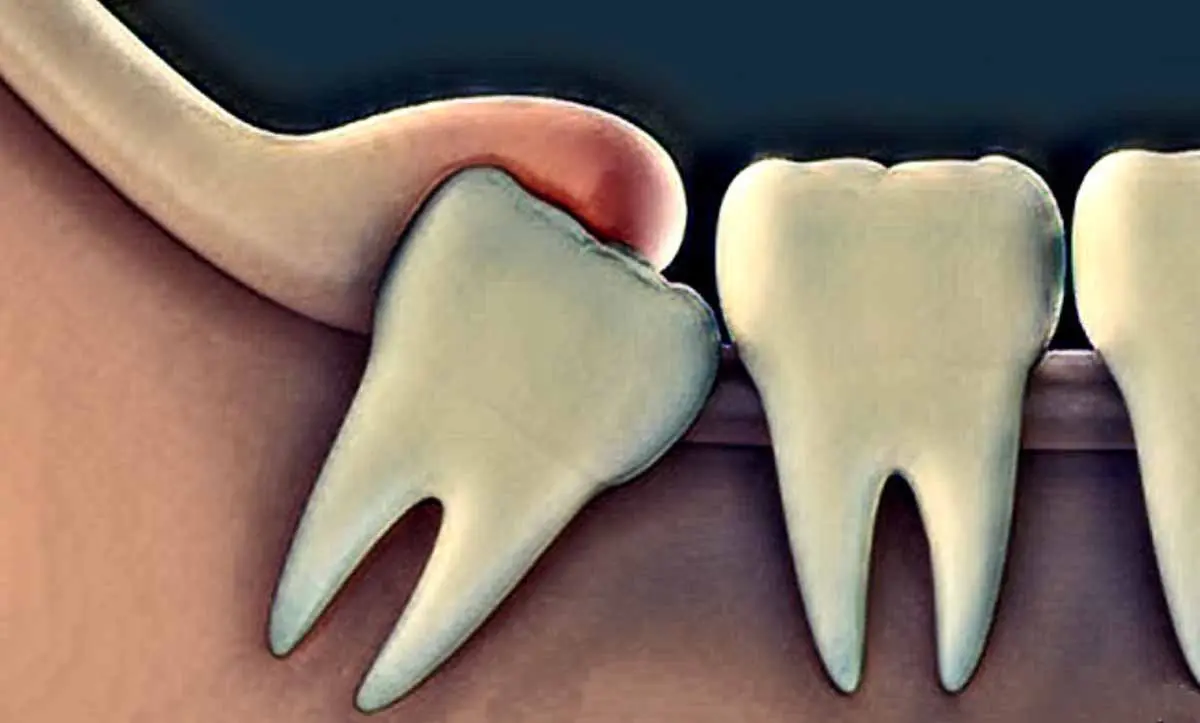
The pericoronitis (inflammation of the surrounding gum tissue) caused by partially impacted wisdom teeth presents itself with very specific and impossible-to-ignore symptoms. The progression of infection is not limited to the gum; it can spread to the cheek muscles, submandibular lymph nodes, and even the throat region. If you observe one or more of the clinical symptoms listed below in your oral structure, it is strongly recommended that you contact Panorama Ankara’s professional surgical team without allowing the condition to become more complicated, such as cyst or abscess formation:
- Dominant Bad Breath (Halitosis) and Unpleasant Taste: Sulfur compounds released by decaying food debris and proliferating bacteria beneath the gum flap create a persistent metallic/inflammatory taste and severe bad breath that does not go away no matter how much you brush.
- Spasm in Chewing Muscles (Trismus): When the infection reaches the masseter muscle responsible for opening and closing the jaw, it causes difficulty in fully opening the mouth, a locking sensation, and sharp stabbing pains in the joint area while eating.
- Decay Development in the Adjacent Tooth (Second Molar): Since the contact point between the partially impacted tooth and the adjacent tooth cannot be cleaned, deep dentin caries begin to develop due to food accumulation. If the wisdom tooth is not removed, the healthy adjacent tooth may also be at risk of loss.
- Referred Ear, Throat, and Temple Pain: Due to the trigeminal nerve network passing through the lower jaw, localized pain from the partially impacted tooth can transform into neurological pain radiating to the ear, tonsil region, and temples, often severe enough to wake the patient at night.
Risk Analysis of Tooth Positions: Why Are Partially Impacted Teeth the Most Dangerous?
Although the concept of “impacted teeth” is often perceived as a single type in society, in oral surgery practice, the eruption level of the tooth completely changes the nature of the operation and the risk carried by the patient. The reason partially impacted teeth present a much more aggressive infection profile compared to fully impacted teeth is their incomplete contact with the oral environment. The comparison table prepared by Panorama Ankara specialists clearly reveals the specific clinical risks and maintenance challenges associated with wisdom teeth based on their position within the jaw:
| Anatomical Position of the Tooth | Bacterial/Infection Risk | Clinical Behavior and Complication Potential |
|---|---|---|
| Fully Impacted (Within Bone) | Very Low | Since it does not open into the oral environment, food debris does not accumulate, it does not decay, and it does not cause pericoronitis. However, it should be monitored radiologically due to the long-term risk of cyst formation or pressure on adjacent teeth. |
| Partially Impacted (Submucosal) | Critically High | With half of the tooth exposed and half beneath the gum, it becomes a perfect incubation center for bacterial plaque. It has the highest likelihood of acute abscess, severe pain, decay of adjacent teeth, and lymph node swelling, requiring urgent extraction. |
| Fully Erupted (In Oral Cavity) | Moderate / High | Although fully erupted, its position far back in the jaw makes it difficult to clean. It may trigger the gag reflex during brushing. It often decays on its own and can be easily removed with a standard extraction procedure. |
Panorama Ankara’s Protocol for Partially Impacted Tooth Surgery
The fact that a tooth is partially impacted does not mean it can be removed with a simple extraction instrument. These teeth often have roots that are curved like hooks or firmly attached to the bone tissue. Before the operation, an anatomical map of the tooth is created using high-resolution 3D dental tomography devices at Panorama Ankara. The distance between the roots and the inferior alveolar nerve is calculated with millimetric precision to complete the risk analysis of the procedure. When the patient sits in the chair, every detail—from the type of anesthetic solution to the relaxing music played during the procedure—is designed to maximize comfort.
The surgical procedure begins with complete numbness of the area, blocking pain sensation entirely. The gum flap (operculum) covering the partially impacted tooth is gently lifted. In most cases, there is a small bone protrusion compressing the tooth; this bone barrier is removed atraumatically using tissue-friendly piezo-surgical systems. If the tooth resists removal in one piece, it is divided into two or three parts within the bone using special burs (sectional extraction) to avoid applying force to surrounding tissues and the jaw joint. This technique eliminates stress on the jaw joint and significantly shortens the duration of the operation. After thoroughly cleaning the area of infected tissues, special hemostatic agents are placed, and the surgical site is completely closed with micro-surgical sutures. Thanks to this flawless process at Panorama Ankara, even the most complex partially impacted tooth extractions are completed smoothly within an average of 20–30 minutes.
Conscious Approach and Expert Support During the Recovery Process
Just as important as the perfection of the surgical procedure is the post-operative care process, which determines the comfort of healing. After partially impacted tooth surgeries, tissue begins to repair itself rapidly. At Panorama Ankara, we provide our patients with a comprehensive guide on how to manage this process before discharge. The first 24 hours after the procedure are the most critical period, during which the body’s clotting mechanism seals the wound site. To prevent disruption of this clot (and avoid alveolitis/dry socket), patients must refrain from smoking and avoid actions that create suction, such as spitting or drinking through a straw.
Swelling is a natural defense and healing response of the body. However, with the periodic cold compress applications recommended by Panorama Ankara physicians, this swelling is kept at barely noticeable levels. Chewing function should be kept away from the surgical area for the first few days, and patients should consume room-temperature, soft, puree-like, and nutrient-rich foods. The specific combination of antibiotics, anti-inflammatory medications, and pain relievers prescribed to you eliminates infection risk while allowing you to go through the healing period without pain. Approximately 7 to 10 days later, during your follow-up appointment, your sutures will be removed, and you will return to your life with a healthy oral environment. In the treatment of partially impacted wisdom teeth in Ankara, say goodbye to the exhausting pain cycle with Panorama Ankara, which places scientific approach, superior surgical experience, and human values at its core—entrust your health not to chance, but to reliable hands.
Your Partially Impacted Tooth Cannot Wait!
Do not allow the infection to cause further damage to your adjacent teeth and jawbone. Schedule an appointment with Panorama Ankara’s experienced oral surgeons and experience the privilege of painless and permanent treatment.