
Ankara Smile Design
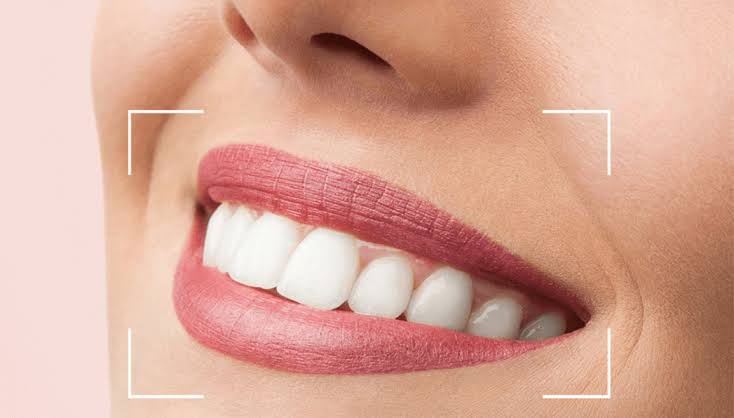
The evolution of aesthetic dentistry in the modern era has long since moved beyond viewing teeth merely as calcium blocks that are free of decay, white, and neatly aligned. Today, an ideal smile is defined as the flawless harmony—an elegant “dance”—between every geometric and biological reference that shapes the human face, from the muscular dynamics of the lips to the width of the nasal wings, from the projection of the chin to the horizontal axis between the pupils, all perfectly synchronized with the micro-anatomy of the teeth. This multidisciplinary concept, known in medical literature as Digital Smile Design (DSD), completely dismantles the standardized, mass-produced, “one-size-fits-all” approach to aesthetics and instead becomes a process of creating a bespoke biomechanical work of art—one that reflects individuality, carries character, and forms an organic bond with the facial skeleton. By integrating the most advanced algorithms of digital dentistry and facial-analysis protocols into its clinical workflow in Ankara smile design, Panorama Ankara frees patients from outdated aesthetic interventions that are irreversible and prone to surprise outcomes. Before a single bur (abrasive instrument) ever touches your teeth, our clinic creates a 3D digital twin of your face—allowing you to experience the most perfect and uniquely personalized design that reflects your speech phonetics, smile line, and character on computer screens and on your own face even before treatment begins.
The clinical success and naturalness of a smile design depend on the flawless synthesis of macro-aesthetic (the overall facial framework) and micro-aesthetic (the fine details within each tooth) parameters. In macro-aesthetic analysis, Panorama Ankara specialists calculate, with precise measurements, your facial midline, the pupillary line passing through the pupils, and the parallelism between the curve drawn by the lower lip when you smile (the smile arc) and the incisal edges of your upper front teeth. If the curvature of the upper teeth does not follow the smile arc of the lower lip, the result—no matter how white the teeth are—can appear aged, tired, or artificial (a reverse smile line). On the micro-aesthetic level, dentistry becomes an extraordinary exercise in detail engineering. The golden proportion within each tooth, dimensional harmony with neighboring teeth, light-reflection capacity (surface texture), and the symmetry of the gingival high points known as the gingival zenith are designed at a microscopic level. At this intersection of dentistry and art, the goal is not to arrange teeth like a laboratory product—overly white and perfectly flat—but to build an organic structure with light-reflecting depth, subtly translucent edges, and 100% biological integration with your face.
Visagism Philosophy: Translating Your Character into Tooth Forms
The most fascinating and psychologically profound stage of the smile design journey is the philosophy of Visagism, where medicine and art intersect. Visagism is the science of reflecting a person’s physical facial traits and inner character (temperament) to the outside world through tooth forms (morphology). Panorama Ankara clinicians analyze not only a patient’s panoramic X-ray, but also their character, professional posture, and the energy they wish to project. Just like a fingerprint, an individual’s temperament can be encoded into the corner angles (interincisal angles) and anatomical forms of the teeth.
For example, in individuals with a dynamic, extroverted, and energetic personality, dynamic smile profiles are preferred—where the canines are more pronounced and sharper, and the incisors are designed with a slightly asymmetric, lively form. For those who want to project a strong, determined, executive (dominant) image, tooth outlines are constructed with more angular, square forms and equalized tooth lengths. In contrast, for patients who wish to radiate a calmer, elegant, delicate, and romantic energy, designs with softened corners—where the central incisors are kept slightly longer than the laterals—featuring oval and rounded contours, come to the forefront. In dentistry, visagism ensures your smile is not only beautiful, but also delivers a powerful, nonverbal psychological message that tells others who you are when you speak or smile.
Clinical Classification: Conventional Aesthetics vs. Digital Smile Design (DSD)
In conventional aesthetic interventions of the past, dentists and laboratory technicians decided tooth form primarily on plaster models and personal experience. This carried a major aesthetic risk: the patient could only see the final result once the porcelains were permanently cemented. To remove this uncertainty-based anxiety entirely, Panorama Ankara has digitized the process end-to-end. The table below transparently summarizes the medical and operational gap between the manual philosophy and advanced digital protocols.
| Clinical & Operational Dynamics | Conventional (Manual) Aesthetic Dentistry | Digital Smile Design (DSD Protocol) |
|---|---|---|
| Method of Analysis & Data Collection | Relies only on static, putty/plaster impressions taken from inside the mouth. | Uses high-resolution studio photographs, speech videos, and 3D optical scans. |
| Integration of Design with the Face | The technician fabricates teeth on a plaster model without seeing the full face. | In design software, teeth are drawn and integrated directly over the patient’s dynamic face and lip video. |
| Predictability & Pre-Treatment Try-In | The patient sees the final outcome largely at the end, when restorations are placed. | Before touching the teeth, the design is tried directly in the patient’s mouth using a mock-up (temporary material). |
| Multidisciplinary Communication | Inter-department coordination (e.g., periodontics and prosthetics) is often done verbally or with 2D drawings. | All specialists work on the same 3D cloud/CAD dataset, synchronizing pink (gingival) and white (tooth) aesthetics perfectly. |
Phonetic Adaptation and Lip Dynamics: The Biomechanical Test of a Smile
A perfect smile design cannot be limited to looking beautiful with lips closed or while the patient is posing; the real test begins when the patient starts speaking and the lips move dynamically. Teeth are among the most important acoustic resonance organs working together with the tongue and lips for accurate speech sounds (phonetics). In particular, the length of the upper central incisors and their 3D angulation directly affect the production of fricative sounds such as “F” and “V.” If the designed teeth are even slightly longer than ideal, the upper teeth collide excessively with the lower lip during “F” sounds; if the teeth are too short, sounds become muffled and unclear. Similarly, producing an “S” sound depends on the ideal horizontal distance (overjet) between the upper and lower front teeth.
In Panorama Ankara’s DSD protocol, once the aesthetic design is completed and the mock-up (temporary pre-visualization) material is applied in the patient’s mouth, the clinician asks the patient to repeat specific phonetic words and records the process with high-frame-rate (slow-motion) cameras. This test allows us to analyze, with millimetric precision, how much dental support the lips need at rest (lip support) and the biomechanical contact between teeth and lips during speech. Smile design is not merely a visual restoration; it is also a major functional engineering process that rebuilds diction, speaking confidence, and the anterior barrier of the airway.
After the DSD Protocol: Mock-Up and Patient Responsibilities
After the design is approved and the biological preparation phase begins for producing permanent porcelain/zirconia restorations (such as gingival leveling or minimal enamel shaping), the patient’s neuromuscular adaptation to the new smile starts. To complete this transformation healthily and preserve the newly established biological balance for life, Panorama Ankara’s aesthetic board asks patients to adopt the following two fundamental principles as a way of life:
- To keep the microscopic margin line where restorations (veneers or crowns) meet the gums free from bacterial plaque, special interdental brushes and oral irrigators (water flossers) recommended by the clinician must be integrated into the daily hygiene routine.
- To avoid compromising biomechanical durability, patients who have involuntary nighttime clenching (bruxism) should regularly use a transparent nightguard prepared from a digital impression to protect new tooth forms from excessive pressure and porcelain fractures.
Step into the Lead Role of Your Own Radiant Story with Panorama Ankara
Seeing asymmetric, worn, or character-incongruent teeth in the mirror—teeth that dim the energy of your face—can lead you to build invisible walls in your social communication. By combining the art of visagism with advanced digital technologies in Ankara smile design, Panorama Ankara rescues you from standardized, artificial porcelain templates and instead engraves the most natural reflection of your facial features, expressions, and spirit into the enamel. This process—where biological harmony, phonetic perfection, and aesthetic elegance converge—is a unique medical transformation that redefines the architecture of your face.
To discover the potential in your smile and personally feel—between your own lips—how your face and teeth can achieve harmony in a 3D digital environment through mock-up technology, you can schedule a detailed DSD (Digital Smile Design) consultation appointment at Panorama Ankara and begin reflecting your distinctive radiance freely to the world.