

The Effects of Orthodontic Disorders on Gingival Health
In the general population, orthodontic treatments are most commonly perceived as procedures requested for aesthetic concerns and the desire to have “properly aligned teeth.” The positive impact of an attractive smile on social life and self-confidence is undeniable; however, the primary and fundamental purpose of orthodontics within medical science is to establish and maintain the functional health of the masticatory system. One of the most critical components of this protective framework is the health of the soft and hard tissues surrounding and supporting the teeth, collectively known as the “periodontium.”
There is a strong cause-and-effect relationship between gingival health and tooth alignment—often overlooked, yet highly significant. Crowded teeth, malocclusions, and jaw anomalies are not merely mechanical problems; they are also biological risk factors that predispose individuals to periodontal diseases such as gingivitis and periodontitis. Proper tooth alignment is not simply an aesthetic luxury but a prerequisite for creating the hygienic foundation necessary to preserve gingival and alveolar bone health throughout a lifetime.
Crowding and “Hygienic Blind Spots”
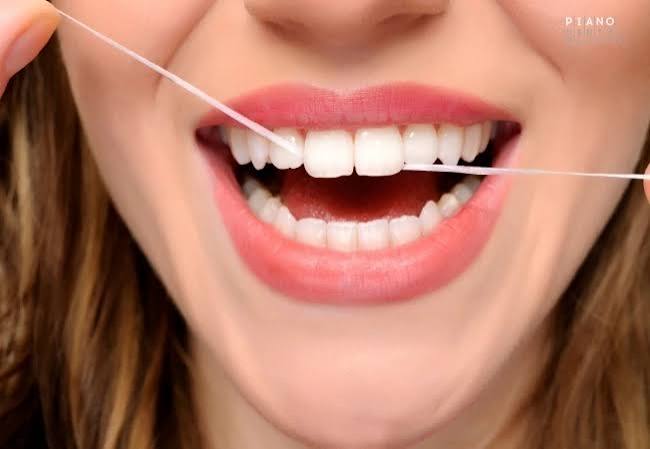
The primary cause of periodontal disease is the accumulation of bacteria on tooth surfaces, referred to as “microbial dental plaque” (biofilm). When this plaque is not removed regularly, it leads to inflammation of the gingival tissues. In an ideal dental alignment, toothbrush bristles can reach all tooth surfaces, and dental floss effectively cleans the interproximal areas by removing plaque. However, in cases of malocclusion—particularly dental crowding—the situation is entirely different. Teeth that are overlapped, rotated, or misaligned create “hygienic blind spots” where toothbrush bristles physically cannot reach. Regardless of how meticulous oral hygiene may be, plaque accumulation in these inaccessible areas becomes inevitable.
Over time, plaque retained in these blind spots mineralizes with salivary components and hardens into dental calculus (tartar). Due to its rough surface, calculus promotes further bacterial adhesion and causes continuous physical irritation to the gingiva. This explains why gingival inflammation (gingivitis), bleeding, and halitosis are more frequently observed in crowded regions. Moreover, in areas where teeth are tightly pressed together, the interdental papilla becomes compressed, impairing blood circulation. Compromised circulation renders the tissue more susceptible to infection. Orthodontic treatment eliminates these plaque-retentive niches by aligning the teeth, creating a “self-cleansing” or easily maintainable oral environment.
Traumatic Occlusion and Bone Resorption
The impact of orthodontic disorders on gingival health is not limited to bacterial plaque accumulation; biomechanical factors can be equally destructive. In an ideal occlusion, masticatory forces are transmitted vertically along the long axis of the tooth and evenly distributed to the alveolar bone. These vertical forces act as physiological stimuli that help maintain bone density. However, when conditions such as tooth tipping, supraeruption, or crossbite are present, occlusal forces are applied laterally or obliquely. This condition is referred to as “traumatic occlusion.”
The tooth-supporting structures—the periodontal ligament and alveolar bone—are not designed to withstand continuous lateral forces. Prolonged trauma leads to bone resorption in the affected areas. As the bone resorbs, the overlying gingival tissue follows, resulting in gingival recession. This risk is particularly high in cases where the lower anterior teeth are crowded and their roots are displaced outside the alveolar bone envelope. Additionally, in deep bite cases, maxillary teeth may excessively cover mandibular teeth, causing direct trauma to the lower gingiva, while mandibular teeth may impinge on the palatal tissues. Such direct physical trauma can lead to chronic injury, ulceration, and significant soft tissue loss.
Mouth Breathing and Gingival Inflammation
Many orthodontic disorders are associated with maxillary constriction, which can result in chronic mouth breathing. A narrow maxilla leads to a reduced nasal floor width, impairing nasal airflow and forcing individuals to breathe through the mouth. In mouth breathers, the gingival tissues are continuously exposed to airflow, leading to dehydration. Saliva plays a crucial role in oral defense by washing away bacteria, buffering acids, and protecting gingival tissues. When gingiva becomes dry due to mouth breathing, this protective mechanism is compromised.
A dehydrated gingival surface becomes highly susceptible to plaque accumulation. In these patients, particularly in the maxillary anterior region, pronounced redness, swelling, and bleeding (hyperplastic gingivitis) may occur even in the presence of minimal plaque. Toothbrushing alone is insufficient to resolve this inflammation; the underlying cause—jaw constriction and airway obstruction—must be corrected orthodontically. When maxillary expansion appliances are used to improve airway volume and achieve proper lip seal, gingival moisture balance is restored and tissue health improves rapidly.
Table: Relationship Between Orthodontic Conditions and Gingival Health
The table below summarizes the specific risks and potential periodontal outcomes associated with different types of orthodontic disorders:
| Orthodontic Condition | Mechanical/Biological Issue | Potential Periodontal Outcome |
|---|---|---|
| Crowding | Plaque retention due to inaccessible areas for brushing and flossing. | Gingivitis, calculus formation, localized bone loss. |
| Deep Bite | Direct physical contact between teeth and opposing gingival tissues. | Traumatic gingival injury, recession, and soft tissue loss. |
| Crossbite | Lateral (non-axial) occlusal force transmission. | Traumatic occlusion, gingival recession, abfraction lesions. |
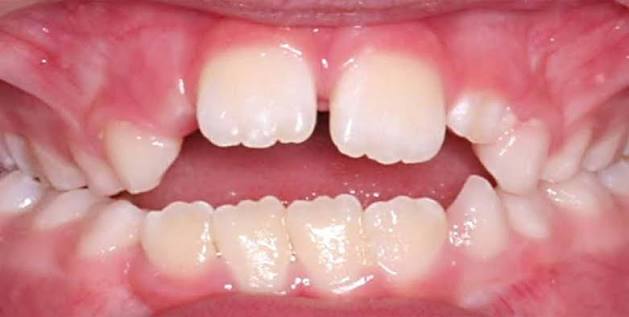
| Open Bite / Mouth Breathing | Gingival dehydration and loss of salivary protection. | Red, swollen, bleeding gingiva (especially in anterior regions). |
| Diastema | Direct food impaction into interdental spaces. | Interdental papilla trauma, pocket formation, acute abscess risk. |
Gingival Health During Orthodontic Treatment
While orthodontic treatment (fixed appliances or clear aligners) aims to preserve gingival health in the long term, it paradoxically complicates oral hygiene during the active treatment phase. Brackets and wires create numerous plaque-retentive surfaces that facilitate food accumulation. If patients fail to maintain meticulous oral hygiene, “orthodontic treatment–induced gingivitis” becomes inevitable. This condition may manifest as gingival enlargement, where swollen gingiva grows over the brackets. Enlarged gingiva further impedes oral hygiene, creating a vicious cycle.
Therefore, patients undergoing orthodontic treatment must go beyond standard toothbrushing and incorporate interdental brushes, orthodontic toothbrushes, and oral irrigators into their daily routine. Maintaining healthy gingiva during treatment is also essential for the speed and stability of tooth movement. Teeth move more efficiently and safely within healthy bone and gingival tissues, whereas orthodontic forces applied in inflamed tissues may accelerate bone loss. Modern clear aligner systems offer an advantage in terms of gingival health, as their removable nature allows for easier brushing and flossing during treatment.
Gingival Recession and Orthodontic Treatment
A common concern among patients is whether orthodontic treatment causes gingival recession. When properly planned, executed with controlled forces, and accompanied by good oral hygiene, orthodontic treatment is not expected to cause recession; on the contrary, it may halt progression by eliminating traumatic occlusion. However, recession risk increases if teeth are excessively moved beyond the alveolar bone boundaries or in patients with a thin gingival biotype. For this reason, gingival thickness and the amount of attached gingiva must be carefully evaluated prior to treatment. In high-risk cases, gingival grafting procedures may be performed before or during orthodontic treatment to enhance tissue thickness and provide protection. This multidisciplinary approach is essential for achieving both esthetic and biological success.
Conclusion: A Medical Necessity Beyond Esthetics
In conclusion, the relationship between orthodontic disorders and gingival health is strong, well-documented, and cannot be ignored. Crowding is not merely a cosmetic issue but a persistent risk factor for periodontal disease. Traumatic occlusion acts as a silent trigger for bone loss. Orthodontic treatments position teeth ideally, providing patients with a lifelong, sustainable hygiene standard. An oral environment where the toothbrush reaches every surface, dental floss glides smoothly, and gingiva remains free of bleeding represents one of the most valuable long-term health investments offered by orthodontics. Therefore, orthodontic evaluations should be conducted not only for esthetic reasons but also with the long-term preservation of gingival and alveolar bone health in mind.