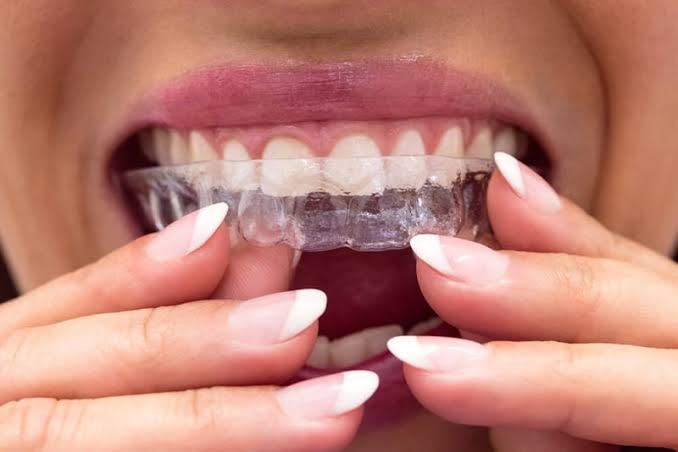


Clear aligner attachments are small, tooth-coloured composite bumps bonded to the surface of the teeth. They help the aligner grip the tooth better so that planned tooth movements take place in a more controlled way. They may not be needed for every patient; whether they are needed, how many and where they go are determined by the orthodontist’s treatment plan.
Many people about to start clear aligner treatment wonder what these small pieces bonded to their teeth are for, whether they will be visible and how they will be removed at the end of treatment. In this article, we bring together the basic information about attachments.
What Are Clear Aligner Attachments?
Attachments are made from composite resin, the same type of material used in dentistry for fillings and bonding. Because they are matched to the shade of the tooth, they are usually not noticeable from a distance. They are small, and their shapes vary according to the job they are designed to do.
Attachments can be rectangular, oval, triangular or bevelled. These shapes are not chosen at random; each one is designed during digital planning to help apply force to the tooth in a specific direction. The aligner is then made to grip these bumps.
Why Are Attachments Used?
Clear aligners apply pressure to the tooth surface to move teeth in small steps. However, tooth surfaces are usually smooth and rounded, so for some movements the aligner may not be able to grip the tooth well enough. This is where attachments come in, helping the aligner transfer force to the tooth more effectively.
Attachments are especially important in the following situations:
- Rotation: Correcting teeth that have turned around their own axis, particularly canines and premolars with a rounded cross-section
- Vertical tooth movement: Moving a tooth further into the jawbone (intrusion) or out of it (extrusion)
- Root movements: Situations where not only the crown but also the root of the tooth needs to be guided
- Retention: Helping the aligner seat better on the teeth and stay in place in the mouth
- Bite corrections: Correcting vertical problems such as a deep bite or an open bite
With mild crowding, attachments may not be needed at all, or they may be placed on only a few teeth. Where more extensive movement is required, the number of attachments may increase. This decision depends entirely on the treatment plan.
Types of Attachments
Attachments can generally be divided into two groups. Conventional attachments are rectangular or oval shapes usually used to improve aligner retention and support general tooth movements. Optimised attachments are designed with computer support for a specific tooth movement; their surface angles and positions are calculated according to the force planned for that tooth. Different types of attachments can be used on different teeth in the same mouth.
Which surface of the tooth the attachment is placed on, and at what height, is also part of the planning. They are usually applied to the surfaces facing the lips or cheeks, but in some cases other surfaces may be chosen to reduce visibility or achieve a different movement. These details are decided by the orthodontist in the digital treatment simulation.
How Are Attachments Bonded?
Attachments are usually placed at the start of treatment, when the first aligners are delivered. In some plans, new attachments may be added or existing ones changed at later stages. The procedure follows these steps:
- The tooth surfaces are cleaned and dried.
- The areas where attachments will go are prepared with a mild acid so the adhesive can bond.
- A bonding agent is applied.
- Composite is placed into the spaces of a template tray shaped to match the attachments.
- The template is fitted over the teeth and the composite is hardened with a special light.
- The template is removed and any excess material is cleaned away.
The procedure does not require local anaesthesia, because no tooth tissue is removed; the composite is simply bonded to the surface. A digital impression of the teeth is used during planning; you can find more on this on our intraoral scanners page.
Living With Attachments: Daily Care and Things to Watch
In the first days after bonding, you may feel the attachments with your tongue and lips. Most people get used to this feeling within a short time. When the aligners are out, attachments may cause slight rubbing on the inside of the lips; this is usually temporary.
Cleaning
The edges of attachments can create areas where plaque builds up easily. For this reason, pay particular attention to the area around the attachments when brushing. A small-headed toothbrush or an interdental brush can make these areas easier to clean. Cleaning your teeth before putting the aligners in helps prevent food and bacteria from being trapped between the teeth and the aligner.
Staining
Composite material can change colour over time due to tea, coffee and some foods. Removing the aligners when drinking coloured beverages and rinsing your mouth afterwards can help reduce staining of both the aligners and the attachments. For general advice on wearing aligners, see our article on what to keep in mind while wearing clear aligners.
If an Attachment Comes Off
An attachment may come off or break when biting into hard foods or when aligners are removed with force. In this case, it is important to let your orthodontist know. Without the attachment, the movement of that tooth may not progress as planned, so it usually needs to be bonded again.
When an attachment comes off, it is advisable to follow your orthodontist’s guidance on whether to keep wearing the current aligner and whether to move on to the next one. Rebonding can usually be done in the same position using the template tray from the original placement, so you may be asked to keep the attachment template throughout treatment. If you notice cracks or tears in the aligner around an attachment, it is also helpful to mention this at your check-up.
How Are Attachments Removed at the End of Treatment?
When active treatment is complete, attachments are carefully removed with burs and polishing tools that do not damage the tooth surface. The tooth surface is then polished. This procedure usually does not require anaesthesia either. After the attachments are removed, the retention phase begins and retainers are used to help the teeth hold their new positions. For information on the overall course of treatment, see our clear aligner treatment page.
Frequently Asked Questions
Do attachments damage the teeth?
Attachments are bonded to the tooth surface and no tooth structure is removed when they are placed. When they are taken off, care is also taken not to damage the tooth surface. With regular oral care, the likelihood of cavities forming around them can be reduced.
Are attachments visible?
Because they are made from a tooth-coloured material, they are usually not noticeable from a distance. They may be noticed up close or on front teeth that catch the light. Visibility can vary with the position and size of the attachment.
Does every clear aligner patient need attachments?
No, they may not be needed for every patient. The orthodontist decides whether attachments are needed based on the type of tooth movements planned. For some cases of mild crowding, treatment may be planned without attachments or with very few.
Do attachments affect eating?
Because clear aligners are removed for meals, attachments usually do not noticeably affect chewing. However, very hard or sticky foods can cause an attachment to come off, so they should be eaten with care.
Note: This article is for general information purposes only. Whether treatment is needed and which method is appropriate are determined individually by your dentist after an examination and any necessary tests.