

What Are Prosthetic Dental Treatments?
Prosthetic dental treatments are the clinical dentistry specialty area that restores the function, anatomy, and aesthetics of teeth that are missing or have significantly lost their structural integrity, using artificial materials (zirconium, ceramic, acrylic). Its main goal is to make oral health sustainable by meeting the patient’s chewing, speech, and aesthetic needs with tissue-friendly prostheses.
Tooth loss or material loss not only creates a regional deficiency but also paves the way for adjacent teeth to tilt into the gap, closure disorders in the jaw joint (TMJ), and digestive system problems. Prosthetic dentistry (prosthodontics) halts this destructive process and rebuilds oral integrity. Thanks to advancing digital dentistry (CAD/CAM) technologies, prostheses produced today can perfectly mimic the light transmission and biomechanical resistance of natural teeth. The scope of treatment covers a wide range, from covering a single tooth to repairing a completely toothless jaw, depending on the patient’s intraoral condition.
What Procedures Do Prosthetic Dental Treatments Cover?
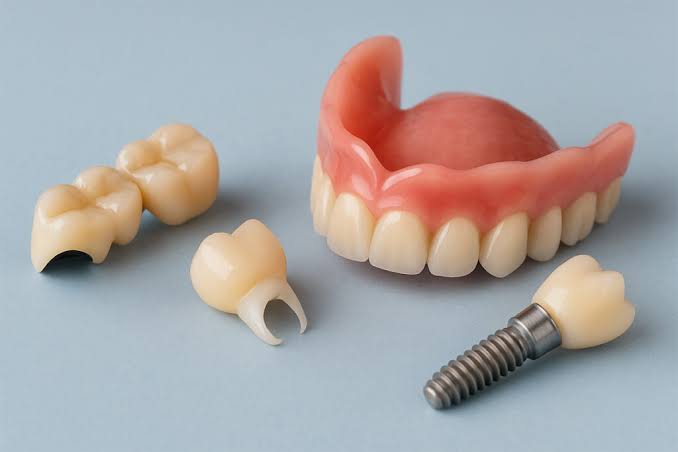
Prosthetic dental treatments cover single tooth crowns, fixed bridges that compensate for missing teeth, removable (full and partial) dentures applied to completely or partially toothless jaws, aesthetic applications such as laminate veneers, and prosthetic structures made on implants placed in the jawbone.
A personalized treatment plan is drawn up by the specialist dentist (prosthodontist) according to the extent of tissue loss in the mouth and the patient’s functional expectations. Fundamentally, prosthetic procedures are divided into two main categories based on whether the patient can remove the prosthesis themselves: “Fixed Prostheses” and “Removable Prostheses.” In addition, in recent years, “Implant-Supported Prostheses,” produced by taking advantage of intra-bone support, form a third and very strong pillar of treatment. When selecting the type of restoration to be made, the health of the surrounding gums, the existing bone support, and the patient’s general systemic condition are evaluated in detail.
In Which Cases Are Fixed Prostheses Preferred?
Fixed prostheses are preferred when there is a small number of missing teeth in the mouth and healthy teeth adjacent to the gap can be used as support. They are the prosthetic treatment option that feels most like the patient’s own natural teeth, cannot be removed from the mouth, is cleaned by brushing, and offers the highest chewing efficiency.
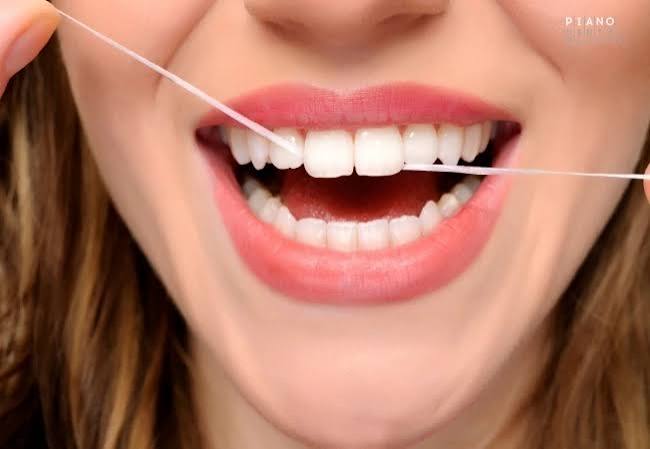
If the patient has healthy teeth in front of and behind the missing tooth, these adjacent teeth are minimally prepared (reduced) by the dentist to form bridge abutments. A three-unit bridge prosthesis, prepared as a single piece in the laboratory, is permanently fixed onto these abutments with special medical adhesives (cements). For single teeth with very high material loss, a “crown” procedure, which is fitted onto the tooth like a cap, is applied instead. The maintenance comfort of fixed prostheses is very high; however, regularly cleaning the interproximal areas of the teeth to which they are bonded with special floss (superfloss) is of critical importance for preserving gum health.
What Are the Differences Between Zirconium and Metal-Supported Porcelain Crowns?
Zirconium crowns have white, strong substructures with high light transmission, physiological gum compatibility, and no risk of metal allergy. Metal-supported porcelain crowns, although quite resistant to chewing forces, have low light transmission and can create a grayish reflection at the gum edges over time.
Especially in aesthetic restorations in the front (anterior) region, light is expected to reflect naturally from the tooth. The metal framework inside metal-supported porcelain can block the passage of light, causing a more matte and artificial appearance. Zirconium, on the other hand, is a naturally white, non-oxidizing, biocompatible element. Since its fracture resistance (megapascal value) is extremely high, it can be used safely even in the back molars, while successfully mimicking the natural translucency of enamel in the front teeth.
| Feature | Zirconium-Based Crown | Metal-Supported Porcelain |
|---|---|---|
| Aesthetics and Light Transmission | Very High (mimics the natural tooth) | Moderate (has a more matte appearance) |
| Gum Compatibility | Excellent (biocompatible, no gray reflection) | Good (but a metallic border may appear with gum recession) |
| Durability | Very High (advanced megapascal resistance) | Very High (traditionally reliable in back teeth) |
| Risk of Metal Allergy | None (contains no metal) | A very low rate of nickel/chromium sensitivity may develop |
Who Are Removable (Put-in-and-Take-out) Prostheses Applied To?
Removable prostheses are applied in cases where there are not enough supporting teeth in the jaw to make a fixed bridge, where implant surgery cannot be performed due to bone resorption, or where the patient has lost all of their teeth. The patient needs to regularly remove and clean the prosthesis themselves for daily oral hygiene.
Removable prostheses are called “partial dentures” for partial tooth loss, and “full (total/palatal) dentures” when no teeth remain in the mouth at all. Partial dentures achieve stability by attaching to the remaining natural teeth in the mouth with metal retainers called clasps, or with invisible “precision attachment” snap-on systems. In these prostheses, part of the chewing force is transferred to the teeth and part to the gums. So that the tissues can physiologically rest, dentists generally recommend that these prostheses be removed before going to bed at night and stored in a moist environment.
How Do Implant-Supported Prosthesis Applications Proceed?
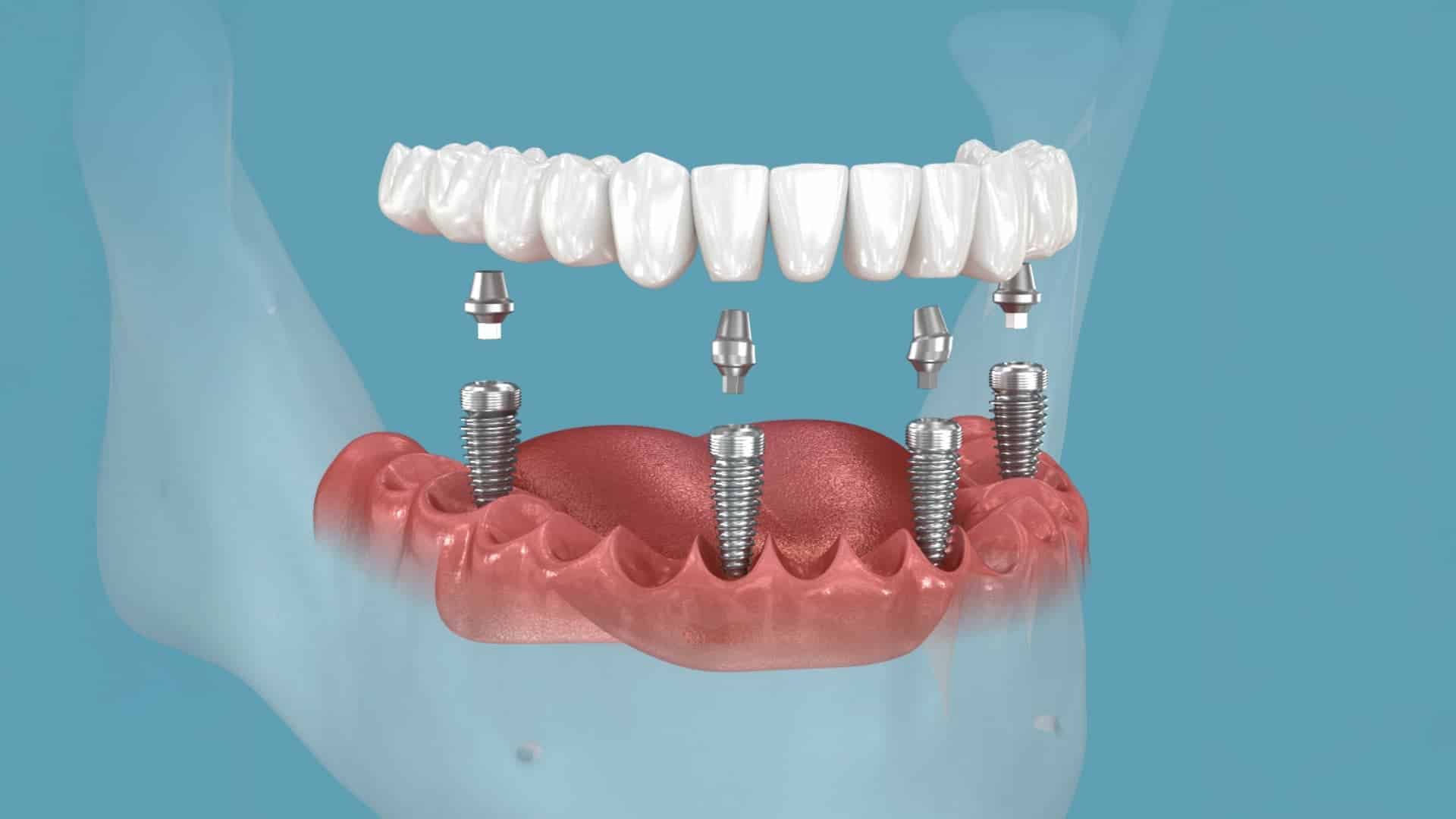
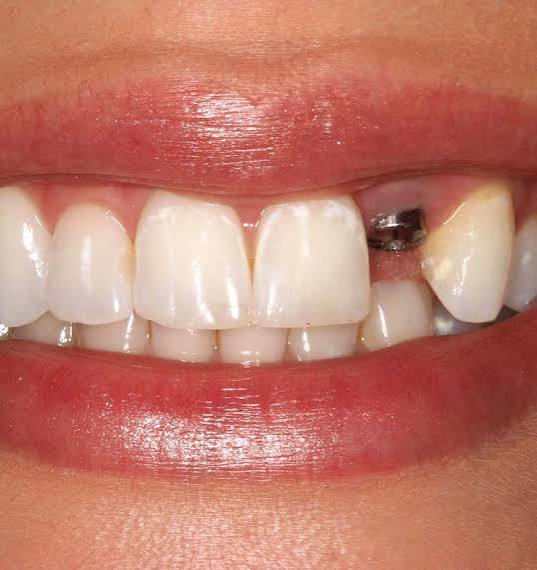
Implant-supported prosthesis applications begin with taking an impression using intraoral scanners after the biological fusion (osseointegration) of the titanium roots placed in the jawbone is complete. Zirconium or porcelain crowns prepared in the laboratory setting are completed by being permanently fixed to the implant substructures (abutments) with special screws or cements.
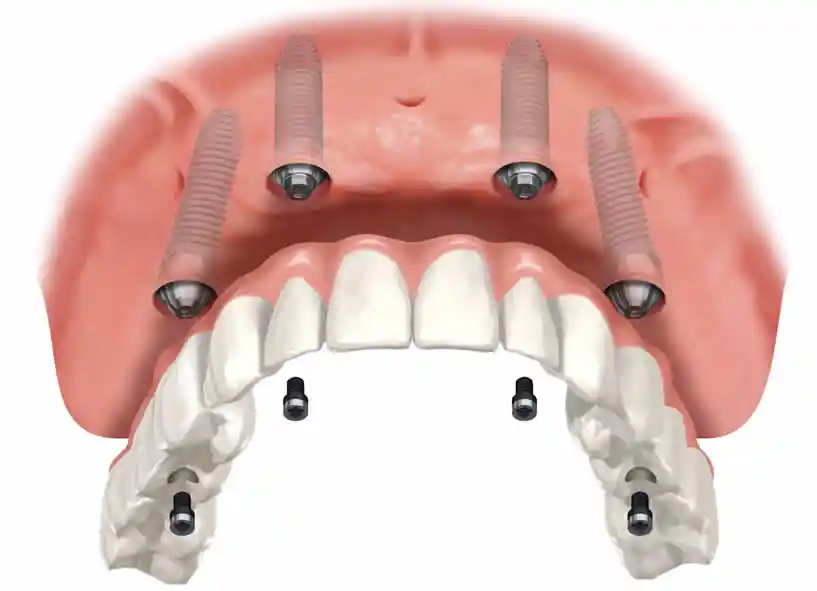
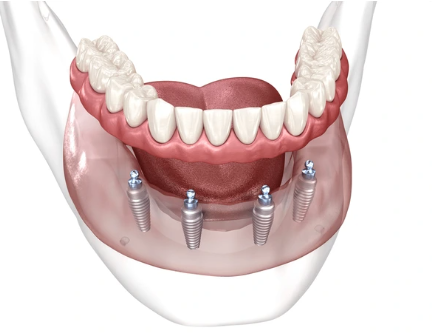
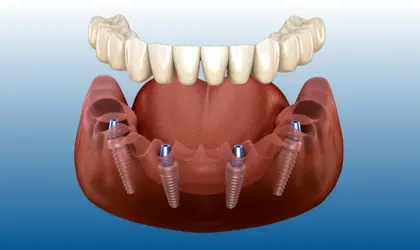
The greatest advantage of implant treatments is that they transmit chewing force directly to the jawbone, just like natural teeth. This creates an effect that halts gum recession and jawbone resorption. Implant-supported porcelain, which does not require cutting adjacent teeth in cases of single tooth loss, eliminates the retention problems caused by removable dentures in cases of complete edentulism. Fixed bridges placed on four or six implants (All-on-4 / All-on-6 systems) end the patient’s need to use removable dentures, providing a comfortable and stable chewing cycle.
How Is Aesthetic Smile Design Performed in Prosthetic Treatments?
Aesthetic smile design is performed by analyzing the patient’s facial features, lip dynamics, gum levels, and skin tone using digital photography and special CAD software. Using laminate veneers or full ceramic crowns, the form and color integrity of the teeth is designed to suit the patient’s individual characteristics.
In addition to function, aesthetic expectations are also extremely important in prosthetic dental treatments. In the smile design process, also known as a “Hollywood Smile,” before any procedure is performed, a computer-assisted simulation (mock-up) is prepared based on digital measurements taken from the patient. This temporary material is applied onto the patient’s teeth, and a preview of the smile that will ultimately be achieved is shown to the patient in the clinical setting. After the patient gives approval, E-Max (glass ceramic) veneers, prepared by shaving down only the front surfaces of the teeth at a millimeter level (0.3 – 0.5 mm), are chemically bonded to the teeth.
How Are Prosthetic Processes Managed Within Panorama Ankara?
In the qualified clinical standards of Panorama Ankara and its surroundings, prosthetic processes are managed by taking precise and fast measurements with three-dimensional digital scanners (intraoral scanners), in a way that fits patients’ schedules. The modern materials and technological infrastructure used offer a transparent treatment calendar that does not disrupt the regional pace of work life.
In the Panorama Ankara location, one of the capital’s dynamic and active living areas, patients’ greatest expectation is for aesthetic and functional treatments to be completed in the shortest possible time, without compromising quality standards. In this context, digital scanning systems, which replace traditional impression materials (silicone/alginate), eliminate impression-related gag reflexes while ensuring the data obtained is instantly transferred to laboratory computers. The process, from the preparation stage of treatment to the fitting of temporary prostheses and the delivery of the final zirconium/porcelain crowns, is organized with digital workflows that maximize patient comfort.
How Is Intraoral Preparation Done Before Prosthetic Dental Treatment?
Before starting prosthetic treatment, decayed teeth in the mouth have their fillings or root canal treatments completed, professional tartar cleaning is performed to stop gum bleeding, and hopeless teeth that need to be extracted are removed from the mouth. Permanent prosthesis application is not started until the tissues become completely healthy and stable.
If you paint a wall whose foundation is decayed or damp, that paint’s lifespan will be very short. Prosthetic dental treatments proceed with this same logic. For the crowns or removable prostheses to be applied to have a long lifespan, the gum and bone tissue on which they will sit must be completely free of disease. Especially if there is inflammation at the root tips of teeth that will receive a bridge or zirconium crown, this infection must first be dried out by an endodontics (root canal treatment) specialist. Prostheses built on a healthy periodontal (gum) foundation can serve the patient for many years.
| Preparation Step | Purpose and Importance |
|---|---|
| Radiological Examination (Panoramic/3D) | To detect root-tip lesions and bone levels that are not visible to the eye. |
| Periodontal Cleaning | To remove tartar and tighten the gum onto which the prosthesis will attach. |
| Endodontic and Restorative Treatments | To clean decay in supporting teeth and prevent infections under the crown. |
| Surgical Extractions and Healing | Extracting teeth that cannot be saved and allowing biological time for the tissue to take shape. |
How Should Prosthesis Care and Hygiene Be After Prosthetic Treatment?
The care of fixed prostheses should be done, just like natural teeth, by brushing twice a day with a soft brush, while the spaces between bridges should be cleaned with an interdental brush and special dental floss. Removable prostheses should be taken out at night, washed with a special prosthesis brush and liquid soap without using abrasive pastes, and kept in water.
Many patients hold the mistaken perception that “prosthetic teeth do not decay, so there’s no need to brush them.” However, even though the zirconium or porcelain structures themselves do not decay, bacterial plaque (tartar) that builds up at the gum border where the prosthesis meets the tissue can lead to decay in the underlying healthy natural tooth and to gum recession. Over time, these leaks can cause bad breath from underneath the prosthesis and the loss of the restoration. In addition, regularly cleaning under the bridge pontics (the porcelain part over the gap) with pressurized oral irrigators or superfloss is the most critical hygiene rule for fixed prosthesis users to prevent food accumulation.
Frequently Asked Questions About Prosthetic Dental Treatments
How long does prosthetic dental treatment take?
The treatment duration varies depending on the scope of the procedure to be performed. A standard zirconium crown or bridge prosthesis can be completed within 3 to 7 days (an average of 2-3 sessions) using a digital workflow, while in cases requiring extraction or the fitting of removable prostheses, the process can extend over several weeks since tissue healing must be awaited.
The integration of digital impression methods into clinics has significantly shortened the time spent on trial stages and minimized the margin of distortion (error) seen in traditional plaster/metal trials.
Do prosthetic teeth prevent speech or taste perception?
Fixed zirconium or implant-supported crowns, since they leave the palatal vault open, do not prevent speech or taste perception at all — on the contrary, since they complete the missing teeth, they improve articulation. However, removable full dentures that completely cover the upper jaw may require a mild adaptation process for swallowing and speech in the first few weeks.
The tissues quickly adapt to the new restoration entering the mouth within a few days through a neuromuscular adaptation process, and temporary reflexes such as excessive salivary gland secretion return to normal.
What is the clinical lifespan of zirconium crowns?
Zirconium or porcelain crowns retain their form for many years, depending on the patient’s oral hygiene, whether they have a teeth-clenching (bruxism) habit, and their periodic clinical check-ups. It has been clinically proven that well-cared-for prosthetic restorations function healthily in the mouth for 10 to 15 years.
If physiological gum recession related to aging occurs over time, even if there is no deterioration in the structure of the prosthesis, a need for renewal may arise in order to adjust the tooth-prosthesis border.
Should removable prostheses be taken out at night when going to bed?
Yes, removing removable (partial or full) prostheses at night when going to bed is quite important for tissue health. It is recommended that the prostheses be kept in a moist container during sleep, so that the gums, which are exposed to chewing pressure throughout the day, can have their blood circulation supported and rest.
In addition, the prosthesis remaining in the mouth throughout the night increases the risk of fungal growth (candidiasis) under the palate and denture stomatitis (inflammation) during the sleep phase, when saliva flow decreases.