

Why Do Gums Bleed? Important Signals Your Body Is Sending You
Is that small trace of blood you see in the sink when you look in the mirror simply the result of brushing too hard, or could it be a sign of a deeper problem? With the Panorama Ankara difference, get ready to understand the language of your gums.
As Panorama Ankara, located in the heart of Ankara and bringing together all the innovations of modern dentistry with our patients, we have gathered the invisible causes behind gum bleeding, the seriousness of this condition, and the pathways to lasting oral health in this guide, combining the natural flow of conversation with the assurance of medical accuracy.
The Primary Cause of Gum Bleeding: Bacterial Plaque and Tartar
A very large proportion—nearly ninety percent—of gum bleeding cases are directly related to our oral hygiene habits. The transparent and sticky layer that accumulates on teeth after eating is called “bacterial plaque.” If this plaque is not removed through regular and proper brushing, it combines with minerals in saliva, hardens, and transforms into “tartar” (calculus).
Tartar has a rough and porous structure. These rough surfaces become an ideal home for bacteria. The bacteria that accumulate along the gum line begin producing acids and toxins. In response, the body’s immune system pumps an increased amount of blood to the affected area to fight these bacteria. This microscopic battle is the fundamental reason your gums become swollen, red, and prone to bleeding the moment a toothbrush touches them. Medically known as Gingivitis (Gum Inflammation), this condition requires professional intervention.
💡 Panorama Ankara Clinical Approach: Tartar Does Not Fall Off on Its Own
One of the most common misconceptions among our patients is the belief that brushing harder and more frequently can eliminate tartar. Bacterial plaque can be removed with a toothbrush, but tartar is as hard as bone. These deposits can only be removed comfortably in a clinical setting using ultrasonic cleaning devices and the specialized frequencies applied by our experienced dentists, without causing any damage to the enamel.
What Are the Other Hidden Causes of Gum Bleeding?
Although bacterial plaque is the most common cause, gum bleeding may also result from entirely different systemic or physical factors. Properly analyzing these factors is essential for determining the correct treatment approach:
- Using the Wrong Toothbrush and Brushing Technique: Gums are delicate tissues. Using toothbrushes with excessively hard bristles or brushing with aggressive back-and-forth sawing motions can mechanically damage the gums and cause bleeding.
- Pregnancy and Hormonal Fluctuations: In women, hormonal changes during pregnancy, puberty, or menopause increase blood flow to the gums. Gums that react more intensely to plaque bacteria become much more prone to bleeding during these periods (“Pregnancy Gingivitis”).
- Vitamin Deficiencies: Deficiencies in vitamin C, which supports cellular regeneration, and vitamin K, which plays a key role in blood clotting, can weaken gum tissue and lead to unexplained bleeding.
- Medications: Blood-thinning medications used for heart conditions and certain blood pressure medications may increase the tendency for gum swelling and bleeding.
- Systemic Diseases (Diabetes, etc.): Uncontrolled diabetes reduces the body’s ability to fight infections. In diabetic patients, gum bleeding and tissue loss tend to progress much more rapidly.
How Can We Distinguish Healthy Gums from Inflamed Gums?
You can examine the comparison table below while standing in front of a mirror at home to assess the condition of your own gums:
| Observation Criteria | Characteristics of Healthy Gums | Inflamed (Bleeding-Prone) Gums |
|---|---|---|
| Color and Appearance | Light, pale pink with a matte appearance. | Dark red, shiny, and sometimes purplish in appearance. |
| Volume and Shape | Firm structure with thin margins that tightly embrace the tooth. | Swollen, edematous, with rounded contours around the tooth. |
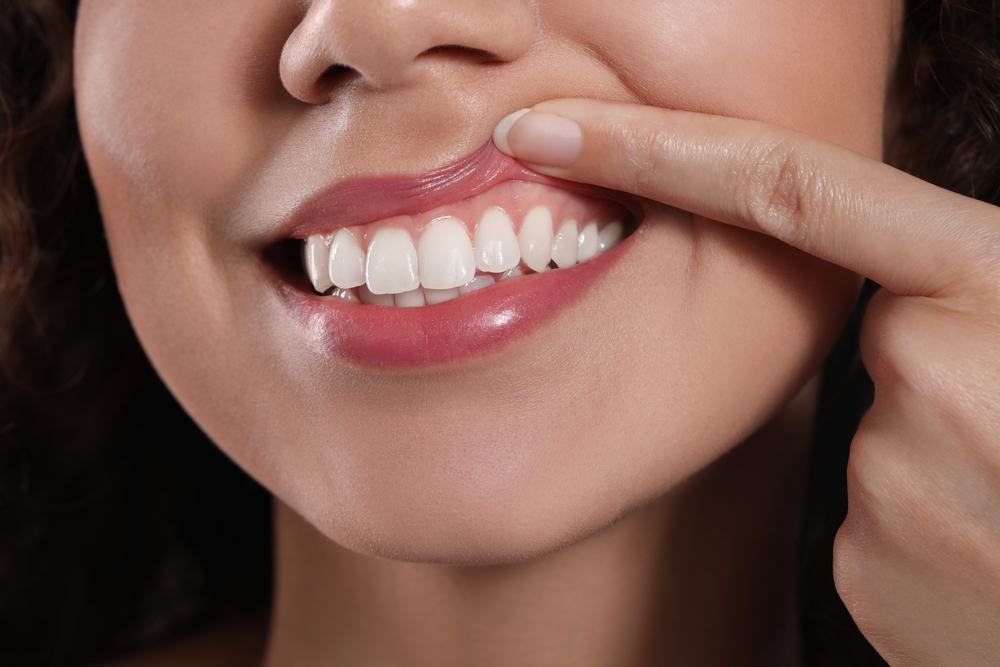
| Surface Texture | Has a fine stippled texture similar to an orange peel. | The stippling disappears, leaving the surface tense and excessively shiny. |
| Physical Response | Does not bleed during brushing, eating an apple, or flossing. | May bleed with even the slightest touch and sometimes spontaneously. |
4-Step Solution to Follow When Bleeding Occurs
If your gums are bleeding, the path you should follow to protect your body is quite clear. As the Panorama Ankara team, the sustainable treatment protocol we provide to our patients consists of the following steps:
-
Do Not Stop Brushing Because of the Bleeding
Brushing bleeding gums may be uncomfortable or frightening. However, if you stop brushing, bacteria will multiply further and the inflammation will worsen. Switch to a soft-bristled toothbrush and continue cleaning the area with gentle circular motions even if some bleeding occurs.
-
Seek a Professional Clinical Evaluation
Visit our clinic at the earliest opportunity. Through clinical and radiographic examinations, we can determine whether the bleeding is caused by superficial plaque accumulation or by a deeper case of periodontitis (advanced gum disease) extending into the jawbone.
-
Professional Tartar Removal (Scaling)
The hardened deposits and bacteria on the root surfaces that cause the infection are completely removed by our experienced dentists using specialized equipment. The gums begin to breathe again and quickly return to their natural pink color. This procedure is highly comfortable and does not interfere with daily life.
-
Learn the Correct Home Care Routine
What makes the success of professional cleaning long-lasting is your home care routine. In addition to brushing, our dentists will demonstrate the proper techniques for using interdental brushes or dental floss and supporting oral hygiene with mouthwash.
Frequently Asked Questions (FAQ) About Oral Health
We answer the most common questions about gum health using current scientific knowledge:
What happens if gum bleeding is left untreated?
If early-stage inflammation (gingivitis) is not treated, the infection can spread from the gums to the jawbone (periodontitis). As bone loss occurs, the gums recede, teeth begin to loosen, and eventually you may lose even completely healthy teeth. Bleeding is the first warning sign of this destructive process.
Does bleeding while flossing mean I am using the floss incorrectly?
If you snap the floss forcefully into the gums, the bleeding may be mechanical. However, if bleeding occurs despite using the correct technique, it indicates that bacterial plaque hidden between the teeth—beyond the reach of a toothbrush—has caused inflammation in that area. With continued regular flossing, the inflammation decreases and the bleeding usually subsides within a few days.
Does smoking affect gum bleeding?
Interestingly, smoking constricts blood vessels in the gums and reduces blood flow. As a result, even smokers with significant tartar accumulation and gum inflammation may not show the typical symptom of bleeding. This can create the false impression that their gums are healthy while the disease silently progresses toward the jawbone.
Conclusion: Starting the Day with a Healthy Smile Is in Your Hands
Every time you look in the mirror or pick up your toothbrush, what you should feel is not fear or anxiety, but the remarkable freshness that comes with cleanliness and health. Gum bleeding is your body’s way of saying, “Help me.” Ignoring that message can open the door to far more complex, time-consuming, and demanding treatments in the future.
Do not leave your oral and dental health to chance. As Panorama Ankara Dental Clinic, with our friendly team, modern diagnostic methods, and professional treatment approaches that prioritize your comfort, we are here to stop the bleeding and restore your smile to its healthiest condition. Take the first step toward healthy, strong, and pink gums, and do not postpone your routine check-ups.