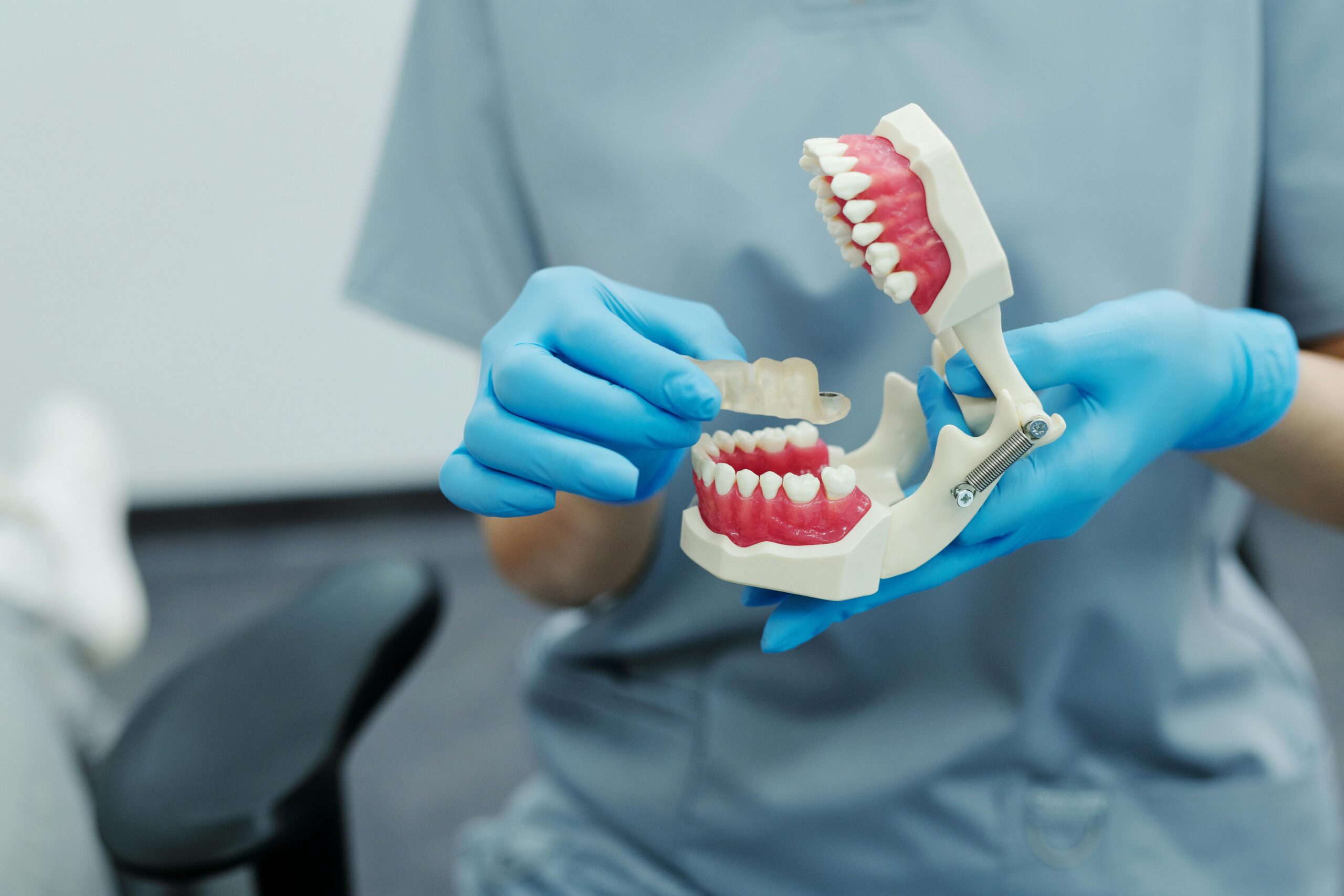


A complete denture is a removable prosthesis system that fits perfectly into the patient’s palate and lower jaw anatomy, prepared to restore chewing, speaking and aesthetic functions in cases where all natural teeth in the mouth are lost. It is specially designed for the upper (maxillary) and lower (mandibular) jaws; it is shaped according to the person’s specific measurements, palate structure and jaw closure.
Indication (Reasons for Application)
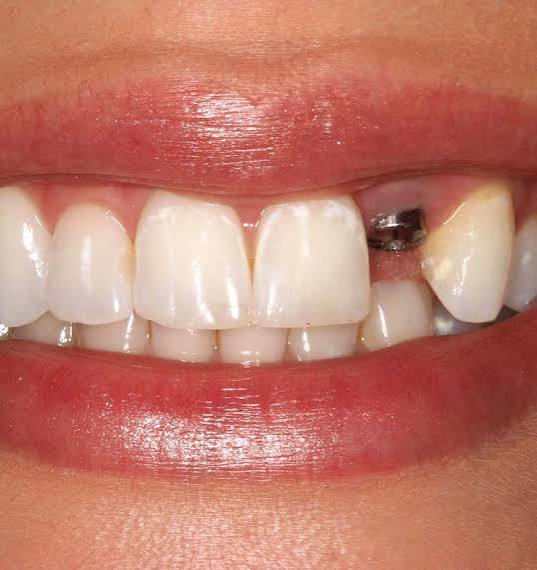
- Complete Tooth Deficiency: If there is not a single tooth left in the lower, upper or both jaws.
- Post Periodontal Disease: When teeth are lost to an extent that cannot be saved due to advanced gum disease.
- Genetic or Traumatic Causes: Congenital absence of teeth (anodontia) or loss of all teeth due to accident/injury.
- Aesthetic and Functional Needs: To maintain eating and speaking quality, to support facial aesthetics.
Types of Full Dentures
Standard Removable Full Dentures:
The most common type. It consists of artificial teeth placed on an acrylic base.
Hybrid (Overdenture) Dentures:
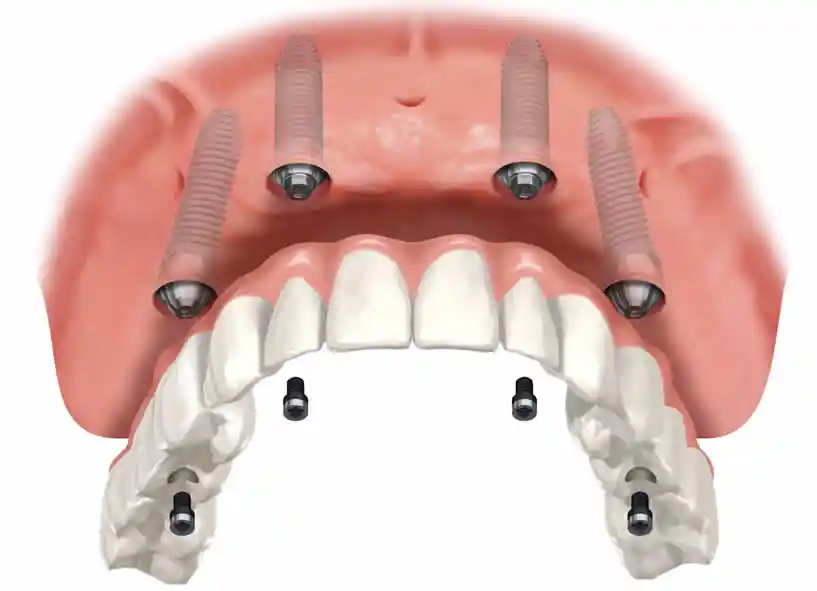
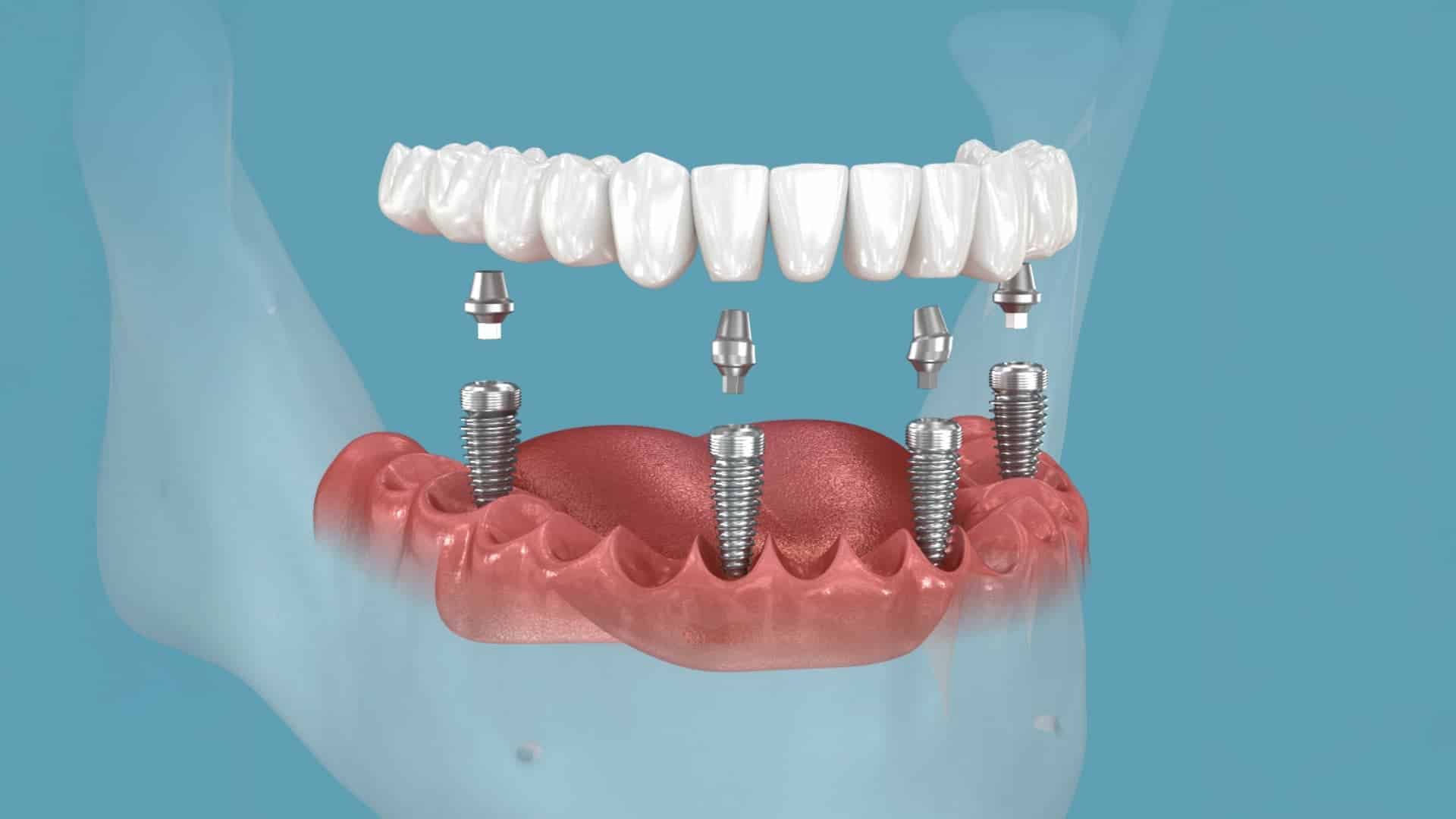
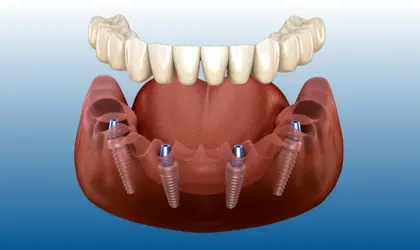
It provides extra stability by sitting on several implants or the remaining tooth root in the mouth.
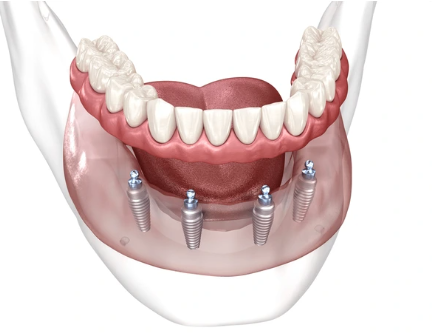
Implant-Supported Full Dentures:
Models that can be fixed on 2–4 implants in the lower jaw and 4–6 implants in the upper jaw or held with a click mechanism.
Temporary (Immediate Load) Dentures:
Temporary dentures prepared simultaneously with tooth extraction and used until the healing process.
Material and Design Stages
Impression Taking:
Palate and jaw harmony are recorded with hard impressions (alginate/cure kits) and functional impressions (vacuum plate or rubber material).
Articulation and Skeletal Design:
Mandibular bite height, midline alignment and bite relationships are determined on an articulator called an articulator.
Trial and Tooth Alignment:
The placement of the teeth on the wax molds is tried on the patient’s intraoral trial; esthetics, speech and eating comfort are checked.
Final Skeleton Production:
Acrylic resin forms the palate-tooth substructure as a base material; the selected tooth type is placed on it and polymerization is ensured.
Final Touch and Polishing:
The edges of the prosthesis are softened, the surface is smoothed and it gains a shiny appearance.
Use and Adaptation Process
- Initial Adaptation Period: Light pressure, difficulty chewing and increased salivation may occur for 1–2 weeks.
- Acclimation Exercises: Starting with soft foods and making short-term intraoral movements accelerates adaptation.
- Daily Removal–Removal: The patient is taught the removal directions and simple holding points of the dentures.
- Gradual Use: In the first days, at 1–2 hour intervals, then by keeping it in the mouth for the full duration, it is acclimated.
Care and Hygiene
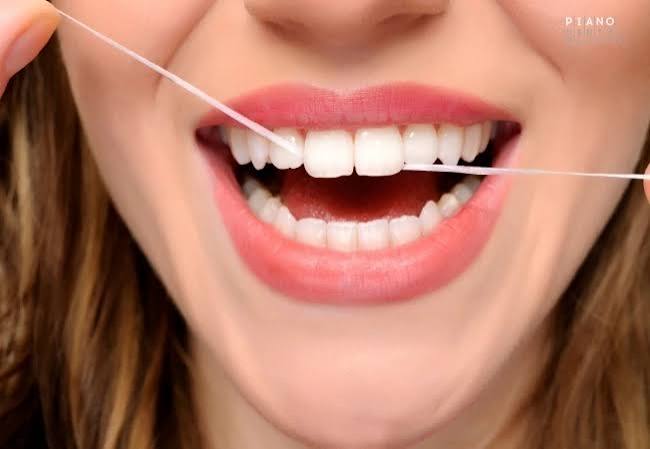
- Daily Cleaning: Remove the denture before going to bed at night and brush it with a toothbrush and denture cleaning tablets.
- Oral Care: When the denture is removed, clean the gums with a soft brush and mouthwash.
- Storage: Keep the denture in a container filled with water or a special denture case during overnight storage; prevents deformation.
- Periodic Check-ups: Dentist check-ups every 6 months; the health of the tissues under the prosthesis, the pressure areas and the compliance status are evaluated.
Advantages and Disadvantages
Advantages:
Immediately applicable, does not require surgical procedure (standard type).
In terms of costthe most economical full dental solution.
Suitable adaptation opportunity for all edentulous patients.
Disadvantages:
Difficulty in stability in lower jaw prostheses; adhesion strength is lower than the upper jaw.
Mobility is higher compared to implant-supported models.
Long-term incompatibility due to bone resorption and need for additional retouching.
Advanced Technology and Future Directions
Digital Measurement and CAD/CAM Production: More precise measurements with mouth scanners, fast skeleton production with industrial milling machines.
Nano-Acrylic and Antimicrobial Coatings: Surface treatments that reduce bacterial retention; prevents bad odor and fungal growth.
Lightweight Composite Materials: Thinner section denture bases that increase comfort of use.
Conclusion
Full dentures are the basic prosthetic solution that allows individuals who have lost all their teeth to return to daily life. A successful result depends on the correct measurement, meticulous design, patient education and disciplined care process being carried out together. With the integration of digital technologies and new material research, much more comfortable, hygienic and long-lasting dentures will continue to be developed in the future.